
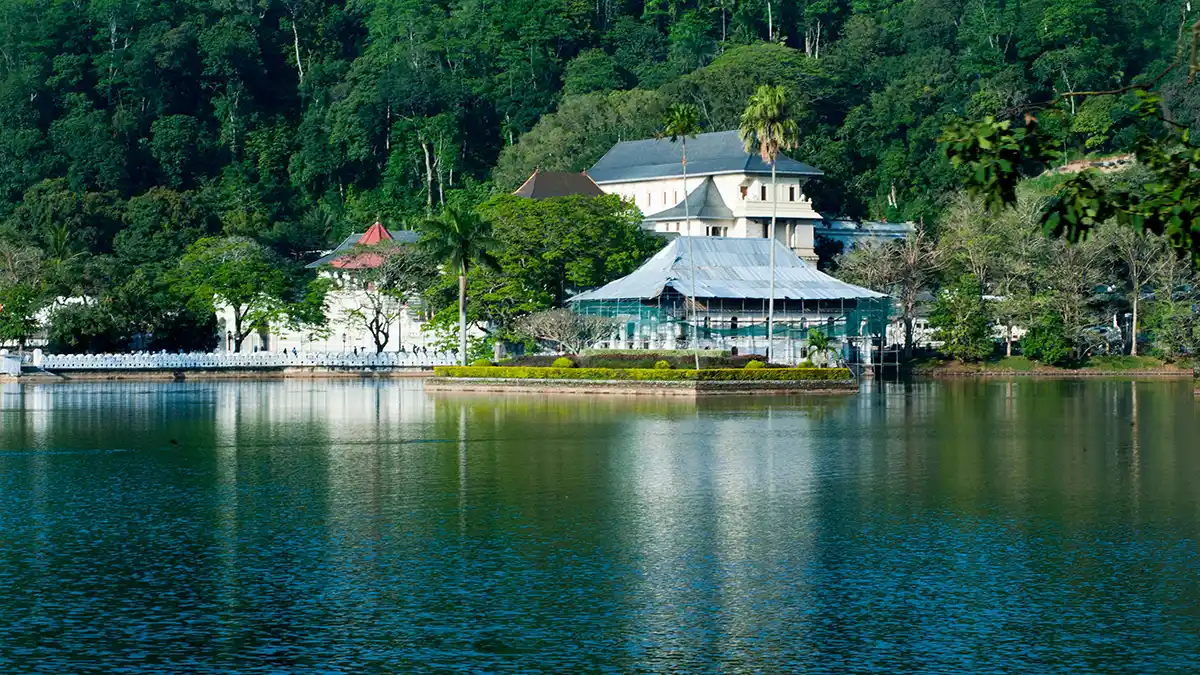
Kandy is a useful cultural and transport stop between Sri Lanka’s Cultural Triangle and the hill country. The Temple of the Sacred Tooth Relic, the lake and the railway all sit near the center, while the Royal Botanic Gardens at Peradeniya require a separate trip west.
It is not a quiet mountain town. Traffic, hills, crowds and sales pressure can make a loosely planned day more tiring than expected. For most first-time visitors, one or two nights is enough. Stay longer only when you want the gardens, an unhurried temple visit or a slower break before the train south.
This guide helps you decide what belongs together, what needs a ride, where to stay and when Kandy deserves more than a quick transfer.
Table of contentsJump to a section
Quick Answer: Is Kandy Worth Visiting?
Yes, Kandy is worth visiting when the temple, the Sacred City, Peradeniya gardens or the Kandy–Ella rail journey matters to your route. It provides a practical pause between Sigiriya or Dambulla and Ella, and its compact cultural core can be explored without turning the stop into a long city break.
Kandy is easier to skip when you have very limited time and none of those priorities appeals. Do not add a night only to wait for a train if a road connection fits the wider itinerary better. Equally, do not rush through the temple and gardens on the same afternoon after a long transfer.
Who Kandy suits
Kandy suits first-time visitors who want to understand Sri Lanka’s Buddhist heritage, travelers continuing by rail into the hill country and anyone who needs a manageable stop between longer road days. It also works well for people who enjoy gardens but do not want another demanding hike.
Budget and solo travelers will find hostels, guesthouses, buses and inexpensive local food. A social hostel can help with onward-travel information, but it does not need to be a party stay. Check recent reviews for road noise, steep access, lockers and how easy it is to reach the station with luggage.
Who may prefer a shorter stop
If your trip is already heavy on temples, Kandy may need only one night. If you are coming for cooler air and hiking, Ella or Haputale usually deserves more of the schedule. Kandy sits among green hills, but the center itself is busy and warm rather than a peaceful tea-estate retreat.
How Long To Stay and Where To Base Yourself
One night works when you arrive before mid-afternoon, visit the temple and lake, then leave the following day. This is a focused stop. It is not enough for a relaxed visit to Peradeniya gardens as well.
Two nights is the better balance for most first trips. Use one day for the cultural core and one for the gardens, a slow morning or transport uncertainty. Three nights only makes sense when Kandy is a deliberate base rather than a checkpoint on the way to Ella.
Focused cultural stop
Prioritize the temple and lake. Keep the arrival transfer realistic and leave room for security, footwear storage and crowds.
Best balance
Add Peradeniya gardens or a slower second day without placing every attraction before a fixed train.
Only for a slower base
Useful when you want rest, gardens, optional forest or museum time, and flexibility around rain or rail plans.
Possible but tiring
A return from Colombo or another distant base spends too much of the day in traffic. An overnight stop is usually more coherent.
Where to stay in Kandy
Stay near the lake or central streets if you want to walk to the temple, restaurants and railway station. The trade-off is traffic and noise. Confirm whether the route to the accommodation involves an uphill lane; a short map distance can feel very different with a backpack.
Hillside guesthouses may offer more space and a quieter evening. They also create a tuk-tuk dependency, especially after dark or in rain. Compare the full stay rather than the room price alone: breakfast, air conditioning or a fan, luggage storage, station access and pickup can change the real value.
Peradeniya is useful for the gardens and some onward road routes, but it is not the most convenient base for a first temple-focused visit. Choose it deliberately rather than assuming all places labelled “Kandy” are beside the lake.
Best Things To Do in Kandy
Kandy does not need a long checklist. The temple and lake form the core. The gardens are the strongest separate outing. Everything else should fit around your interests and energy.
Visit the Temple of the Sacred Tooth Relic respectfully
The Temple of the Sacred Tooth Relic is the central reason many travelers stop in Kandy. It sits within the Sacred City of Kandy, which UNESCO recognizes for its connection to the last capital of the Sinhala kings and the Buddhist shrine.
This remains an active place of worship, not only an attraction. Wear clothing that covers shoulders and knees, remove footwear where instructed, pass through the security process calmly and keep photography respectful. The official temple guidance currently explains rules for clothing, bags and prohibited items; check it again before the visit because arrangements can change.
Ceremony periods can feel meaningful, but they can also be crowded and noisy. If you want more space to understand the complex, choose a quieter part of the day rather than assuming the busiest ritual period is automatically the best experience.

Walk part of Kandy Lake rather than forcing the full loop
Kandy Lake is useful for orientation and for seeing how the temple, central streets and hills fit together. You do not need to complete every section. Walk the side that connects naturally with your accommodation and temple visit, then stop when traffic, rain or fading light makes the route less pleasant.
The lake edge is not a traffic-free park throughout. Pavement quality and road exposure vary. Watch for vehicles at crossings, give wildlife space and avoid leaning over the water for photographs.
Give the Royal Botanic Gardens enough time
The Royal Botanic Gardens at Peradeniya are west of central Kandy and should be treated as a separate outing. The official garden describes a large collection spread across a broad site, so a rushed hour between checkout and a train misses the point.
Go when you want shade, trees and a slower half-day rather than another temple. Take water, allow for rain and confirm current tickets and opening arrangements on the official website. Use a bus, tuk-tuk, taxi or driver according to your luggage and energy; it is not a sensible extension of the lake walk.
Explore the center selectively
The streets between the lake, market area and station show Kandy as a working city. This can be useful for food, fruit, everyday shopping and onward transport. It can also feel congested. Keep valuables secure, cross carefully and move on if an unsolicited gem, spice or tour pitch becomes persistent.
The central market can be included when you already need food or supplies. Do not force it into the schedule as an essential attraction, and ask before photographing people or stalls closely.
Choose one optional cultural activity
A cultural performance, small museum or viewpoint can fill a spare evening. Quality, schedules and access vary, so check current reviews and official information. You do not need all three after a temple visit and lake walk.
Udawattakele is another possible outing for travelers who want forest close to the city. Treat it as a separate walk, verify current public access and local conditions, and use suitable footwear after rain. Skip it if a proper hill-country hike is already coming later in the route.
How To Plan the Kandy Lake Walk
The original version of this guide focused on the evening lake loop. The useful idea remains: the water helps you slow down and understand the city. The full circuit, however, is not compulsory.
Start from the section nearest the temple or your accommodation. Walk while there is comfortable daylight, pause where the pavement gives enough space and turn back when the road becomes unpleasant. An out-and-back route can be better than continuing simply to complete a loop.
Temple and nearby lake edge
They share the same central zone. Leave enough time between them so the temple visit does not feel like a photo stop.
The length of the walk
Heat, rain, traffic and tired legs matter more than completing the full shoreline.
Peradeniya gardens
The gardens require transport west of the center and enough time to explore without watching the clock.
Late isolated sections
If light, pavement or traffic feels uncomfortable, return by a familiar route or arrange a trusted ride.
Keep food away from monkeys and other animals, and do not approach water monitors for a close photograph. After dark, use well-lit streets and arrange a tuk-tuk or app ride when the route back to a hillside stay is unclear.
One-Day and Two-Day Kandy Itineraries
These plans leave room for arrival fatigue and changing access. They are not timed checklists.
One day: temple and central Kandy
Begin with the Temple of the Sacred Tooth Relic when current visitor arrangements suit. Explore the immediate complex without rushing, then take a meal or rest break in the center.
Later, walk a comfortable section of Kandy Lake. Add the market area, a cultural performance or a viewpoint only if your energy remains good. A quieter dinner and early night may be more useful before the train or road transfer south.
Two days: add Peradeniya
Use the first day for the temple, lake and central Kandy. On the second, travel to the Royal Botanic Gardens and give the grounds enough time.
Return for food, luggage and the next transfer rather than attaching another distant attraction. If rain is persistent, swap the order or keep the second day light. Paying for an extra night is sometimes better than racing from wet gardens to a fixed departure.
How To Get To and Around Kandy
Kandy is connected to Colombo by road and rail and to the Cultural Triangle mainly by road. Actual journey time depends heavily on traffic, the service and the day. Build margin around check-in and reserved departures.
From Colombo or the airport area
Train and bus options operate from the Colombo region, while taxis and drivers are easier with several bags or a late arrival. Bandaranaike International Airport is not in central Colombo, so do not plan the airport, a city pickup and Kandy as though they are one simple transfer. Verify the current railway timetable and station before booking accommodation around an arrival time.
From Sigiriya, Dambulla or Habarana
Road transport is the practical connection for most itineraries. Buses can keep costs low; a shared or private vehicle can reduce changes. Avoid adding a safari, Dambulla, a long bus ride and an evening temple visit to the same day.
From Kandy to Ella
The hill-country train is a route highlight, but it is still transport. Seats can sell out, operations can change and unreserved travel may be crowded. Check the official schedule and reservation system, confirm the station and date, and keep a road alternative when the train does not fit.
Nanu Oya is the rail gateway used for Nuwara Eliya on many routes. It is not an automatic extra overnight stop in a short itinerary. Choose Nuwara Eliya only when you are willing to remove time elsewhere.
Use the Kandy to Ella train guide to compare classes, understand Nanu Oya, prepare luggage and build a road alternative before choosing this travel day.
Getting around the city
Walk within the lake, temple, market and station area when heat and traffic allow. Use a tuk-tuk, taxi, app ride or local bus for Peradeniya, hillside accommodation and separated attractions.
Agree on a street tuk-tuk fare before leaving or use an app when available. At busy periods, allow extra time rather than asking a driver to make an unrealistic connection.
Kandy Budget Planning
Kandy can be a moderate-budget stop. Accommodation and local meals do not need to be expensive, but temple admission, gardens, tuk-tuks and reserved rail seats can make a two-day stay cost more than a simple transfer night.
Central walking and local meals
Stay within a practical distance, use buses where they make sense and choose everyday restaurants away from the most visible visitor entrances.
Temple, gardens and transport
Check current official admission and railway prices. Add footwear storage, luggage, pickups and local rides to the real day cost.
Pressure purchases
Gem, spice and souvenir stops are optional. Leave when a sales visit is presented as part of a free city tour you did not request.
Your departure margin
The cheapest connection is poor value if a tight transfer causes you to miss a reserved train or pay for an emergency taxi.
Carry some cash for small meals, buses, tuk-tuks and storage, but keep the rest secured. Confirm what a guide or driver includes before starting, and do not pay a deposit for an unclear shopping or sightseeing package.
Weather, Crowds and Respectful Travel
Kandy can receive rain in any season. A light layer, water and shoes with grip are more useful than a rigid hourly plan. Cloud and rain may improve the gardens while making hillside paths slippery.
The annual Esala Perahera period can bring major ceremonies, crowds, traffic changes and accommodation pressure. Dates and arrangements vary, so check the official temple information for your year. Attend with respect for its religious importance rather than treating it only as a street show.
- Temple: dress modestly, follow security instructions and avoid blocking worshippers for photographs.
- Lake: give animals space, keep food packed away and stay alert beside traffic.
- Rain: slow down on stone, steps and forest paths; change the plan when surfaces become unsafe.
- Transport: protect time around reserved trains and avoid accepting a rushed ride.
- Sales pressure: a polite, firm refusal is enough. Do not follow an unsolicited guide into a shop.
- Evenings: use lit routes, secure valuables and arrange a trusted ride to isolated hillside accommodation.
Booking Tools and Official Sources
A guided Kandy visit can help with context and transport when time is short. It is not necessary for walking the central lake area. Compare what is included, whether temple admission is separate, pickup boundaries and recent reviews before paying.
Affiliate booking tool: The tool below contains affiliate links. If you make an eligible booking through it, WeltFox earns a commission at no additional cost to you. Read our full affiliate disclosure.
Useful official sources
Related Sri Lanka Guides
FAQ
Kandy Travel FAQs
Short answers for deciding how Kandy fits a first Sri Lanka route.
Is Kandy worth visiting?
Yes, when the Temple of the Sacred Tooth Relic, Kandy Lake, Peradeniya gardens or the hill-country railway matters to your route. One or two nights is enough for most first-time visitors.
How many days do you need in Kandy?
One night works for a focused temple and lake visit. Two nights is better if you want the Royal Botanic Gardens, a slower pace or margin around rail plans.
Where should you stay in Kandy?
Stay near the lake or center for walking access to the temple, food and station. Choose a hillside stay for quieter surroundings only if you accept extra rides and steep access.
Do you need to walk the full Kandy Lake loop?
No. Walk the sections that connect naturally with the temple and your accommodation. Turn back when traffic, rain, heat or fading daylight makes the route less comfortable.
What should you wear to the Temple of the Tooth?
Wear respectful clothing that covers shoulders and knees, remove footwear where instructed and follow current security and visitor guidance. Check the official temple website before visiting.
Are the Royal Botanic Gardens walkable from central Kandy?
Treat Peradeniya as a separate outing west of central Kandy. Use current bus, tuk-tuk, taxi or driver options rather than extending the lake walk.
Should you take the train from Kandy to Ella?
Take it when the current schedule, seats and wider route fit. It is scenic transport, not an obligation. Keep a road alternative when rail operations or availability do not suit.
Is Kandy good for solo travelers and backpackers?
It can be. Central accommodation, public transport and social hostels make planning manageable. Check recent reviews for security, noise, lockers and uphill access, and use trusted transport after dark.
Can you visit Kandy as a day trip from Colombo?
It is possible, but the return journey can dominate the day. An overnight stay is usually more practical if you want the temple and lake without rushing.
When is Kandy busiest?
Weekends, ceremonies and the annual Esala Perahera period can increase crowds, traffic and accommodation demand. Check current official dates and local arrangements for your trip.
Final Thoughts: Use Kandy as a Deliberate Stop
Kandy is most useful when it has a clear role. Stay one night for the temple and lake, or two when Peradeniya and a slower pace matter. Do not make the city carry every expectation of Sri Lanka’s hill country.
Walk what feels comfortable, leave room around the railway and skip the extra viewpoint or sales stop when your energy is low. A focused cultural day followed by proper rest is enough.

Reader Notes
Share your thoughts
Have a question, update, or practical tip about Kandy Travel Guide: Temple, Lake, Gardens and Route Planning? Share it with other readers. Every comment and reply is reviewed before publication.
✓Moderated conversation
Rate this guide
Ratings appear here when available.
Conversation
Reader comments
Replies appear below the original comment after review.
Reader comments will appear here after review.
Add a note
Join the conversation
Share a useful update, a focused question, or a correction. Do not post personal information.