
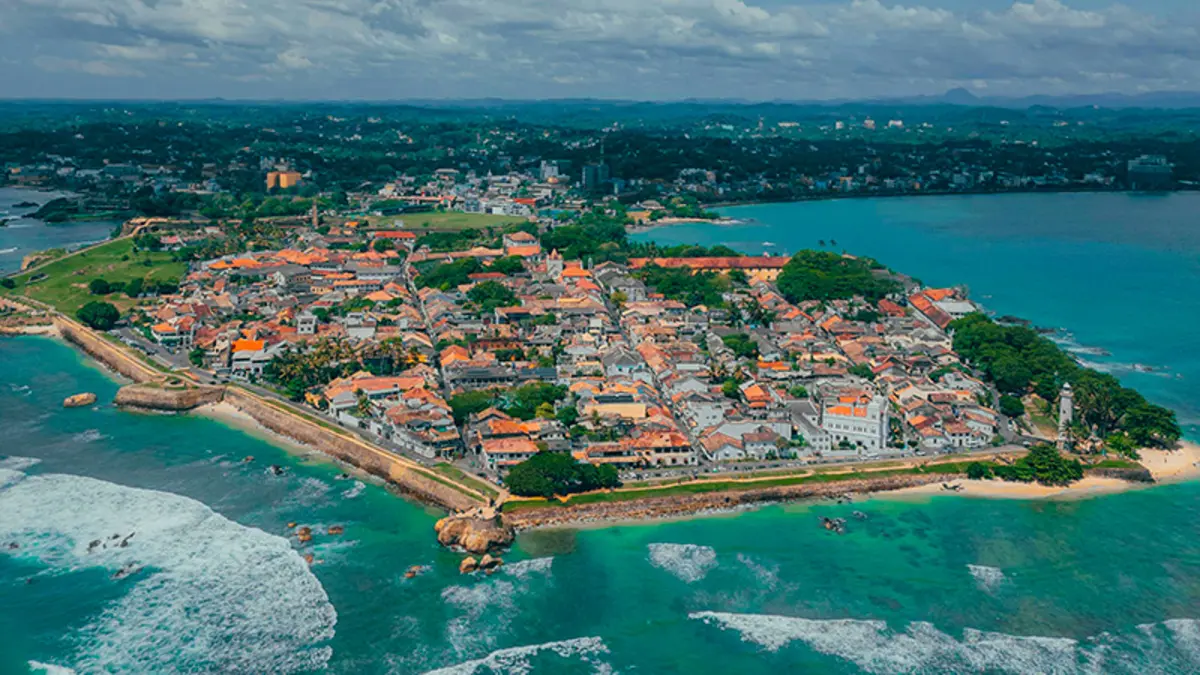
Galle Fort is one of the easiest heritage stops to fit into a Sri Lanka route. Its streets, ramparts, lighthouse, places of worship, museums and cafes occupy one compact peninsula. You can explore without a vehicle once you are inside.
Compact does not mean effortless. The heat can make a midday walk tiring, rampart surfaces are uneven, museum access changes and the fort remains a living neighborhood rather than an open-air set. A better visit separates indoor heritage time from the sea-wall walk and leaves enough energy for sunset.
For many first-time visitors, one afternoon and evening is enough. Stay a night when you want the quieter morning streets, a museum or a slower final stop before leaving the south coast.
Table of contentsJump to a section
Quick Answer: Is Galle Fort Worth Visiting?
Yes, Galle Fort is worth visiting when you want a walkable cultural stop on Sri Lanka’s south coast. It breaks up a beach-heavy route and works particularly well late in the trip, when another long excursion may be less appealing than history, food and a gentle evening walk.
UNESCO lists the Old Town of Galle and its Fortifications for the way European fortification and town-planning ideas were adapted to South Asian traditions and local conditions. The Portuguese established the fortified town in the 16th century, and it developed substantially under Dutch rule before the British period. The value is not only in one monument. It is in the walls, street grid, buildings and continuing everyday use of the town.
Skip an overnight stay when your priority is swimming, surfing or a quiet beach. Galle Fort is beside the ocean, but it is not a substitute for a main beach base. You can visit from Unawatuna, Mirissa or another nearby coast stop and return after the walk if that avoids an unnecessary hotel change.
Who Galle Fort suits
Galle Fort suits first-time visitors who want a heritage stop without a complicated itinerary. It also works for solo travelers, families who can supervise children closely on the walls, and anyone who wants a calmer final evening after Ella, safari or several beach days.
Budget travelers can visit without staying inside the fort. Use Galle town, the area near the station or Unawatuna as a base, then bring only what you need for the walk. A social hostel may help with shared transport and onward plans, but check lockers, road noise, late access and how far the property really is from the fort entrance.
Who may prefer a shorter visit
If colonial-era architecture and museums are not priorities, a focused sunset walk may be enough. Travelers with limited mobility should also plan selectively rather than assuming the full rampart circuit is step-free. Galle is still useful, but the best version may be street-level lanes, a cafe and one accessible viewpoint.
How Long To Stay and Where To Base Yourself
A late-afternoon visit works when you mainly want the lighthouse area, sea walls and sunset. Arrive with enough daylight to orient yourself. Do not schedule a museum, full rampart circuit, shopping and dinner into the same short window.
One night is the strongest first-visit plan. Explore a museum or the inner streets after arrival, rest through the hottest period, walk the ramparts later and return for a quieter morning before checkout. Two nights make sense only when you want more heritage time, slow meals or Galle as a base for nearby coast outings.
Focused heritage and sunset
Choose one indoor stop or a few lanes, take a break, then use the comfortable part of the evening for the ramparts.
Best overall balance
Add a quiet morning and avoid returning to another town immediately after dark. This is enough for most first visits.
For slow history and food
Useful when museums, architecture and long meals are the point. It is unnecessary on a tightly paced coast route.
Keep the return simple
Visit from a beach base, but arrange the trip back before sunset if late buses, trains or ride availability are uncertain.
Stay inside Galle Fort
Staying inside gives you the old streets before day visitors arrive and after the heat softens. It is the easiest option for dinner and a sunrise or early-morning walk. The trade-off is price: boutique hotels, restored guesthouses and cafes inside the walls can cost more than comparable places outside.
Historic buildings also vary in soundproofing, stairs, room size and ventilation. Read recent reviews rather than choosing only by facade. Ask about vehicle access, luggage help and the walking route from the entrance if steps are difficult.
Stay in Galle town or near the station
This is often the practical budget choice. You are closer to rail and bus connections and can walk or take a short ride into the fort. The area feels busier and less atmospheric, but that may be a fair trade when you have an early departure or a heavy backpack.
Check the final street rather than relying on the word “Galle” in a listing. Some properties are much farther from the fort or station than the map preview suggests.
Stay in Unawatuna or another beach base
Unawatuna works when beach access matters more than sleeping within a heritage site. Mirissa and Weligama can also serve as separate coast bases, but the return takes more planning. Choose one main base rather than moving hotels among every marked town.
If you visit for sunset, decide whether to eat in the fort or return first. A late transfer feels longer when you are wet, carrying beach equipment or waiting for a ride with no clear pickup point.
Best Things To Do in Galle Fort
The fort works as a connected district, not a checklist of unrelated landmarks. Pick a few places that explain its history, then leave space to notice the streets and coastline.
Understand the fort before walking it
The aerial shape helps explain the visit: a compact town occupies a rocky peninsula, enclosed by landward and seaward fortifications. UNESCO describes the property as a living urban ensemble with residential and public uses, not a military ruin abandoned after the colonial period.
Start near the main entrance, Clock Tower or an official information point when you need orientation. The Galle Heritage Foundation operates an information center and manages heritage work within the fort. Current displays and managed gallery access can change, so use its information rather than assuming every bastion or historic space is freely open.

Walk the lighthouse and sea-wall area
The white lighthouse and nearby ramparts form the most recognizable coastal section. Walk there when the sun is less intense and the wind is manageable. The path gives broad sea views, but exposed edges, grass, stone and steps require attention.
Do not climb walls or cross barriers for an unobstructed photograph. Keep children close and stay back when strong wind, rain or rough water makes the edge uncomfortable. The lighthouse is a visual landmark; do not assume its interior is a visitor attraction.
Follow selected rampart sections
You do not need to complete every bastion. The best section is the one that fits your starting point, mobility, weather and return route. The southern and western sea-facing walls are useful around sunset, while the landward walls give context for the gate and modern city.
Some parts feel open and comfortable. Others involve steps, narrow sections or uneven ground. Turn back when the surface stops being enjoyable. Completing a circuit is not an achievement worth a fall or an exhausted walk after dark.
Explore the Old Gate and inner streets
The inner lanes reveal the fort as a town rather than one defensive wall. Look for shaded verandas, courtyards, administrative buildings and the relationship between European planning and South Asian building traditions. UNESCO specifically notes this adaptation as part of the site’s significance.
The Old Gate and warehouse area add maritime context. Traffic still uses parts of the fort, so listen for vehicles and do not stand in gateways for photographs. Avoid entering private courtyards, school grounds or residential buildings simply because a door is open.
Choose one museum
The Galle National Museum and maritime museums cover different aspects of southern and seafaring history. The responsible government institutions describe collections related to regional culture, trade, boats, shipwreck archaeology and marine life.
Choose one according to interest and current operations. Verify the exact museum name, entrance, opening day and ticket information before going; similar names are used for more than one collection, and online listings can mix them up. A museum is better earlier in the day than squeezed into the sunset hour.
Visit places of worship respectfully
Churches, a mosque and other religious sites are part of the fort’s living history. Access depends on services, prayer, dress and local arrangements. Enter only where visitors are welcomed, dress with care, lower your voice and ask before photographing people.
A doorway view may be enough when worship is underway. The purpose of the visit is not to interrupt community life to complete a landmark list.
Use cafes and shops as a pause, not the whole plan
Galle Fort has many cafes, restaurants, galleries and shops. They make the stop comfortable, especially in heat or rain. Prices can be higher than in Galle town, and not every “local” product has a clear origin.
Choose food because it suits your budget and energy. Ask questions before buying gems, antiques or high-value crafts, and do not let a long sales pitch consume the evening. A drink and shade can be more useful than another purchase.
How To Plan the Galle Fort Sunset Walk
The original version of this article focused on evening light. That remains the simplest way to enjoy Galle Fort, but it works best as a flexible route rather than a timed circuit.
Arrive before the light begins to soften. Use the first part of the visit for inner streets, the Old Gate area or a museum if it is open. Take a food or water break, then move toward the lighthouse and sea-facing ramparts when conditions are cooler.
Start: enter through the main gate and orient yourself around the Clock Tower, Old Gate or inner streets.
Before sunset: reach the lighthouse and southern sea-wall area with enough daylight to see the surface clearly.
Sunset choice: continue along a comfortable public rampart section or stop at a safe open viewpoint. The sun’s exact position and cloud cover change through the year.
Finish: return through familiar streets for dinner or leave from a pickup point agreed before the walk.
What to combine
Combine the lighthouse, Flag Rock area and a selected stretch of the sea-facing walls when surfaces and access suit. These places share the same broad coastal zone. Add the inner lanes before or after, but do not zigzag repeatedly across the fort to collect every landmark.
What to keep separate
Keep museums and managed galleries separate from the sunset route. They have their own operating arrangements and deserve attention. Keep swimming separate too. The fort walls and rocky shoreline are not a general invitation to enter the sea.
What to skip when energy is low
Skip the full circuit. Choose one wall section, watch the light from a safe place and return through the streets. A cafe break, early dinner or quiet bench can improve the visit more than pushing through heat or rain.
Cloud does not ruin the evening. It changes the light. If thunder, heavy rain, strong wind or poor visibility develops, leave exposed ramparts and continue at street level or return to the accommodation.
One-Day and Two-Day Galle Itineraries
These plans show a workable rhythm. Museum operations, weather and your arrival time should decide the details.
One day: heritage, rest and sunset
Arrive in the morning or around midday and leave luggage before exploring. Start with the Old Gate, an information point and one museum if its current access suits. Walk a few inner streets rather than trying to inspect every building.
Take a proper lunch and avoid the most exposed walls during the hottest part of the day. Rest, check the weather and return later for the lighthouse and selected ramparts. Finish with dinner inside the fort or a planned ride back to your base.
If you arrive after a long train or road transfer, remove the museum. Eat, rest and keep only the evening walk. Galle will still have served its purpose.
Two days: add a quiet morning and coast choice
Use the first day for inner streets, one museum and sunset. On the second morning, revisit the walls before the heat builds or explore a section you skipped. Have breakfast, check out slowly and continue to the next base.
Use the second afternoon for Unawatuna or another coast outing only when you are staying another night and conditions suit. Do not add a beach transfer immediately before a long journey simply because it appears close on a map.
Galle as a final night
Galle can be a calm final cultural stop before returning toward Colombo or the airport. It is not close enough to treat an international flight casually. Leave a generous buffer and consider sleeping farther north when the departure is early.
How To Get To and Around Galle
Galle is connected to Colombo and south-coast towns by rail and road. The right option depends on luggage, weather, the exact base and whether you need to arrive before sunset.
By train
The coastal railway serves Galle from Colombo and stations farther south. It can be a useful public-transport option, but services, stopping patterns and reservation arrangements change. Search the official Sri Lanka Railways timetable for the exact date and stations rather than relying on a screenshot or old blog schedule.
Galle station is outside the fort. Walking may suit light luggage and comfortable weather. Take a tuk-tuk, taxi or app ride when carrying a large bag, arriving in rain or staying at a property on an unfamiliar side street.
By bus
Buses connect Galle with Colombo, Matara and many south-coast towns. Local and longer-distance services use different routes and stopping points. Confirm the correct stand and direction locally, keep small luggage manageable and allow extra time around busy periods.
A bus can be economical from Unawatuna or nearby towns. It may be less comfortable with a large backpack, after dark or when you need a precise check-in time.
By taxi, tuk-tuk or app ride
Road transport is convenient between Galle Fort and a nearby beach base. Agree on the fare or use the app estimate before departure, confirm whether pickup is inside or outside the fort and share only an official accommodation pin.
Traffic and vehicle access can vary within the historic area. A driver may use a gate or meeting point rather than stopping at the exact building. Keep that possibility in mind when traveling with children or luggage.
Walking inside the fort
Walking is the main way to explore. Streets are compact, but heat, curbs, cobbles, stairs and rampart gradients affect effort. Use shade, carry water and cross carefully. There is no benefit in walking from a distant beach base simply to keep the day “on foot.”
Galle Fort Budget Planning
Galle Fort can be inexpensive as a walk or costly as a boutique stay. The difference comes from accommodation, meals, shopping, museums and transfers rather than one unavoidable fort fee.
- Save on accommodation: compare Galle town and Unawatuna with rooms inside the fort. Include the cost and inconvenience of return transport.
- Save on food: eat one meal outside the most visitor-focused streets or choose a simple local restaurant. Keep water with you rather than buying repeatedly.
- Choose one paid visit: one museum or guided walk can add context. Several rushed admissions rarely improve a short stay.
- Control shopping: set a budget before entering gem, craft or antique shops. Ask for provenance and receipts where relevant.
- Keep a transport buffer: late rides, luggage and rain can change the cheapest-looking plan.
Solo travelers do not need to book a private tour to make the fort manageable. A small group walk may help with history, but the public streets can still be explored independently. Spend on context when you value it, not because the district feels complicated.
Weather, Safety and Respectful Travel
Galle is hot and humid for much of the year, and rain can interrupt any month. Conditions on the southwest coast vary with monsoon patterns and short-term weather. Check the Department of Meteorology close to the visit rather than assuming a “dry season” guarantees a clear sunset.
Carry water, sun protection and a light rain layer. Shoes with grip are more useful than footwear chosen for photographs. If the stone is wet, the wind strengthens or visibility drops, leave the exposed walls.
Rampart and evening safety
Many edges are open or have limited barriers. Stay on established public paths, keep back from drops, supervise children and do not sit or climb where a slip would have serious consequences. Avoid rocks below the walls when waves or access look uncertain.
After dark, use familiar inner streets and an agreed pickup point. Galle Fort is active in the evening, but normal precautions still apply. Keep valuables secure, avoid poorly lit isolated sections and use trusted transport when the route back is unclear.
Accessibility
Do not assume the complete rampart route is step-free. Street surfaces, curbs, slopes, stairs and entrances vary. A visitor who uses a wheelchair, walking aid or stroller may have a better experience on selected inner streets and street-level viewpoints than on the full walls.
Ask the accommodation or Galle Heritage Foundation for current local advice before the visit. Museums occupy historic buildings and may have different access constraints. A shorter route is a valid visit.
Respect the community and heritage
The fort still contains residents, students, workers and worshippers. Keep doorways clear, ask before close portraits and do not fly a drone or arrange commercial filming without checking current rules and permissions.
Avoid touching fragile surfaces, carving names, leaving litter or using walls as props. Heritage protection is part of why the district remains worth visiting.
Booking Tools and Official Sources
A guided walk can add historical context and help distinguish Portuguese, Dutch, British and Sri Lankan layers. It is optional. Compare the actual route, group size, language, meeting point, accessibility, admissions and recent reviews before booking.
Affiliate booking tool: The tool below contains affiliate links. If you make an eligible booking through it, WeltFox earns a commission at no additional cost to you. Read our full affiliate disclosure.
Useful official sources
Related Sri Lanka Guides
FAQ
Galle Fort Travel FAQs
Short answers for deciding how Galle Fort fits into a south-coast route.
Is Galle Fort worth visiting?
Yes, when you want a walkable heritage stop with ramparts, historic streets, museums, food and sunset. A focused half-day is enough when beaches are the main priority.
How long do you need at Galle Fort?
Allow a half-day for selected streets, ramparts and sunset. One night gives the best balance because it adds a cooler evening and quieter morning without requiring a long stay.
Do you need a ticket to enter Galle Fort?
Public streets and accessible rampart areas are separate from ticketed museums and managed galleries. Confirm current admissions and access with the responsible institution before any indoor visit.
Where is the best place for sunset in Galle Fort?
The southern and western sea-facing ramparts offer broad views when public access and weather suit. Choose a safe open section rather than chasing one exact point, because clouds and the sun's position vary.
Should you stay inside Galle Fort or in Unawatuna?
Stay inside for heritage streets, restaurants and a quiet morning. Choose Unawatuna when beach access and a lower-key coast base matter more, then visit Galle Fort as a separate outing.
Can you swim at Galle Fort?
Do not treat the ramparts and rocky shoreline as a general swimming area. Use an established beach and check current sea conditions, access and local advice before entering the water.
Can you reach Galle by train?
Yes, the coastal railway serves Galle, but schedules and stopping patterns can change. Search Sri Lanka Railways for the exact date and stations, and allow for the connection from the station to the fort.
Is Galle Fort safe to walk after dark?
The inner streets remain active in the evening, but use normal precautions. Return by familiar, lit routes, avoid isolated exposed sections and arrange trusted transport when your accommodation is elsewhere.
Is Galle Fort wheelchair accessible?
Some inner streets and street-level viewpoints may be manageable, but the complete rampart route is not uniformly step-free. Ask for current local advice and plan selected sections around surfaces, curbs and historic-building access.
Do you need a guide for Galle Fort?
No. Independent walking is practical. A qualified guide can add historical and architectural context, so compare the route, credentials, language, accessibility and recent reviews when that depth matters to you.
Final Thoughts: Keep Galle Simple
Galle Fort does not need a packed itinerary. Choose one museum or heritage stop, walk the lanes while the day is comfortable, rest and return to the sea walls for sunset. Stay one night when you want the early streets; visit from a beach base when another hotel change would add fatigue.
The strongest visit respects both sides of the fort: a protected historic place and a neighborhood where people still live and work. Slow down, keep away from exposed edges and leave without worrying about the rampart section you skipped.


Reader Notes
Share your thoughts
Have a question, update, or practical tip about Galle Fort Travel Guide: Ramparts, History and Sunset? Share it with other readers. Every comment and reply is reviewed before publication.
✓Moderated conversation
Rate this guide
Ratings appear here when available.
Conversation
Reader comments
Replies appear below the original comment after review.
Reader comments will appear here after review.
Add a note
Join the conversation
Share a useful update, a focused question, or a correction. Do not post personal information.