
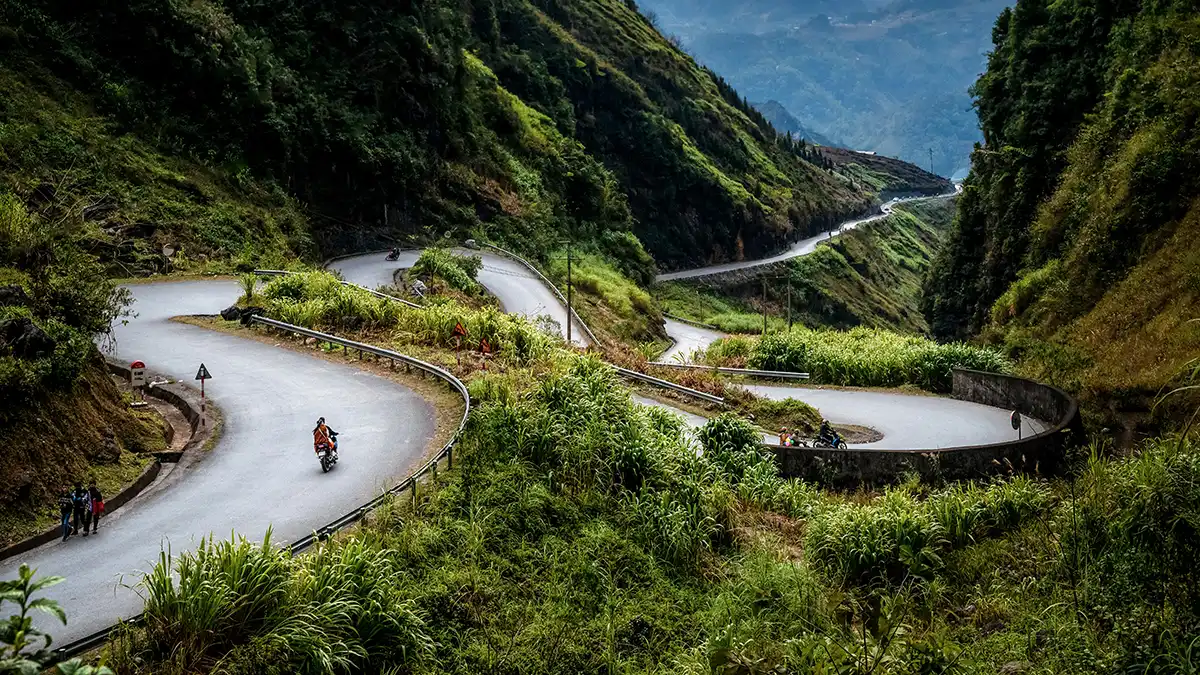
Ha Giang can be one of the most rewarding additions to a northern Vietnam route, but it is not a simple sightseeing stop. Most travelers come for the Ha Giang Loop: several days of winding roads, karst plateaus, passes, valleys, small towns, homestays and long hours on the road.
This Ha Giang travel guide is built for first-time visitors who want to decide whether the region actually fits their trip. It explains how many days you need, whether 3 days is enough, why 4 days is usually better, how to think about easy riders and self-drive, and when Sapa, Ninh Binh or another northern Vietnam stop may be the better choice.
Table of contentsJump to a section
- First-trip answer
- Planning summary
- Route fit and alternatives
- Trip length
- Loop route and stops
- Choose how to travel
- Safety, permits and insurance
- Where to stay
- Things to do and itineraries
- Hanoi access and no-motorbike options
- Weather, costs and practical basics
- Tour red flags and what to skip
- Booking tools and sources
- Frequently asked questions
Quick Answer: Is Ha Giang Worth Visiting?
Yes, Ha Giang is worth visiting if you want dramatic mountain roads, karst scenery, a more adventurous northern Vietnam experience and enough time to plan it carefully. It can become a highlight of a Vietnam route when you treat it as a multi-day mountain journey, not a quick attraction.
It may not be worth it if your Vietnam itinerary is short, you dislike long road days, you get severe motion sickness, you need predictable comfort, or you are tempted to self-drive without real experience, legal cover and insurance.
Mountain-road travelers
Ha Giang suits adventurous travelers, backpackers, photographers and anyone who wants road-trip style mountain scenery.
4 days for the loop
Four days is better for most first-time visitors, plus travel time between Hanoi and Ha Giang.
Easy rider or small tour
Most non-riders and nervous riders should use an easy rider or a small, safety-focused group.
Use a private car
A private car or jeep-style tour is the most practical option if you want the scenery without riding or sitting on a motorbike.
Not for beginners
Only consider self-driving if you are confident, properly licensed, insured and comfortable on mountain roads.
Do not treat it as a 2-day add-on
The biggest mistake is rushing Ha Giang into an already overloaded northern Vietnam route.
Ha Giang Travel Guide Summary
Use this section as a quick planning check before you commit time, money and energy to the loop.
What Is Ha Giang Like for First-Time Visitors?
Ha Giang is a northern mountain province near the China border. Most travelers come for the Ha Giang Loop, a multi-day route through mountain passes, limestone plateaus, valleys, small towns and remote-feeling overnight stops.
This is not normal city sightseeing. You do not come here to tick off museums and cafe streets. The experience is the road itself: long bends, changing weather, viewpoints, homestays, quiet towns, market mornings and the feeling that travel days are part of the destination.
Ha Giang is more demanding than Sapa or Ninh Binh. Sapa is easier if you want a mountain base and trekking. Ninh Binh is easier if you want karst scenery with calmer logistics. Ha Giang asks for more time, more road tolerance and more safety judgment.
Ha Giang is best understood as a multi-day mountain road journey, not a quick attraction stop.
Is Ha Giang Right for Your Vietnam Route?
Ha Giang works best when northern Vietnam is a major part of the trip. If you add it casually because every backpacker mentions the loop, the route can become exhausting fast.
Add Ha Giang If…
Add Ha Giang if you have at least 4 days for the region, plus travel time from Hanoi. It also makes sense if mountain road scenery is a priority, you can handle long road days, and you are willing to use an easy rider, small-group tour or private car if self-driving is not safe for you.
It works best when you can stay flexible with weather. If your schedule has no buffer and the forecast turns poor, the loop can become more stressful than rewarding.
Skip Ha Giang If…
Skip Ha Giang if you are on a fast 10-day Vietnam route and trying to include Hanoi, Ha Long or Lan Ha, Ninh Binh, Hoi An, Da Nang and Ho Chi Minh City as well. Something will suffer.
Also skip it if you are an inexperienced rider tempted to self-drive, you need comfortable and predictable travel days, you have severe motion sickness or back problems, or the weather looks poor and you cannot delay.
Ha Giang in 10, 14 and 21 Days
With 10 days in Vietnam, Ha Giang only makes sense if northern Vietnam is the main focus. You will need to cut other big stops.
With 14 days, Ha Giang is possible, but it shapes the whole northern section. You may need to choose between Sapa, Ninh Binh, a bay trip and Central Vietnam rather than adding everything.
With three weeks, Ha Giang fits much better. The 3 Week Vietnam Backpacking Route has enough room to add Ha Giang after Hanoi if you build in recovery time.
Ha Giang vs Sapa vs Ninh Binh: Which Should You Choose?
These three places are often compared, but they are not substitutes. They answer different travel moods.
Best for mountain roads
Effort: high. Time: 4+ days plus travel. Main risk: road fatigue, weather and riding safety. Best if the loop is a priority.
Best for trekking and a mountain base
Effort: medium. Time: 2 to 3 days plus travel. Main risk: fog, crowds and mismatched trekking expectations.
Best for easier karst scenery
Effort: low. Time: 1 to 3 days. Main risk: heat, crowds and rushed day-trip pacing. Best if you want beauty with fewer logistics.
Ninh Binh is easiest
If you are nervous, short on time or traveling with family, Ninh Binh is usually the gentler first-time choice.
Ha Giang can be strong
Ha Giang is excellent for many backpackers, but only when safety, operator quality and pacing are taken seriously.
Yes, with time
Combining Ha Giang, Sapa, Ninh Binh and a bay trip is mainly for 2 to 3 week routes. Do not stack them too tightly.
Choose Ha Giang If…
Choose Ha Giang if dramatic mountain roads are your main northern Vietnam goal, you have time to handle fatigue, and guided or semi-guided travel is acceptable. This is the choice for a road journey.
Choose Sapa If…
Choose Sapa if trekking matters more than road-trip scenery, you want an easier mountain base, or you prefer sleeping in one place and taking day trips.
Choose Ninh Binh If…
Choose Ninh Binh if you want beautiful limestone scenery with much easier logistics. It is better for short trips, nervous travelers, families and anyone who wants a softer first-time Vietnam stop.
How Many Days Do You Need in Ha Giang?
The biggest planning mistake is counting only the loop days and forgetting travel from Hanoi. From Hanoi, a realistic Ha Giang commitment often takes 5 to 6 days once you include arrival, the loop, recovery and onward travel.
1 Day in Ha Giang
One day is not useful from Hanoi. It only works if you are already in Ha Giang city and want a short local outing or a partial taste toward Quan Ba.
2 Days in Ha Giang
Two days is too rushed for most first-time visitors. A partial loop or car-based taster is possible, but a normal first trip should not force the full loop into two days.
3 Days on the Ha Giang Loop
Three days is common and possible, but tiring. It can work for travelers with limited time, good stamina and reasonable weather. It is a poor choice if the group moves slowly, the forecast is bad or you are already road-fatigued.
4 Days on the Ha Giang Loop
Four days is the best default for most first-time visitors. It gives more room for Dong Van, Ma Pi Leng Pass, the Nho Que River, Du Gia, rest stops and delays. It also reduces the pressure to rush late in the day.
5+ Days in Ha Giang
Five or more days suits photographers, slow travelers, market timing, extra valley time and weather buffers. It is not necessary for everyone, but it can turn Ha Giang from a hard ride into a calmer mountain journey.
3-Day vs 4-Day Ha Giang Loop
Possible, but rushed
Best if your schedule is tight, your energy is good and the weather looks reasonable. Expect long days and fewer pauses.
Better for most first-timers
More time for Ma Pi Leng, Dong Van, Nho Que, Du Gia and safer pacing. This is the better default if you can spare the day.
Choose 4 days if you can
Choose 3 days only if your schedule is tight, your energy is good, and the weather looks reasonable.
The three-day loop is a compressed alternative, not an easier version of Ha Giang. It suits travelers with limited time, good stamina and reasonable conditions, but Lung Cu or the Nho Que / Tu San Canyon detour may need to be removed. Du Gia may also be shortened, bypassed or handled differently because operator routes vary. Treat the map as a planning outline, not an exact road route.

The Ha Giang Loop: Practical Overview
The Ha Giang Loop usually starts and ends in Ha Giang city. That is the staging point for buses from Hanoi, motorbike rentals, easy rider tours, private cars, luggage storage and the first night before the loop.
A practical four-day route travels north through Quan Ba and Yen Minh, reaches the main plateau section around Dong Van and Ma Pi Leng, then returns through Meo Vac and Du Gia. Lung Cu and the Nho Que / Tu San Canyon trip are optional detours rather than compulsory stops. Operator routes vary, and the direction matters less than the pacing, weather and safety decisions.
Use the map to understand the order and pacing of the journey, not as turn-by-turn navigation. Road conditions, access and operator routes can change. Some stretches feel smooth; others can involve roadworks, gravel, narrow corners, trucks, fog or rain.
Lung Cu and the Nho Que / Tu San Canyon trip are optional branches. Adding both may lengthen an already demanding road day.
Main Stops on the Loop
Ha Giang City
Use this for the first night, tour start, luggage storage and bus connections.
Quan Ba
Heaven Gate and the Twin Mountains are common first-day stops if visibility is good.
Yen Minh
A practical break point that keeps the first loop day from becoming too long.
Dong Van
Good for the old quarter, market timing and access to Ma Pi Leng.
Ma Pi Leng Pass
One of the main road sections, but the experience depends heavily on weather and safety.
Nho Que River
The Tu San Canyon boat trip can be memorable if timing, access and weather work.
Meo Vac
Useful for market timing, mountain atmosphere and breaking up the return route.
Du Gia
A quieter valley stay that often makes a 4-day loop feel better paced.
What Makes the Loop Hard
The loop is hard because it combines long road days, blind corners, trucks and buses, changing weather, fog, rain, roadworks, fatigue, variable tour quality and limited medical access in some areas. None of that means you should avoid Ha Giang automatically. It means you should not plan it casually.
Self-Drive, Easy Rider, Group Tour or Car: What Is Best?
This is the most important Ha Giang planning decision. Do not choose based only on price or what other travelers say was fun. Choose based on road experience, legal cover, insurance, weather, comfort and the kind of trip you actually want.
Only for confident, covered riders
Pros: flexibility and control. Cons: highest risk, legal and insurance concerns. Verdict: not for beginners.
Best for many first-timers
Pros: local driver, less stress, loop feeling. Cons: still exposed to weather and fatigue. Verdict: sensible default.
Good if the operator is responsible
Pros: social and organized. Cons: quality and group style vary. Verdict: read recent reviews carefully.
Best for flexibility
Pros: better pacing and more personal stops. Cons: costs more. Verdict: excellent if budget allows.
Best non-motorbike option
Pros: comfort and weather protection. Cons: less classic loop feeling. Verdict: best for families and comfort travelers.
Valid if the fit is wrong
Pros: avoids risk and fatigue. Cons: misses the main experience. Verdict: sensible on rushed or unsafe routes.
Best Option for Most First-Time Visitors
For most first-time visitors, the best option is an easy rider or a small, safety-focused group tour. You still need to check helmets, group size, reviews, route pace, weather policy and what happens if someone wants to stop.
Best Option If You Do Not Want a Motorbike
Choose a private car, jeep-style tour or shorter car-based route. This is the best option for families, older travelers, comfort-focused travelers and anyone who does not want to sit on a motorbike for several days.
Best Option for Confident Riders
Self-drive only makes sense if you are experienced, properly licensed, insured and comfortable on mountain roads. Ha Giang is not the place to learn.
Questions to Ask Before Booking a Tour
Ask how many people are in the group, what helmets are provided, what happens in bad weather, what is included, where you sleep, whether the route is 3 days or 4 days, who handles permits if needed, and what happens if someone gets injured or wants to stop.
Safety, License and Insurance: Read This Before Riding
Ha Giang is not the place to learn motorbiking. The loop can involve blind corners, steep descents, trucks and buses, gravel, roadworks, rain, fog, landslides and long distances between easier support points.
Wear a proper helmet, use protective clothing where possible, avoid night riding, avoid alcohol before riding, and stop if you are tired. Medical access can be more limited than in big cities, so small mistakes can become serious.
Can Beginners Ride the Ha Giang Loop?
Not recommended. Beginners should use an easy rider, private car or a different northern Vietnam stop. If you have only ridden scooters a few times in easy conditions, Ha Giang is too much for a first serious mountain route.
License and IDP Notes
Rules and enforcement can change, and this article is not legal advice. Before riding, verify current license and international driving permit requirements with official sources, your rental company, your tour operator and your travel insurer.
Do not assume that having an IDP, a home license or a scooter rental agreement automatically makes you legal or insured for the Ha Giang Loop. Check the vehicle category, engine size, local requirements and your policy wording.
Travel Insurance Notes
Ask your insurer directly about motorbike cover, engine size limits, license requirements, passenger coverage, emergency evacuation and adventure activity exclusions. Keep written confirmation if possible. If the answer is unclear, assume you are not covered until proven otherwise.
Easy Rider Safety Still Matters
An easy rider removes the need to self-drive, but it does not remove mountain-road risk. Check helmets, driver reputation, recent reviews, group size, bad-weather policy and the general tone of the tour. A cheap tour with weak safety standards is not good value.
Do You Need a Permit for Ha Giang?
Ha Giang includes border-area districts, and permit rules or enforcement can change. Some tours and hotels may help arrange required permits, and passport details may be needed.
Do not treat permit information from old blog posts as permanent. Before you travel, verify current requirements with your tour operator, accommodation, official sources or a reliable local contact.
Where to Stay in Ha Giang and on the Loop
Where you sleep affects the loop pace. Do not choose overnight stops only by price. Think about how long the next riding day will be, whether you want a social homestay or quieter room, and how much recovery you need.
Best before and after the loop
Use it for the first night, last night, bus connections, tour start and luggage storage.
Best first loop night
A practical stop that breaks up the route and avoids forcing too much into day one.
Best plateau base
Good for the old quarter, market timing, Ma Pi Leng access and 4-day loop pacing.
Best for mountain atmosphere
Useful for market timing and access around Ma Pi Leng, Nho Que and the surrounding roads.
Best slower valley stop
Du Gia works well on a 4-day route when you want a quieter final loop night.
Choose comfort honestly
Homestays can be social and basic. Guesthouses and private rooms are often better when you are tired.
Homestays vs Guesthouses vs Hotels
Homestays can be social, memorable and simple. They can also mean shared bathrooms, thin mattresses, late group noise or basic facilities. Guesthouses are usually more predictable, while hotels or private rooms can be worth it when you need sleep more than atmosphere.
Check recent reviews for noise, beds, bathrooms, food, pickup, luggage storage and group style. Remote homestays may not suit travelers who need comfort, privacy or easier access to medical support.
Best Things to Do in Ha Giang
Ha Giang is not a place where you need a list of 40 attractions. The route is the main experience. Add stops carefully so the trip stays enjoyable rather than overpacked.
Ride or Tour the Ha Giang Loop
The loop is the reason most travelers come. Whether you self-drive, use an easy rider, join a small group or travel by car, the main value is the multi-day mountain journey.
See Ma Pi Leng Pass
Ma Pi Leng Pass is one of the key loop sections if weather allows. Give it time, but do not force viewpoints in dangerous rain, fog or poor visibility.
Take the Nho Que River / Tu San Canyon Boat Trip
The Nho Que River boat trip through Tu San Canyon can be worth it if timing, weather and access work. It is optional if adding it creates stress, delays the riding day or conditions are poor.
Explore Dong Van Karst Plateau
The Dong Van Karst Plateau is recognized as a UNESCO Global Geopark. Treat it as a whole landscape rather than one stop: passes, limestone formations, old towns, villages, viewpoints and market routes all sit inside that broader plateau.
Spend Time in Dong Van Town
Dong Van is a useful overnight stop with old-town atmosphere, cafes and market timing if your route lines up. It is also a practical base before or after the Ma Pi Leng section.
Visit Meo Vac
Meo Vac is quieter than Dong Van for many travelers and works well for market atmosphere, mountain views and breaking up the route toward Du Gia or the return to Ha Giang.
Slow Down in Du Gia
Du Gia is best on a 4-day loop. It gives the route a softer final overnight stop and can make the whole trip feel less like a race.
Stop at Quan Ba Heaven Gate and Twin Mountains
Quan Ba is a useful first-day stop, especially if visibility is good. It is not a reason to rush the whole loop, but it helps the first day feel like more than a transfer.
Visit Lung Cu Flag Tower
Lung Cu Flag Tower is optional. Add it if your route has time, your operator includes it sensibly and the weather is reasonable. Skip it if it forces a rushed day.
Visit Hmong King Palace
Hmong King Palace is a short cultural stop, not an essential stop for every traveler. It is most useful when it fits naturally between Yen Minh, Dong Van and Lung Cu.
Visit Local Markets Respectfully
Markets can add useful local context when their schedule lines up with your route. Go slowly, buy something if you are interested, and ask before photographing people. Do not treat communities as props for travel photos.
Suggested Ha Giang Itineraries
These are route shapes, not fixed schedules. Weather, operator style, permit handling, roadworks and group pace can change the day.
Ha Giang taster
Best for nervous travelers, older travelers, families, bad weather or short routes. Stay in Ha Giang city and use a car or easy rider for a shorter scenic outing.
Fast loop
Day 1: Ha Giang City -> Quan Ba -> Yen Minh.Day 2: Yen Minh -> Dong Van.Day 3: Dong Van -> Ma Pi Leng -> Meo Vac -> Ha Giang City.Rushed but common.
Recommended loop
Day 1: Ha Giang -> Quan Ba -> Yen Minh.Day 2: Yen Minh -> Dong Van.Day 3: Dong Van -> Ma Pi Leng -> Nho Que -> Meo Vac / Du Gia.Day 4: Du Gia -> Ha Giang.
Slower loop
Best for photographers, slow travelers, markets, extra valley time and a weather buffer. Use shorter road days and avoid racing the loop.
Passenger version
Use the 4-day plan, but think about passenger comfort, layers, rain gear, motion sickness and how long you can sit comfortably.
Comfort route
Best for families, older travelers and comfort-focused visitors. Still use realistic pacing because the roads remain winding.
Rainy or Foggy Weather Plan
Delay if you can. Choose a car if conditions are poor. Skip exposed viewpoints in dangerous weather, avoid night riding and shorten the route if needed. If visibility is very poor, Ha Giang may not deliver the trip you imagined, and that is a valid reason to change plans.
Ha Giang in a 10-Day Vietnam Itinerary
Only add Ha Giang to a 10-day Vietnam route if northern mountains are the main point of the trip. For most first-time routes, it forces too many sacrifices.
Ha Giang in a 14-Day Vietnam Itinerary
Ha Giang is possible in two weeks, but it will shape the northern section. You may need to drop Sapa, shorten Ninh Binh or choose one bay experience instead of trying to do everything.
Ha Giang in a 3-Week Vietnam Backpacking Route
Ha Giang works much better on a 3-week route. Start after Hanoi, build in recovery time, then continue toward Ninh Binh, a bay trip or central Vietnam.
How to Get from Hanoi to Ha Giang
Most travelers reach Ha Giang from Hanoi. Check current schedules and pickup points before booking because operators, timings and vehicle quality can change.
Avoid scheduling a tight first loop day after a very late or poor-quality overnight transfer. Confirm the pickup point, arrival location, luggage policy and recent operator reviews before booking.
Sleeper Bus
Sleeper buses are common and usually the budget option. Quality varies, roads can feel winding, and late-night or early-morning arrivals can make the first loop day harder. Keep valuables with you and avoid planning tight onward flights after the loop.
Limousine Van
Limousine vans can be more comfortable for many travelers, especially if you dislike sleeper buses. Check pickup, drop-off, luggage rules and recent reviews before booking.
Private Transfer
A private transfer is the most comfortable option for families, groups or travelers who want less uncertainty. It costs more, but it can reduce stress before or after a demanding loop.
What to Do With Your Big Backpack
Most loop travelers leave large luggage in Ha Giang city and take a smaller bag. Confirm storage with your hostel, hotel or tour company before you arrive. Pack layers, rain gear, medicine, power bank and enough cash for smaller stops.
For the start of the route, use the Hanoi Travel Guide to plan arrival days, food and transport decisions.
Can You Visit Ha Giang Without a Motorbike?
Yes. Ha Giang without a motorbike is realistic if you use the right format.
Easy Rider
An easy rider is the best motorbike-based choice for many first-timers. You still feel the loop, but you are not handling the bike yourself.
Private Car or Jeep
This is the best non-motorbike option. It suits families, older travelers, comfort-focused travelers, photographers with gear, and anyone who wants more protection from rain or cold.
Partial Ha Giang Route by Car
You can take a shorter route from Ha Giang City toward Bac Sum Pass and Quan Ba rather than forcing the full loop. It can suit nervous travelers, families, older visitors or poor weather, and should normally be done by private car or easy rider if you do not have appropriate riding experience. It is not the complete loop or a one-day trip from Hanoi; reach Ha Giang City first.
Public Transport Around Ha Giang
Public transport exists in limited ways, but it is not ideal for most first-time visitors who want viewpoints, stops and flexible pacing. For a first trip, a car, easy rider or organized tour is usually simpler.
When Skipping the Loop Is the Better Decision
Skipping the loop is better if safety, comfort, weather or timing do not fit. A good Vietnam route is not measured by how many famous stops you force into it.
Best Time to Visit Ha Giang
There is no guaranteed perfect time for Ha Giang. Mountain weather can change quickly, and visibility can make or break the loop.
Best Months for Clearer Views
Shoulder periods are often better for clearer views and more comfortable riding, but conditions can still vary. Check recent weather before committing, especially if Ma Pi Leng views or Nho Que River access matter to you.
Months to Be Careful
Rainy and foggy periods require more caution because roads can become slippery, visibility can drop, and landslide or roadwork disruptions may affect the route. Winter can also be cold on a motorbike, especially early and late in the day.
What Bad Weather Changes
Bad weather affects road safety, viewpoint value, riding comfort, tour pace, Nho Que boat plans and Ma Pi Leng visibility. If the forecast is poor and you have no buffer, Sapa, Ninh Binh or a lower-risk route may be a better choice.
Ha Giang Costs and Budget
Ha Giang costs vary widely by operator, season, group size, vehicle type, room standard and what is included. Treat any exact price you see online as something to verify before booking.
Keep it cheap, not unsafe
Use budget transport and simple accommodation, but do not cut corners on helmets, operator quality, insurance or unsafe riding.
Easy rider or small group
This usually gives the best balance of safety, support, social travel and cost, if the operator is responsible.
Private car and better rooms
Spend more for a private car, better accommodation, flexible timing and less exposure to weather.
Budget for Hanoi to Ha Giang transport, the loop format, accommodation, meals, permits if required, fuel, the Nho Que boat trip if you add it, mobile data, insurance and an emergency buffer.
Food and Practical Basics
Food on the loop is usually simple: homestay dinners, noodle soups, rice meals, coffee stops and basic snacks. Vegetarian travelers should communicate early because small towns and homestays may have fewer options.
Carry cash because remote card access can be limited. Set up mobile data before the loop, but do not expect perfect coverage everywhere. Pack light: layers, rain jacket, sunscreen, motion sickness tablets, basic medicine, a power bank, small day bag and laundry timing before or after the loop.
Responsible and Respectful Travel in Ha Giang
Ha Giang is home to ethnic minority communities, local markets and rural homes that are part of everyday life, not a stage for visitors. Ask before photographing people, avoid poverty-romanticizing language, buy fairly if you are interested in crafts, and respect homestay rules.
Do not hand out sweets or money to children. Keep waste with you until you can dispose of it properly. Respect border rules, restricted areas and local guidance from your driver or accommodation.
Safety, Scams, Tour Red Flags and Common Mistakes
Tour Red Flags
Be cautious with very cheap prices and unclear inclusions, weak helmets, huge party groups if that is not your style, no bad-weather plan, unclear permit handling, vague insurance or bike details, and pressure to self-drive when you are not comfortable.
Common Mistakes
Common mistakes include self-driving without experience, license or insurance; booking the cheapest operator; forcing a 2-day loop; riding at night; ignoring weather; carrying too much luggage; planning a flight right after the loop; and combining too many northern Vietnam destinations too quickly.
Safety Basics
Do not ride at night. Avoid alcohol before riding. Keep warm layers handy. Stop when tired. Do not race the group. Choose smaller, safety-focused groups if possible. If the route starts feeling unsafe, slowing down or stopping is the right decision.
What to Skip in Ha Giang
Skipping things is part of planning a better Ha Giang trip. The region is stronger when you choose safely rather than trying to prove you did everything.
Skip self-driving if you are inexperienced
If you are unlicensed, uninsured or not confident on mountain roads, use an easy rider, car or a different destination.
Skip the 2-day loop
It usually forces hard pacing and leaves little room for weather, stops, fatigue or mistakes.
Skip big party tours if they do not fit you
Choose the group style you actually want. Not every traveler wants loud homestays and fast convoy riding.
Skip viewpoints in dangerous weather
Ma Pi Leng and other viewpoints are not worth unsafe riding in fog, rain or poor visibility.
Skip Nho Que if timing is stressful
The boat trip is optional. Do not add it if it creates a rushed or unsafe riding day.
Skip remote homestays if comfort matters
Families, older travelers and anyone with medical concerns may be better with guesthouses, hotels or a private car route.
Skip Ha Giang if your route is overloaded
Ninh Binh, Sapa or Lan Ha Bay may fit better if you do not have enough time or energy for the loop.
Helpful Booking Tools
Use these tools only after the route logic is clear. Compare safety, recent reviews, inclusions, cancellation terms and insurance wording before paying.
Affiliate booking tool: The option below contains affiliate links. If you make an eligible booking through it, WeltFox earns a commission at no additional cost to you. Read our full affiliate disclosure.
Useful Official Links and Facts to Verify
Use official and reliable sources for volatile details. Do not rely only on old blogs for permits, license rules, safety advice or weather.
Related Vietnam Travel Guides
Use these guides to connect Ha Giang with the rest of your northern Vietnam route.
FAQ
FAQs About Visiting Ha Giang
Short answers for loop safety, timing, transport, permits and whether Ha Giang fits your route.
Is Ha Giang worth visiting?
Yes, Ha Giang is worth visiting if you want dramatic mountain scenery, a multi-day road journey and enough time to plan safely. Skip it if your route is rushed or you do not want long mountain-road days.
Is the Ha Giang Loop safe?
Risk can be reduced with an experienced operator, a sensible pace, suitable weather decisions and proper protective equipment, but mountain-road travel is never risk-free. Fog, rain, traffic, roadworks and fatigue remain real concerns.
How many days do you need in Ha Giang?
Four days for the loop is better for most first-time visitors, plus travel time from Hanoi. Three days is possible but rushed, while five days gives more buffer.
Can beginners ride the Ha Giang Loop?
Beginners should not self-drive the Ha Giang Loop. Use an easy rider or private car instead. Anyone considering self-drive must verify current license and IDP rules as well as the exact motorbike and emergency-cover terms in their insurance policy.
Is an easy rider worth it?
An easy rider is a practical choice for many first-time visitors because you do not have to drive. It does not remove road risk, so check the driver's reputation, helmet quality, group size, pace and bad-weather policy.
Can you visit Ha Giang without a motorbike?
Yes. Use an easy rider, private car, jeep-style tour or shorter car-based route. Public transport is less useful for a first-time loop-style trip.
How do I get from Hanoi to Ha Giang?
Most travelers use a sleeper bus, limousine van or private transfer. Check current operators, pickup points, luggage rules and arrival times before booking.
What is the best month to visit Ha Giang?
There is no guaranteed best month. Shoulder periods often bring better riding conditions, but mountain weather changes quickly, so check the current forecast before booking.
Should I choose Ha Giang, Sapa or Ninh Binh?
Choose Ha Giang for a demanding multi-day mountain-road journey, Sapa for trekking from a mountain base, or Ninh Binh for karst scenery with easier logistics. Short first-time routes usually cannot fit all three comfortably.
Can solo travelers visit Ha Giang?
Yes. A reputable small group or private easy rider can simplify the route. Check recent reviews, arrange a clear arrival point and accommodation, share your itinerary, and avoid self-driving or isolated late arrivals when they do not feel appropriate.
Do you need a permit for Ha Giang?
Permit rules can change because parts of Ha Giang are border-area districts. Verify current requirements before travel and check whether your tour or accommodation arranges permits.
Final Thoughts: Is Ha Giang Worth It for You?
Ha Giang can be a highlight of a northern Vietnam trip, but it is not the right choice for every traveler. Four days is better than three for most first-time visitors. Beginners should not self-drive. Easy rider and car options make the region possible for non-riders.
Safety, weather and operator quality matter more than ticking every viewpoint. Skipping Ha Giang is valid if the route is too rushed, the forecast is poor, or the safety/comfort tradeoff does not feel right.
The best Ha Giang trip is planned around real energy, weather and safety, not pressure to copy someone else’s route.



Reader Notes
Share your thoughts
Have a question, update, or practical tip about Ha Giang Travel Guide: Practical First-Time Visitor Guide? Share it with other readers. Every comment and reply is reviewed before publication.
✓Moderated conversation
Rate this guide
Ratings appear here when available.
Conversation
Reader comments
Replies appear below the original comment after review.
Reader comments will appear here after review.
Add a note
Join the conversation
Share a useful update, a focused question, or a correction. Do not post personal information.