
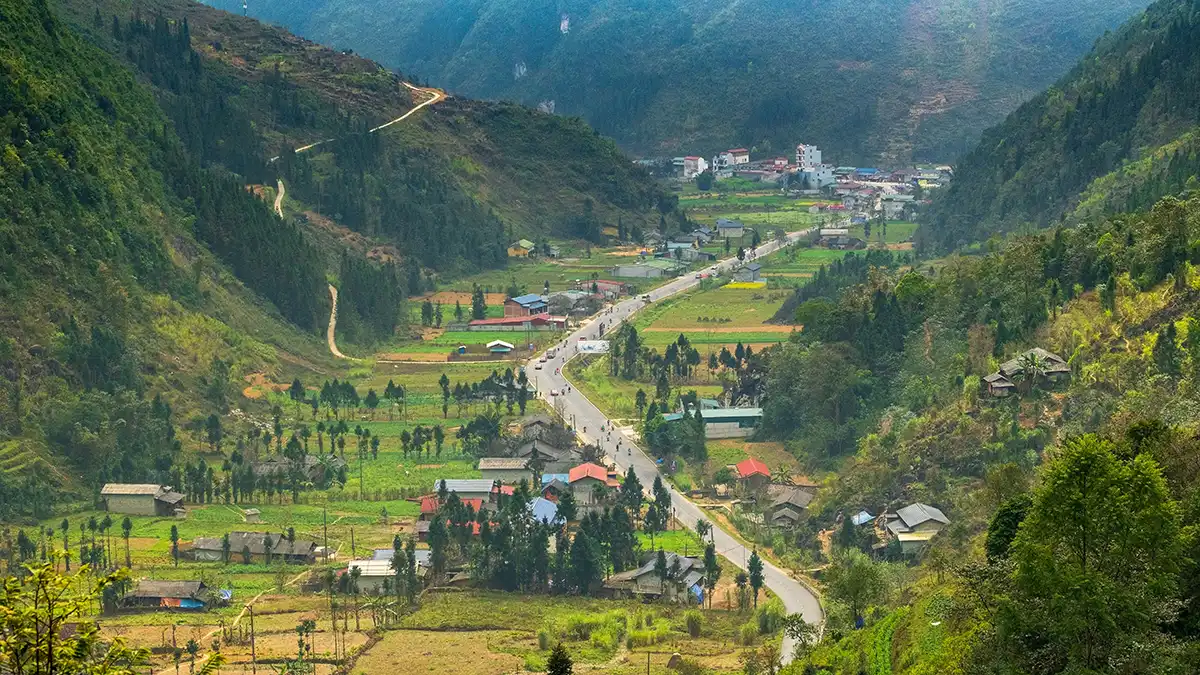
Vietnam is long, busy and easy to underestimate on a map. Three weeks gives you enough time for a strong backpacking route, but it is still not enough time to see every mountain town, every cave, every beach and every southern detour without burning out.
This guide is built for first-time backpackers who want a realistic public-transport-first route. It uses Hanoi and Ho Chi Minh City as the main anchors, keeps the north-to-south flow simple, and gives you clear permission to skip stops when weather, budget or energy makes the route feel too heavy.
Table of contentsJump to a section
Quick Answer: What Is the Best 3 Week Vietnam Backpacking Route?
For most first-time backpackers, the best 3 week Vietnam backpacking route is:
Hanoi -> Ha Giang or Sapa -> Ninh Binh -> Lan Ha Bay or Ha Long Bay -> Phong Nha -> Hue -> Hoi An / Da Nang -> Ho Chi Minh City -> Mekong Delta or Phu Quoc.
This route gives you a strong north-to-south Vietnam itinerary without pretending you can see everything. It includes one big northern adventure, karst scenery, one bay trip, an optional cave detour, central Vietnam, a rest zone, Ho Chi Minh City and one southern ending.

Use the map as a route shape, not a checklist: start in Hanoi, choose one northern mountain stop, slow down in Ninh Binh, add one bay trip if it fits your budget, decide whether Phong Nha deserves the detour, continue through Hue, rest in Hoi An or Da Nang, then finish in Ho Chi Minh City with either the Mekong Delta or Phu Quoc.
Three weeks is enough for a memorable Vietnam backpacking itinerary. It is not enough for both Sapa and Ha Giang, every bay, every cave, every central Vietnam town, Da Lat, Mui Ne, Nha Trang, Mekong Delta and Phu Quoc in a relaxed way.
Who This 3 Week Vietnam Backpacking Route Is For
This route is for travelers who want a real backpacking route, not a private-driver holiday and not a rushed checklist. You will have long transfers, early starts, hostel decisions and weather adjustments. The point is to build enough space into the route that those normal travel frictions do not ruin the trip.
You want public transport first
This route is built around buses, trains, shared transfers, occasional flights and local taxis, with tours where they make the logistics safer or easier.
You like social travel
Hanoi, Ha Giang, Tam Coc, Cat Ba, Phong Nha, Hoi An and Ho Chi Minh City all work well for hostels, group tours and meeting other travelers.
You want variety without chaos
The route includes cities, mountains, karst scenery, caves, food, coast, history and one southern ending, but it keeps the choices selective.
You hate long travel days
Vietnam is a long country. Even a sensible route includes sleeper buses, train rides, airport transfers or long van journeys.
You only want a beach holiday
If beach time is the whole goal, choose a shorter route with Hoi An, Da Nang, Phu Quoc or another coast-focused plan instead.
You want every famous stop
This article intentionally leaves things out. That is what makes the route more usable.
3 Weeks in Vietnam vs 7, 10 and 14 Days
Trip length changes the kind of Vietnam trip you should plan. Three weeks is not just a 14 day Vietnam itinerary with seven extra stops added. It should give you more space, better transport choices and fewer rushed decisions.
One region, fast highlights
Seven days usually means Hanoi, Ninh Binh and Lan Ha or Ha Long Bay; Central Vietnam only; or Ho Chi Minh City with the Mekong Delta. It is a regional sampler, not a countrywide route.
A selective first trip
Ten days can connect Hanoi, Ninh Binh, a bay trip, Hoi An / Da Nang and Ho Chi Minh City if you use flights or firm transport choices.
A fuller first-time route
Two weeks can feel complete, but it still needs careful cuts. You will probably choose between mountains, caves, beaches and southern detours.
The slower backpacking route
Three weeks gives you room for hostels, public transport, one northern adventure, central Vietnam rest days, an optional cave stop and a flexible southern ending.
What 7 Days in Vietnam Looks Like
With one week, choose one region. A northern route could be Hanoi, Ninh Binh and Lan Ha or Ha Long Bay. A central route could be Hoi An, Da Nang and Hue. A southern route could be Ho Chi Minh City and the Mekong Delta. Trying to cross the whole country in seven days usually turns into airport logistics.
What 10 Days in Vietnam Looks Like
Ten days is a balanced first trip if you stay selective. A practical route is Hanoi, Ninh Binh, Lan Ha or Ha Long Bay, Hoi An / Da Nang and Ho Chi Minh City. It gives variety, but it does not leave much room for Ha Giang, Phong Nha or Phu Quoc.
What 14 Days in Vietnam Looks Like
Two weeks lets you build a fuller north-to-south or south-to-north route. It can include more of Central Vietnam and one or two long jumps, but you still need to choose carefully. If you add everything, the route becomes busy again.
What 3 Weeks Gives You
Three weeks gives you fewer rushed transitions, more public transport, one meaningful northern adventure, a choice between Phong Nha and extra central Vietnam time, rest days, hostel social flow and either a beach or Mekong ending.
What Still Does Not Fit in 3 Weeks
Even with three weeks, you should not assume you can comfortably include both Sapa and Ha Giang, all three bays, every central Vietnam stop, Da Lat, Mui Ne, Nha Trang, Phu Quoc and the Mekong Delta. More time should mean a better route, not a longer checklist.
North to South or South to North?
North to south is the easiest default for most backpackers. It starts with Hanoi, puts the mountain or adventure section early, follows a common social flow, and lets you end with Ho Chi Minh City, the Mekong Delta or beach time.
South to north still works. Choose it if your flights are better, your weather window makes more sense that way, or you prefer ending in Hanoi and the northern mountains.
You want the most common backpacker flow
Hanoi is a strong starting hub, and many backpackers move from the north toward Central Vietnam and Ho Chi Minh City.
You want the hard section earlier
Ha Giang, Sapa and northern travel can be tiring. Doing them early often feels easier than saving them for the end.
Flights into Ho Chi Minh City are better
Route direction matters less than good flight timing, reasonable prices, entry planning and onward connections.
You want to finish in Hanoi
This can work well if the north has the best weather at the end of your trip or if you are continuing into another northern route.
The flight deal is much better
If the price or schedule difference is large, start with the better flight and adapt the route. Do not overpay just to follow a standard direction.
The Recommended 21 Day Vietnam Backpacking Itinerary
Use this as a backbone, not a contract. Weather, people you meet, tour availability, energy and budget can all change the route. The safest way to use this plan is to book the first few nights and keep later sections flexible where possible.
- Days 1-3HanoiDetails
- Days 4-7Ha Giang or SapaDetails
- Days 8-9Ninh BinhDetails
- Days 10-11Lan Ha, Ha Long or Bai Tu Long BayDetails
- Days 12-13Phong NhaDetails
- Days 14-15HueDetails
- Days 16-18Hoi An or Da NangDetails
- Days 19-21Ho Chi Minh City, Mekong Delta or Phu QuocDetails
Hanoi
Nights: 3. Main reason: arrival, food, Old Quarter, admin and northern transport planning.
Transport note: arrive by flight, then use walking, Grab and local taxis. Adjust if: you arrive late or jet-lagged; protect the first night.
Ha Giang or Sapa
Nights: 3 to 4. Main reason: northern mountains, trekking or loop adventure.
Transport note: buses and tours are common, but details change by operator. Adjust if: weather, safety or fatigue makes the mountains too much.
Ninh Binh
Nights: 2. Main reason: karst scenery, boat rides, cycling and recovery after the north.
Transport note: use buses, trains or vans from Hanoi or northern connections. Adjust if: you need a rest day after Ha Giang.
Lan Ha / Ha Long / Bai Tu Long
Nights: 1 to 2. Main reason: bay scenery, kayaking and a boat-based break from land travel.
Transport note: Cat Ba, Hanoi and cruise pickups vary by operator. Adjust if: budget is tight or cruise reviews look weak.
Phong Nha
Nights: 2. Main reason: caves, national park scenery and a smaller backpacker town.
Transport note: expect a long move south. Adjust if: caves are not a priority or weather affects cave access.
Hue
Nights: 1 to 2. Main reason: food, Imperial City, tombs and a slower historical stop.
Transport note: buses and trains connect from Phong Nha / Dong Hoi. Adjust if: history is not a priority or you need more rest.
Hoi An / Da Nang
Nights: 3. Main reason: mid-trip reset, food, beach, tailoring, cafes and easier central Vietnam pacing.
Transport note: go via Da Nang for airport, train and road connections. Adjust if: you prefer Da Nang’s beach-city base over Hoi An’s atmosphere.
Ho Chi Minh City, Mekong Delta or Phu Quoc
Nights: 2 to 3. Main reason: big-city ending, food, museums, airport logistics, river country or beach time.
Transport note: a flight from Da Nang to the south can protect the route. Adjust if: your departure flight is close.
Day 1-3: Hanoi - Arrival, Food and First Backpacker Base
Why Start in Hanoi
Hanoi is the easiest northern starting point. It gives you international and domestic flight access, a dense hostel scene, good food, and onward transport toward Ha Giang, Sapa, Ninh Binh and the bay areas.
It is also a useful place to slow down before the route gets harder. Use the first days for SIM or eSIM setup, laundry, weather checks, hostel conversations, tour research and transport decisions.
What to Do in Hanoi
Keep the Hanoi section simple. Walk the Old Quarter, circle Hoan Kiem Lake, eat well, try egg coffee, choose one museum or cultural stop, and do not fill every hour before your first big transfer.
For more detailed planning, use the Hanoi Travel Guide.
Backpacker Notes
Stay central if you want the easiest first days. Choose a social hostel if you want to meet people quickly, or a quieter hostel if you know you will need sleep before Ha Giang, Sapa or a long bus.
Avoid booking every onward leg too tightly from day one. Vietnam rewards a little flexibility, especially when weather, hostel recommendations and other travelers change your plans.
What to Skip If Tired
Skip complicated day trips before the route starts. Skip too many museums in one day. Skip late nightlife before an early transfer. The first three days should make the route easier, not make you tired before it begins.
Day 4-7: Ha Giang Loop or Sapa - Choose One Mountain Stop
For most three-week routes, choose Ha Giang or Sapa, not both. Doing both can eat too much time, add weather risk and leave you with less energy for Ninh Binh, Central Vietnam and the south.
You want the biggest adventure section
Ha Giang is the more demanding choice. It suits travelers who want long road days, dramatic northern scenery and a social tour or easy-rider experience.
You want easier mountain logistics
Sapa usually works better if you prefer trekking, trains or buses, and mountain scenery without committing to several days on the Ha Giang Loop.
You want the route to stay balanced
Both stops together can make the north too heavy. Choose one, then use the saved time for Ninh Binh, Hoi An / Da Nang or a buffer day.
Ha Giang Safety Note
Treat Ha Giang as a serious road trip, not a casual scooter rental. Self-riding is not for beginners. License, insurance and local rules need checking before you commit. Bad weather changes the risk, and riding at night is a bad idea for most travelers.
For many first-time backpackers, an easy rider or careful small-group tour is the better option. Check recent reviews, inclusions, group size, luggage handling, safety briefing, helmets, rain plans and cancellation terms.
Day 8-9: Ninh Binh - Karst Scenery and Recovery Time
Why Ninh Binh Works Well After the North
Ninh Binh slows the route down at the right time. After Ha Giang or Sapa, you get river scenery, limestone karsts, cycling routes, cafes and quieter evenings. It is also more flexible than a cruise because you can choose how much to do each day.
What to Do
Choose one boat ride, usually Trang An or Tam Coc, then add cycling, Hang Mua if the weather and your energy are good, and an easy evening in Tam Coc or Trang An. Do not turn Ninh Binh into another checklist.
The Ninh Binh Travel Guide and Ha Long Bay vs Ninh Binh comparison can help if you are deciding whether both Ninh Binh and a bay trip make sense.
Where to Stay
Tam Coc is usually the easier backpacker base because it has more hostels, restaurants and traveler infrastructure. Trang An is quieter and better if you want countryside calm. Both can work.
What to Skip If Tired
Skip doing both Trang An and Tam Coc. Skip stacking too many temples and viewpoints into one day. Skip renting a scooter if you are not confident. A bicycle, Grab where available, local taxi or arranged transfer can be enough.
Day 10-11: Lan Ha Bay, Ha Long Bay or Bai Tu Long Bay
Why Add a Bay Stop
A bay stop gives you limestone islands, boat time, kayaking, a different pace and a classic northern Vietnam landscape. It is not the same experience as Ninh Binh, even though both have karst scenery.
Lan Ha Bay vs Ha Long Bay vs Bai Tu Long Bay
Ha Long Bay is the classic name with the widest range of cruise options. Lan Ha Bay is often connected with Cat Ba and can work well for backpackers. Bai Tu Long Bay is usually quieter and more cruise-focused. The best choice depends on route, budget, pickup point, weather and operator quality.
Use the dedicated guide to compare Ha Long Bay, Lan Ha Bay and Bai Tu Long Bay.
Day Trip or Overnight?
An overnight trip is usually better if your budget allows, but a bad overnight cruise is worse than a simple day trip. Check recent reviews, cabin type, route, pickup point, meals, inclusions, cancellation terms and what happens in poor weather.
What to Skip If Budget Is Tight
Skip low-review cruises, rushed upgrade-heavy packages and any operator that is vague about the route or inclusions. If the bay trip strains your budget, Ninh Binh plus extra central Vietnam time may be a better use of the money.
Day 12-13: Phong Nha - Optional Cave Detour
Add Phong Nha If…
Add Phong Nha if caves, national park scenery and a smaller backpacker town genuinely appeal to you. It can break up the long route south and give the trip a different texture after Hanoi, Ninh Binh and the bays.
Skip Phong Nha If…
Skip Phong Nha if caves are not a priority, the weather is poor, cave access is limited, your budget is getting tight, or you are tired of long transfers. It is a detour, not a mandatory stop.
What to Do in Phong Nha
Choose one or two cave experiences, keep an eye on weather and access conditions, and leave space for a slow day. Cave tours, national park routes and activity access can change, so check current details before you build your transport around this stop.
Day 14-15: Hue - Food, Imperial City and a Slower History Stop
Why Hue Belongs in the Route
Hue gives the route a quieter cultural stop between Phong Nha and Hoi An / Da Nang. It is best for the Imperial City, royal tombs, riverside walks and central Vietnamese food.
What to Do With One or Two Days
With one day, focus on the Imperial City and food. With two days, add a tomb, pagoda or slower riverside time. Check current opening hours and ticket rules before visiting because details can change.
What to Skip If Short on Time
Skip trying to see every tomb. Skip Hue as a rushed day trip if history matters to you. If history does not matter, you can shorten Hue and add the time to Hoi An, Da Nang or a rest day.
Day 16-18: Hoi An and Da Nang - The Mid-Trip Rest Zone
Why This Is the Best Rest Point
By the time you reach Central Vietnam, you have probably had city days, mountain roads, karst scenery, a cruise decision and at least one long transfer. Hoi An / Da Nang is where the route should slow down.
Use this section for laundry, sleep, cafes, beach time, food, tailoring if it matters, and a softer pace. This is not wasted time. It is what makes the final week more enjoyable.
Stay in Hoi An If…
Stay in Hoi An if old-town atmosphere, lantern evenings, cafes, tailoring and walkability matter most. It is more atmospheric and easier for slow evenings.
Read the Hoi An Travel Guide if you are leaning that way.
Stay in Da Nang If…
Stay in Da Nang if beach access, modern hotels, airport logistics, easier Grab rides and a more spacious city base matter more. It is usually the better choice if you want My Khe Beach, a gym or pool break, or a simpler connection to flights and trains.
Use the Da Nang Travel Guide if you want help choosing areas.
Suggested 3-Day Central Vietnam Flow
Day one: arrive, rest, eat and walk. Day two: Hoi An old town or Da Nang beach, depending on where you stay. Day three: slow beach time, Marble Mountains, My Son, a food experience or another rest day. Do not fill every hour.
What to Skip If Tired
Skip Ba Na Hills if budget, weather or crowds make it feel wrong. Skip extra day trips if you need sleep. Skip moving hotels between Hoi An and Da Nang unless there is a clear reason.
Day 19-21: Ho Chi Minh City, Mekong Delta or Phu Quoc
Ho Chi Minh City: Best for Food, Museums and Departure Logistics
Ho Chi Minh City is hot, fast and useful. It works well for food, museums, nightlife, airport logistics and southern connections. Use Grab or trusted taxis, keep phone and bag awareness high near busy streets, and avoid planning a tight airport transfer after a long tour return.
Choose Mekong Delta If…
Choose the Mekong Delta if you want river scenery, boat travel, local food, fruit, homestay-style experiences or a more active cultural ending. A short organized trip can be more efficient than trying to solve every connection independently near the end of the route.
Choose Phu Quoc If…
Choose Phu Quoc if you want a beach finish and your flight routing, budget and weather make sense. It is not essential to a first Vietnam backpacking route. It can be a good decompression stop, but it usually adds flight or ferry planning.
Skip Both If…
Skip both Mekong Delta and Phu Quoc if your departure is close, you are tired, weather is awkward, or you would rather finish slowly in Ho Chi Minh City. A calm final day is better than missing a flight because the last detour was too ambitious.
Full Route Summary Table
Use this section as a practical route check: each card shows why the stop belongs, how long to stay, and when it is smarter to cut it.
3 nights
Best for: arrival, food, hostels and route setup. Transport: flight, Grab, local taxis, buses and trains. Skip if: you cannot, but keep it short if cities overwhelm you.
3 to 4 nights
Best for: mountains and social backpacking. Transport: buses, tours, easy riders, trekking operators. Skip if: weather, road safety or fatigue is the main concern.
2 nights
Best for: karst scenery and recovery. Transport: train, van or bus. Skip if: you are cutting hard, though it is one of the most useful route buffers.
1 to 2 nights
Best for: bay scenery and boat time. Transport: cruise pickup, Cat Ba transfer or Hanoi connection. Skip if: budget is tight or cruise reviews are weak.
2 nights
Best for: caves and a smaller backpacker stop. Transport: long bus or train plus transfer. Skip if: caves are not a priority.
1 to 2 nights
Best for: history and food. Transport: train, bus or transfer. Skip if: you have no interest in the Imperial City or tombs.
3 nights
Best for: rest, food, beach and central Vietnam pacing. Transport: Da Nang airport, train, taxis, buses. Skip if: do not skip completely; shorten, but keep some rest.
2 nights
Best for: food, museums, flights and southern connections. Transport: flight, bus, Grab, airport transfer. Skip if: your flight leaves elsewhere.
1 to 3 nights
Best for: river culture or beach ending. Transport: tours, buses, ferries or flights depending on choice. Skip if: departure timing is tight.
Alternative 3 Week Vietnam Backpacking Routes
The default route is not the only sensible plan. Choose an alternative if it better matches your energy, budget, weather or travel style.
North-to-south route
Suits: first-timers who want the standard backpacking flow. Skips: deep beach time. Logic: buses, trains and one flight if needed. Risk: too many long transfers if you do not add buffers.
South-to-north route
Suits: travelers with better flights into Ho Chi Minh City. Skips: nothing by default. Logic: same route reversed. Risk: finishing with the hardest mountain section.
Slower budget route
Suits: travelers avoiding expensive tours. Skips: Ha Giang, premium cruises or flights. Logic: trains and buses. Risk: fewer big-ticket experiences.
Nature and adventure route
Suits: travelers prioritizing mountains, caves and outdoor stops. Skips: some city and beach time. Logic: more detours. Risk: weather can affect multiple highlights.
Beach and rest route
Suits: travelers who want slower coastal time. Skips: some mountain or cave sections. Logic: Hoi An, Da Nang, Phu Quoc or other coast-focused choices. Risk: weather and extra flights.
No-motorbike route
Suits: safety-first travelers. Skips: self-riding. Logic: trains, buses, tours, taxis and easy riders. Risk: some sections cost more with drivers or tours.
Route without Ha Giang
Suits: travelers who do not want long road days. Skips: the loop. Logic: add Sapa, Ninh Binh, Hoi An or Phu Quoc time. Risk: you may feel like you missed the famous northern loop, but the pacing is often better.
Route without Phong Nha
Suits: travelers not interested in caves. Skips: central inland detour. Logic: easier move toward Hue and Hoi An. Risk: missing a distinctive landscape.
Phu Quoc or Mekong ending
Suits: beach travelers or river-culture travelers. Skips: the other southern option. Logic: choose one. Risk: trying to squeeze in both before departure.
Rainy-season flexible route
Suits: travelers booking as they go. Skips: fixed assumptions. Logic: watch regional weather and adjust. Risk: peak-season accommodation can be tighter.
How to Travel Around Vietnam on This Route
Transport is where many Vietnam backpacking routes become unrealistic. Plan the whole route around the fact that advertised travel times are not the same as door-to-door travel days.
Sleeper Buses
Sleeper buses are common on backpacker routes, but quality varies. Check recent reviews, pickup and drop-off points, luggage handling, arrival time and whether the bus type is really what you expect. Keep valuables with you, not in stored luggage.
Avoid stacking too many overnight buses in a row. One uncomfortable night is manageable. Several can ruin the next destination.
Trains
Trains can be more comfortable than buses on some legs, but schedules, classes and availability need checking. They are useful when you want more space, a steadier ride or a break from road travel.
Use the official Vietnam Railways source where possible before committing to important train legs.
Domestic Flights
Flights can protect the route when the overland jump is too long. A Da Nang to Ho Chi Minh City flight, for example, can save energy near the end of the trip. Check baggage rules, airport transfer time and the real cost before deciding.
Grab, Taxis and Local Transfers
Grab, taxis and local transfers are useful in cities and for awkward short connections. Availability and pricing can vary, so keep a backup plan for early mornings, late nights and airport transfers.
Open Bus Tickets
Open bus tickets can sound convenient, but they may tie you to operators or timings you do not like. For many backpackers, booking each leg as the route develops is more flexible. If you use an open ticket, understand the rules before paying.
Vietnam Backpacking Budget: How Much Money Do You Need for 3 Weeks?
Costs change by season, exchange rates, transport choices, tour quality and how much comfort you want. Instead of one fixed number, think in budget styles.
Hostels, street food and fewer tours
This works if you choose dorms, simple food, buses and free or low-cost activities. The challenge is that Ha Giang, a bay cruise, Phong Nha caves and flights can still be meaningful fixed costs.
Hostels plus selected splurges
This is the most realistic backpacker style: dorms or simple private rooms, street food, some cafes, a safer Ha Giang operator, a better-reviewed bay trip and a flight when it saves the route.
Private rooms and easier transfers
This style uses more private rooms, flights, better buses, private transfers in awkward places and higher-quality tours. It can make the route smoother, but the cost rises quickly.
Fixed Costs vs Daily Costs
Daily costs are food, local transport, laundry, coffee, dorm beds and small attractions. Fixed costs are the bigger decisions: Ha Giang Loop, bay cruise, Phong Nha caves, domestic flights, travel insurance, private rooms and Phu Quoc.
What to Cut If the Budget Is Tight
Cut the weakest expensive item first. That might be Phong Nha, Ba Na Hills, a premium cruise, a domestic flight that is not necessary, private rooms, Phu Quoc or too many paid tours. Do not cut safety essentials to save a little money.
Where to Stay: Hostel and Social Travel Strategy
Accommodation shapes the whole backpacking route. You do not need a party hostel every night, but you do need the right base in the right town.
Best Places to Stay in Hostels
Hanoi, Ha Giang, Tam Coc, Cat Ba, Phong Nha, Hue, Hoi An, Da Nang and Ho Chi Minh City all have hostel or guesthouse options that fit different styles. Stay central when arrivals are late or transfers are early.
Social Hostels vs Party Hostels
Social does not have to mean sleepless. Read recent reviews for noise, cleanliness, lockers, staff help, tour quality and location. If the next day has a long transfer, choose sleep over nightlife.
When to Choose a Guesthouse or Homestay
Choose a guesthouse or homestay when you need rest, privacy, a quieter location or a more local atmosphere. This is especially useful after Ha Giang, in Ninh Binh, in Phong Nha, or during a mid-trip reset.
Where to Book Ahead
Book ahead for your first Hanoi nights, popular Ha Giang tours, peak-season bay trips, busy Hoi An / Da Nang dates, and any arrival that lands late at night or very early in the morning.
Can You Backpack Vietnam Without a Motorbike?
Yes. Most first-time backpackers do not need a motorbike for this route.
Where You Do Not Need a Motorbike
You do not need one in Hanoi, Ho Chi Minh City, Hoi An, Da Nang, most airport transfers, organized bay trips or many city-based day tours. Walking, Grab, taxis, buses, trains and tours cover most of the route.
Where a Motorbike Helps but Is Not Essential
A motorbike can help in Ninh Binh, Phong Nha, Hue and some beach or countryside areas, but it is not essential. If you are not confident, use bicycles, arranged transfers, taxis, tours or a driver.
What to Do Instead
Use easy riders, private drivers, small group tours, bicycles, trains, buses and Grab where available. It may cost more in a few places, but it is better than forcing a vehicle choice that you cannot manage safely.
Ha Giang Without Self-Riding
Ha Giang can still work without self-riding. Look at easy-rider tours or small-group tours with experienced local drivers. Check insurance, license implications, helmets, luggage handling, route length, weather policy and recent safety reviews before booking.
Route Fatigue Is Real: Where to Rest
The route can look reasonable on paper and still feel hard on the ground. Heat, traffic, noisy dorms, late buses, early arrivals, weather and constant decisions add up.
Signs Your Route Is Too Fast
You are not eating properly. You keep arriving before sunrise and wasting the next day. You are skipping the thing you came to see because you are exhausted. Every booking feels urgent. You are choosing tours only because there is no time to plan independently.
Best Places to Slow Down
Hoi An / Da Nang is the best mid-route rest zone. Ninh Binh works well after the mountains. Phong Nha can be a slower countryside stop if caves interest you. Ho Chi Minh City can work as a practical final reset before flying out.
How to Add Buffer Days
Choose Ha Giang or Sapa, not both. Skip Phong Nha if caves are not a priority. Choose Mekong Delta or Phu Quoc, not both. Add one more night in Hoi An / Da Nang. Keep your final departure day simple.
Best Time for a 3 Week Vietnam Backpacking Route
There is no perfect month for every part of Vietnam. The country stretches across different weather zones, so you are usually balancing northern mountain conditions, central Vietnam rain risk and southern heat or wet-season patterns.
Best Overall Months
Spring and autumn shoulder periods are often useful planning windows, but conditions can still vary by region and year. Check current weather patterns before locking in outdoor-heavy sections like Ha Giang, Phong Nha, the Hai Van Pass, Cham Islands, Phu Quoc or cave trips.
Northern Vietnam Weather
The north can be cool, misty, hot, wet or storm-affected depending on season and elevation. Mountain plans need flexibility. If the forecast is poor, choose a safer transport option or change the order.
Central Vietnam Weather
Central Vietnam can be affected by heat, rain, storms and rougher sea conditions depending on time of year. Weather can influence Phong Nha, Hue, Hoi An, Da Nang, Hai Van Pass and beach plans.
Southern Vietnam Weather
The south is usually warmer, but rain patterns, storms and island connections can still affect plans. Phu Quoc and Mekong Delta decisions should be made with current weather and transport details in mind.
How to Adjust the Route by Season
Keep the route flexible. If the north looks poor, spend more time in Hanoi, Ninh Binh or Central Vietnam. If Central Vietnam is wet, shorten cave or beach plans. If the south is awkward near departure, keep Ho Chi Minh City as the final base.
Safety, Scams and Common Backpacker Mistakes
Vietnam is a popular backpacking destination, but the route still needs practical caution. The goal is not to be fearful. The goal is to avoid predictable problems.
Biggest Safety Risks
Traffic, motorbike accidents, tired transport decisions, bad weather, weak tour operators, phone or bag theft, and poor judgment after late nights are bigger risks than dramatic scenarios.
Common Scams and Annoyances
Watch for unclear taxi pricing, weak “VIP” bus claims, unclear cruise inclusions, motorbike damage disputes, vague Ha Giang tour inclusions, market overcharging and pressure to book quickly. Use recent reviews and written details where possible.
Backpacker Mistakes to Avoid
Do not leave valuables in bus hold luggage. Do not self-ride if you are inexperienced or uncovered. Do not book the cheapest cruise or loop tour without reading details. Do not arrive in unfamiliar places very late if you can avoid it. Do not put every expensive tour back to back.
Solo Backpacking Vietnam
Vietnam can work well for solo backpackers because the route has a strong hostel network, popular group tours and clear backpacker hubs. You can meet people without staying in party hostels every night.
Is Vietnam Good for Solo Backpackers?
Yes, if you stay central, keep transport plans clear, choose well-reviewed accommodation, and leave room for social plans to change. Ha Giang, Ninh Binh, Cat Ba, Phong Nha, Hoi An and Ho Chi Minh City can all be social in different ways.
Is Vietnam Good for Solo Female Backpackers?
Many solo female travelers visit Vietnam, but planning still matters. Choose central accommodation, avoid isolated late arrivals where possible, use trusted transport at night, keep valuables secure and read recent hostel reviews for location and staff support.
How to Meet People Without Party Hostels
Choose social-but-quiet hostels, walking tours, cooking classes, food tours, Ha Giang easy-rider groups, bay cruises, Phong Nha tours and hostel common areas. You do not need to choose the loudest hostel to meet people.
Food, Coffee and Practical Backpacker Basics
Food is one of the best parts of a Vietnam backpacking route. Keep it simple and regional rather than trying to eat from a giant list.
Food to Try Along the Route
In Hanoi, try pho, bun cha and egg coffee. In Hue, look for bun bo Hue and central Vietnamese snacks. Around Hoi An and Da Nang, look for cao lau, mi quang, seafood and coffee. In Ho Chi Minh City, try com tam, banh mi and neighborhood food stalls. In the Mekong Delta, fruit, river food and local dishes become part of the experience.
Street Food and Hygiene
Choose busy places, watch turnover, be careful with raw ingredients if your stomach is sensitive, and do not overload your first day with everything at once. If you get sick, slow down and protect your buffer days.
SIM, eSIM, Laundry, Cash and Apps
Set up mobile data early, keep some cash for smaller places, use cards where accepted but do not rely on them everywhere, download maps, keep transport confirmations offline, and use laundry stops before long route sections.
What to Skip With 3 Weeks in Vietnam
The best route is not the route with the most stops. It is the route you can actually enjoy.
Do not force both Sapa and Ha Giang
Choose both only if northern mountains are the main purpose of the trip and you are willing to cut elsewhere.
Skip Phong Nha if caves are not a priority
Phong Nha is worth it for the right traveler, but the detour is not essential for everyone.
Skip Phu Quoc if beach time is not the goal
It adds transport planning and can feel disconnected from the main route if you are only going because it sounds famous.
Skip Mekong Delta if departure timing is tight
A final Ho Chi Minh City buffer is better than a rushed river tour that risks your flight home.
Skip the cheapest cruises and loop tours
These are safety, comfort and quality decisions. Read recent reviews and understand what is included.
Skip self-riding if you are not experienced or covered
Use easy riders, drivers or tours instead. A good trip is not worth risking for a vehicle you cannot handle safely.
Skip too many overnight buses
They save money on paper but can cost you the next day. Use them selectively.
Helpful Booking Tools
Use booking tools after the route logic is clear. They are useful for comparing options, but they should not decide the route for you.
Affiliate booking tools: The tools below contain affiliate links. If you make an eligible booking through them, WeltFox earns a commission at no additional cost to you. Read our full affiliate disclosure.
Useful Official Links
Use official and reliable sources for volatile details, especially visas, transport, safety advice and heritage-site information.
Related Vietnam Travel Guides
Use these guides to fill in the destination details without making this route article too heavy.
FAQ
FAQs About Backpacking Vietnam for 3 Weeks
Short answers for route direction, transport, budget, safety and what to skip.
Is 3 weeks enough for Vietnam?
Yes, three weeks is enough for a strong Vietnam backpacking route if you stay selective. It is not enough to see everything comfortably, so choose one mountain adventure, one bay experience, a central Vietnam rest zone and one southern ending.
What is the best 3 week Vietnam backpacking route?
A practical route is Hanoi, Ha Giang or Sapa, Ninh Binh, Lan Ha Bay or Ha Long Bay, Phong Nha, Hue, Hoi An or Da Nang, Ho Chi Minh City, then Mekong Delta or Phu Quoc.
Should I travel Vietnam north to south or south to north?
North to south is the easiest default for many backpackers because it follows a common social flow and starts with the northern adventure section. South to north is still fine if flights, weather or onward plans work better.
How much money do I need for 3 weeks backpacking Vietnam?
It depends on your travel style, season and fixed costs. Hostels, street food and buses keep costs lower, while Ha Giang tours, bay cruises, Phong Nha caves, domestic flights, private rooms and Phu Quoc raise the budget.
Can I backpack Vietnam without a motorbike?
Yes. Most first-time backpackers can use buses, trains, flights, Grab, taxis, tours, drivers and easy riders. A motorbike can help in some places, but it is not required for this route.
Are sleeper buses safe in Vietnam?
Sleeper buses are common, but quality varies. Check recent reviews, keep valuables with you, avoid overly tight arrivals, and do not stack too many overnight buses in a row.
Is Vietnam safe for solo backpackers?
Vietnam can work well for solo backpackers with normal precautions. Stay central, use well-reviewed hostels, keep transport plans clear, protect valuables and avoid risky late-night arrivals where possible.
Should I choose Sapa or Ha Giang?
Choose Ha Giang for the bigger road-trip adventure and a strong social tour experience. Choose Sapa for easier trekking logistics and a softer mountain stop. Most three-week routes should not do both.
Should I choose Ha Long Bay or Ninh Binh?
They are different experiences. Ha Long or Lan Ha is boat-based bay scenery, while Ninh Binh is land-based karst scenery with cycling and river trips. With three weeks, you can do both if budget and timing allow.
Is Phong Nha worth adding to a 3 week Vietnam route?
Phong Nha is worth adding if caves, national park scenery and a smaller backpacker town appeal to you. Skip it if caves are not a priority, weather is poor, or the route already feels tiring.
Should I visit Mekong Delta or Phu Quoc?
Choose Mekong Delta for river scenery and a cultural southern ending. Choose Phu Quoc for beach decompression. With three weeks, most backpackers should choose one, not both.
How many rest days do I need in a 3 week Vietnam itinerary?
Plan at least two or three softer days. Hoi An / Da Nang is the best mid-trip rest zone, and Ninh Binh or Phong Nha can also help slow the route down.
What should I skip with 3 weeks in Vietnam?
Skip doing both Sapa and Ha Giang unless mountains are the main trip. Skip Phong Nha if caves are not a priority, skip one southern ending, avoid weak-value cruises and do not stack too many overnight buses.
Final Thoughts: Build a Route You Can Actually Enjoy
Three weeks is enough for a strong Vietnam backpacking trip. The best route is not the busiest one.
Choose one mountain adventure. Build in rest. Use public transport where it makes sense. Pay for safety where it matters. Skip things without guilt. Keep the route flexible for weather, energy and the people you meet along the way.
If a stop does not fit your budget, route or energy, leaving it out is not a failure. It is how you make the rest of the trip better.



Reader Notes
Share your thoughts
Have a question, update, or practical tip about 3 Week Vietnam Backpacking Route: Practical North-to-South Itinerary? Share it with other readers. Every comment and reply is reviewed before publication.
✓Moderated conversation
Rate this guide
Ratings appear here when available.
Conversation
Reader comments
Replies appear below the original comment after review.
Reader comments will appear here after review.
Add a note
Join the conversation
Share a useful update, a focused question, or a correction. Do not post personal information.