
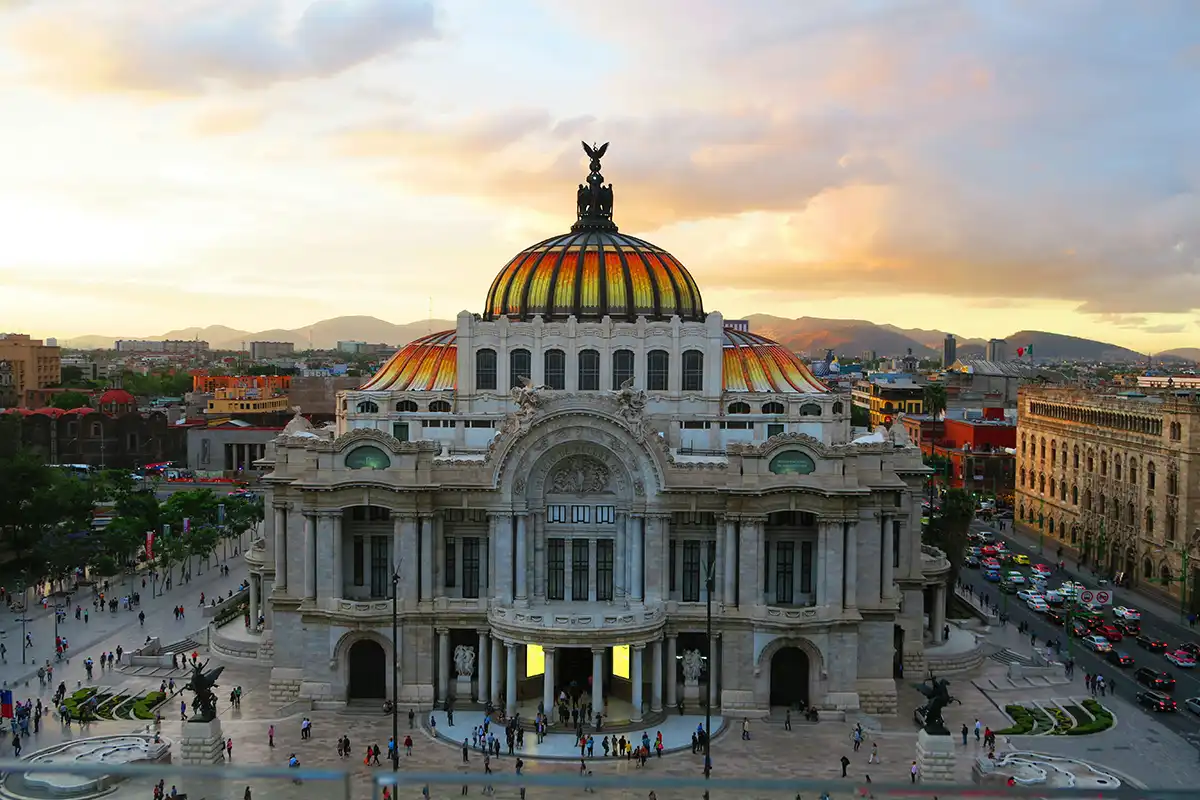
Palacio de Bellas Artes can be a brief architecture stop, a museum visit centered on Mexican muralism, or the anchor for a performance. Deciding which version you want is more useful than treating every possible activity as compulsory.
Its location beside Alameda Central also makes it one of the easiest landmarks to include in a first Historic Center route. The building, Palacio Postal and Torre Latinoamericana form a compact cluster; the Zocalo and additional museums belong to a longer plan.
Written by Giselle Hernandez Avila; reviewed and edited by Miyuru Kanchana.
Table of contentsJump to a section
Quick answer: is Palacio de Bellas Artes worth visiting?
Yes. It is a strong first-time Mexico City stop for architecture and cultural context, even if you only see the exterior. Going inside adds the murals, museum spaces and whatever temporary programming is available on the day.
The right amount of time depends on the visit you choose. An exterior look fits into a wider Historic Center walk. A museum visit needs its own block, while a performance should shape the rest of the day rather than being squeezed between sightseeing stops.

Choose the visit you actually want
Exterior and Historic Center walk
Choose this when time is limited. See the facade and dome, cross into Alameda Central, then continue to one or two nearby landmarks.
Museum and murals
Choose this when muralism, architecture or current exhibitions are the priority. Verify the museum arrangements before building the day around entry.
Performance visit
Treat a concert, dance performance or other event as a scheduled plan. Confirm the ticket, entrance and arrival instructions issued for that event.
You can combine the exterior and museum when access suits, but a performance does not need a full museum circuit on the same day. A clear choice leaves more room for the surrounding Historic Center.
What Palacio de Bellas Artes is
Palacio de Bellas Artes is both a major Mexico City landmark and an operating cultural venue. Construction began in 1904 under Italian architect Adamo Boari. Federico E. Mariscal directed the later completion, and the building opened in 1934.
That long construction history helps explain why the exterior and interior do not feel like a single simple style. More importantly for a visitor, the Palacio is not a preserved facade with a fixed experience. Museum displays, temporary exhibitions and performances can make two visits quite different.
What to see
Exterior architecture
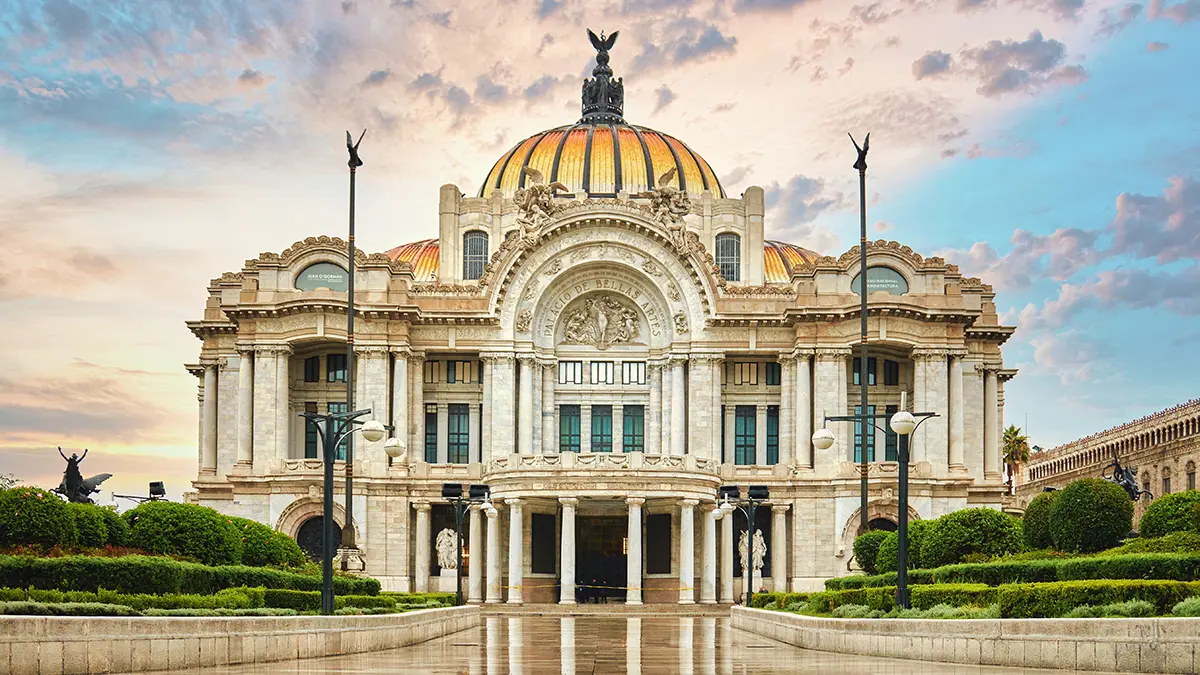
Start outside, even if you plan to enter. Step back toward Alameda Central for the broader view, then look more closely at the stone facade, sculptural details and colored dome. The traffic and pedestrian crossings around the building are busy, so use formal crossings rather than stepping into the road for a photograph.
Interior spaces and murals
The interior adds architectural detail and large-scale works connected with Mexican muralism. Artists represented in the building include Diego Rivera, Jose Clemente Orozco and David Alfaro Siqueiros.
Read the available labels rather than trying to move past every work quickly. If muralism is new to you, one carefully observed floor is more useful than treating the building as a photo checklist.
Temporary exhibitions and guided visits
Exhibitions and guided-visit arrangements change. Check the museum site for the current offer, language, meeting point and any reservation requirement. A listing found in an old article or search result may no longer describe the visit available on your date.
Performances
The venue hosts concerts, opera, dance and other cultural programming. Use the official calendar and the ticket information attached to the specific event. Do not assume museum admission includes a performance, or that a performance ticket gives access to every museum area.
How to plan the visit
Location and arrival
The Palacio stands on the eastern edge of Alameda Central in Mexico City’s Historic Center. Bellas Artes public transport stops are nearby, but the best arrival method depends on your accommodation, mobility needs, time of day and the rest of the route.
If you arrive by taxi or app-arranged ride, check the pickup point carefully because traffic controls and curb access can change. If you use public transport, verify the current route and station access through the operator. You can also open the Palacio location in Google Maps for live navigation.
How long to allow
Use the type of visit rather than a fixed online estimate:
- Exterior only: a brief stop within a wider walk.
- Museum and murals: a dedicated visit whose length depends on access, exhibitions and your pace.
- Guided visit: follow the current meeting and duration information from the organizer.
- Performance: reserve the event window plus enough time for the stated entry procedure.
This avoids promising that every visitor can complete the same route within one fixed window.
Tickets and access
Ticket requirements may differ between museum entry, a temporary exhibition, a guided visit and a performance. Check the exact official page for the experience you want rather than assuming one ticket covers everything.
The same caution applies to opening times, free-entry conditions, bags and photography. These are operational details, not permanent facts.
A practical Historic Center route
Keep the route compact. The following places are choices around the Palacio, not a requirement to visit every museum and viewpoint in one session.
Alameda Central
The easiest addition because it sits beside the Palacio. Use the park for the broad exterior view and a pause between indoor stops.
Palacio Postal
A nearby architecture stop. Confirm current public access and avoid treating working areas as unrestricted visitor space.
Torre Latinoamericana
A separate paid viewpoint choice when skyline views matter. Check current access before building it into the day.
Museo Franz Mayer
A useful alternative museum near Alameda Central. Choose it when design and decorative arts fit better than extending the walk toward the Zocalo.
For a longer Historic Center day, continue toward the Zocalo after Bellas Artes only when your energy, weather and current access conditions suit. The area contains enough museums and historic buildings for several visits; adding all of them does not improve one afternoon.
Accessibility, safety and visitor etiquette
If you need step-free access, seating, assistance or accessible restroom details, contact the venue before traveling. Historic-building routes and event arrangements can vary, and a general statement about the building is not a substitute for confirming the specific space you plan to use.
The surrounding Historic Center is busy. Keep phones and wallets controlled in crowds, pay attention at crossings and choose a sensible transport plan after an evening event. This is more useful than treating the entire district as either completely safe or unsafe.
Inside the Palacio, follow current instructions for bags, photography, food, restricted areas and performance etiquette. Ask before photographing people, and never use a flash where it is prohibited or disruptive.
Historic Center tour options
Use a guided option only when historical or artistic interpretation would improve the visit. Tour titles can be vague, so check the exact stops, entrance wording, guide language, meeting point and cancellation rules.
Official Palacio de Bellas Artes links
These pages cover the details most likely to change. Recheck the relevant page close to the visit.
Related Mexico guides
For a wider first trip, the Mexico City travel guide explains how Centro fits with Chapultepec, Coyoacán, neighborhood time and day trips.
FAQ
Palacio de Bellas Artes FAQ
Short answers for choosing the right kind of visit and verifying the details that can change.
Is Palacio de Bellas Artes worth visiting?
Yes. The exterior is a useful architecture stop on a first Historic Center walk, while the interior adds murals, museum spaces and current cultural programming when access suits.
Can you visit only the exterior?
Yes. An exterior visit pairs naturally with Alameda Central, Palacio Postal or Torre Latinoamericana. Enter only when the murals, exhibitions or current program are relevant to you.
How long should you spend at Palacio de Bellas Artes?
Treat the exterior as a brief stop, the museum as a dedicated visit and a performance as a scheduled plan. The actual time depends on current access, exhibitions, queues and your pace.
What can you see inside?
Depending on current access, the visit may include interior architecture, murals, museum spaces and temporary exhibitions. A performance uses its own ticket and entry arrangements.
Do you need a ticket?
Ticket rules differ between museum entry, temporary exhibitions, guided visits and performances. Check the official page for the exact experience and date.
Where is Palacio de Bellas Artes?
It is beside Alameda Central in Mexico City's Historic Center, near Palacio Postal and Torre Latinoamericana.
Is Palacio de Bellas Artes accessible?
Visitors with specific mobility, seating or assistance needs should contact the venue about the exact museum area or event. Access arrangements can vary within the building and by program.
What should you combine with the visit?
Alameda Central, Palacio Postal and Torre Latinoamericana form the simplest nearby cluster. Add another museum or continue toward the Zocalo only when time and energy allow.
Final recommendation
Choose the exterior walk when the wider Mexico City itinerary is already full. Choose the museum when muralism and the building itself are priorities. Choose a performance only after checking the official calendar and treating it as the day’s scheduled anchor.
The Palacio is easy to add because the surrounding sights are close, but that does not mean every Historic Center landmark belongs in the same visit. One clear Palacio experience and a compact nearby route will usually feel better than an overfilled checklist.
Reader Notes
Share your thoughts
Have a question, update, or practical tip about Palacio de Bellas Artes in Mexico City: Practical Visitor Guide? Share it with other readers. Every comment and reply is reviewed before publication.
✓Moderated conversation
Rate this guide
Ratings appear here when available.
Conversation
Reader comments
Replies appear below the original comment after review.
Reader comments will appear here after review.
Add a note
Join the conversation
Share a useful update, a focused question, or a correction. Do not post personal information.