
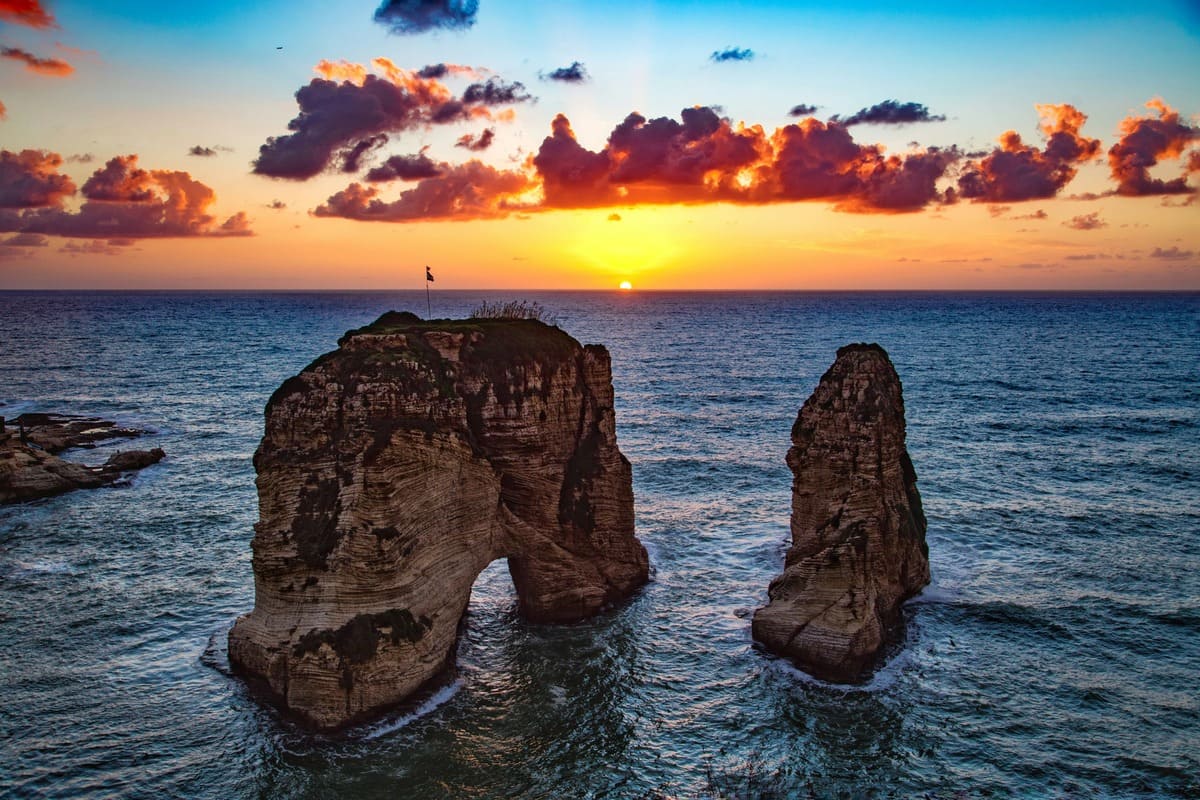
Lebanon draws interest for Beirut’s museums and coast, long-settled port cities, Roman and medieval sites, cedar landscapes, mountain communities, religious diversity, and a food culture that changes by region and occasion.
Those reasons do not settle whether a leisure trip is responsible now. Current official travel advice is severe, conditions can shift quickly, and access to flights, roads, medical care, insurance, or consular support may change with little notice.
This guide is for responsible research and future planning. It is not permission to ignore the advice issued for your passport or circumstances, and it does not identify any neighborhood or route as guaranteed safe.
Table of contentsJump to a section
Current Lebanon travel advisory
Government advice is written for different citizens and circumstances. Read the complete advisory issued for you rather than combining these summaries into one universal rule.
Level 4: Do Not Travel
- Current position
- The May 6, 2026 advisory says not to travel for any reason.
- Risks named
- Crime, terrorism, unrest, kidnapping, landmines, and armed conflict.
- Limit
- The advisory warns that U.S. emergency assistance can be limited and commercial aviation or airport access can be disrupted.
Severe region-based warnings
- Current position
- The FCDO advises against all travel to many specified areas and against all but essential travel to other areas.
- Practical effect
- Insurance may be invalid and consular help can be severely limited.
- Limit
- The official map and wording can change; check them immediately before any decision.
Do Not Travel
- Current position
- Smartraveller advises Australians not to travel to Lebanon.
- Practical effect
- Airspace, flights, roads, and departure options can change quickly.
- Limit
- Review the complete advice, including personal security and emergency contacts.
Avoid All Travel
- Current position
- Canada advises avoiding all travel to Lebanon.
- Practical effect
- Canada tells Canadians in Lebanon to leave and to prepare plans that do not depend on government-assisted departure.
- Limit
- Use the current advisory for regional warnings, registration, and consular details.
Travel against government advice can invalidate insurance. Consular teams may not be able to reach you, and an embassy is not a guaranteed evacuation service. Airport and road access can also change before an article can be updated.
Check your own government’s advice, not only the four examples above. If the wording differs, follow the source responsible for your passport, residence, insurance, and personal circumstances.
Should you plan a trip now?
Pause or postpone a leisure trip when any of these applies:
- your government advises against travel;
- your insurance excludes the country, region, or reason for disruption;
- flights or airport access are unstable;
- you cannot fund and arrange an independent departure;
- the plan enters an advised-against area;
- the trip depends on one road, flight, or fixed connection;
- you lack reliable communications, medication, or emergency funds.
This is not a risk checklist that turns the journey into an acceptable one once every box is ticked. A driver, flexible ticket, insurance policy, local contact, or calm social-media report does not cancel armed-conflict, kidnapping, aviation, or consular limits.
If you are already in Lebanon
Use current official instructions for your nationality and location. At a high level:
- follow local authorities and your embassy or consulate;
- monitor your government advisory, airline, and airport information;
- avoid demonstrations, political gatherings, military or security locations, and every advised-against area;
- keep passports, medication, essential supplies, and departure options under review;
- know how to contact your embassy or consular service;
- do not depend on a government evacuation;
- leave through a normal commercial option when your government advises departure and it is reasonably available.
Do not use a travel article for tactical movement through conflict-affected areas. The location-specific advice from authorities should control the decision.
Understanding Lebanon’s regions
This section is geographic orientation, not a current route recommendation. Advisory boundaries can cut across the simple regional labels used by travel guides, and conditions within a region are not uniform.
No regional description below is a safety assessment. Open the current advisory map before interpreting a place as reachable.
Beirut and Mount Lebanon
- Cultural role
- Museums, universities, seafront districts, dining, architecture, and recent history.
- Typical interest
- A first urban base and context for the rest of the country.
- Current check
- National and region-specific advice, demonstrations, airport-road access, and local restrictions.
Tripoli and the northern coast
- Cultural role
- Historic markets, religious architecture, a citadel, port history, and layered urban life.
- Typical interest
- A substantial city visit rather than a quick photo stop.
- Current check
- The exact UK and other government regional boundaries, local access, and transport conditions.
Byblos and Batroun
- Cultural role
- Archaeology, old harbors, historic streets, coastal dining, and contemporary town life.
- Typical interest
- Future coast-based day trips or a slower overnight choice.
- Current check
- Government advice, road access, attraction operations, and local events.
Qadisha, Bcharre and cedar areas
- Cultural role
- Monastic landscapes, cedar heritage, mountain communities, and hiking terrain.
- Typical interest
- A separate highland stay or carefully planned day outing.
- Current check
- Road, weather, trail, land-access, and advisory conditions.
Chouf and historic villages
- Cultural role
- Palaces, stone villages, religious diversity, forests, and regional history.
- Typical interest
- Beiteddine, Deir el Qamar, and nature as one future-planning cluster.
- Current check
- Specific roads, seasonal access, official advice, and site operations.
Bekaa and Baalbek
- Cultural role
- Roman heritage, agricultural landscapes, food, and long regional histories.
- Typical interest
- A major heritage branch only when official advice permits it.
- Current check
- Severe regional warnings, road access, site operations, and security conditions.
Sidon, Tyre and southern Lebanon
- Cultural role
- Historic ports, archaeology, religious sites, markets, and coastal landscapes.
- Typical interest
- Future research rather than a current route suggestion.
- Current check
- Government advisories often impose the strongest restrictions here; do not plan around them.

Places to research for a future trip
These places form a concise research list, not a checklist and not a claim that access is currently advisable. Typical time is intentionally broad because openings, roads, security conditions, and the pace of a future trip will need to be checked again.
Beirut and coast research
Use these cards to understand future trip roles. Do not reserve them while official advice or insurance makes the trip irresponsible.
Beirut
- Why it matters
- The strongest starting point for museums, food, seafront geography, and modern Lebanese history.
- Typical time
- Several days in a future trip, depending on museum and neighborhood access.
- Before travel
- Recheck the national advisory, demonstrations, local restrictions, and airport-road conditions.
National Museum of Beirut
- Why it matters
- Archaeological context for places encountered across Lebanon.
- Typical time
- Part of a day rather than a rushed arrival stop.
- Before travel
- Confirm official opening, access, and current local conditions.
Raouche and the Corniche
- Why it matters
- A clear view of Beirut's relationship with the Mediterranean and public waterfront life.
- Typical time
- A short outing or part of a wider Beirut day.
- Before travel
- Check local access, weather, demonstrations, and current advice.
Byblos (Jbeil)
- Why it matters
- A long-settled archaeological landscape beside a living coastal town.
- Typical time
- A substantial day trip or a slower overnight future stop.
- Before travel
- Confirm site operations, road access, and the current advisory.
Batroun
- Why it matters
- Historic streets, coastal life, dining, and a different pace from Beirut.
- Typical time
- Part of a day or an overnight in a future north-coast plan.
- Before travel
- Verify road, event, accommodation, and advisory conditions.
Tripoli
- Why it matters
- Markets, Mamluk-era architecture, religious sites, and urban history need unhurried context.
- Typical time
- A full future day rather than a quick northern stop.
- Before travel
- Check the exact government regional warning, local access, and photography restrictions.
Mountain and heritage research
Mountain, interior, and southern places need separate road, weather, land-access, and advisory checks.
Qadisha Valley
- Why it matters
- A culturally important monastic landscape with villages and steep mountain terrain.
- Typical time
- A full day or part of a longer highland stay.
- Before travel
- Verify trails, weather, local access, road conditions, and official advice.
Cedars of God and Bcharre
- Why it matters
- Cedar conservation, mountain culture, literature, and access to the Qadisha area.
- Typical time
- One highland day or an overnight future branch.
- Before travel
- Check seasonal roads, snow, opening arrangements, and current advice.
Baalbek
- Why it matters
- One of Lebanon's principal archaeological complexes and a major reason to study the Bekaa.
- Typical time
- A dedicated future day with realistic road buffers.
- Before travel
- Travel only when official regional advice permits and current access is confirmed.
Beiteddine and Deir el Qamar
- Why it matters
- Palace, village, architectural, and social history in one coherent future region.
- Typical time
- A focused day rather than several disconnected mountain stops.
- Before travel
- Confirm opening, road, local-event, and advisory conditions.
Jeita Grotto
- Why it matters
- A major cave system that can fit a future Mount Lebanon outing.
- Typical time
- Part of a day, subject to current visitor operations.
- Before travel
- Confirm official opening, transport, photography rules, and advisory conditions.
Sidon (Saida)
- Why it matters
- Markets, coastal fortifications, religious history, and a living southern city.
- Typical time
- A substantial future day when the south is permitted.
- Before travel
- Do not plan it while government advice excludes the route; verify local access later.
Tyre (Sour)
- Why it matters
- Archaeological sites, port history, and the cultural geography of the southern coast.
- Typical time
- A full future day or overnight only when conditions permit.
- Before travel
- Current severe southern warnings must control the decision.
Future route shapes if conditions improve
Choose one or two coherent regions in a future trip. Do not assume every branch belongs in the same week.
Beirut and nearby central coast
- Shape
- Beirut museums and neighborhoods with one nearby coast or Mount Lebanon outing.
- Use when
- A future short visit needs limited hotel changes and flexible days.
- Recheck
- National advice, airport access, demonstrations, roads, and site operations.
Beirut, Byblos and Batroun
- Shape
- Urban context followed by archaeology and a slower coastal town.
- Use when
- Future conditions support a coherent northbound route.
- Recheck
- Road access, accommodation, current regional advice, and onward transport.
Beirut and Chouf
- Shape
- Beirut followed by Beiteddine, Deir el Qamar, or one nature priority.
- Use when
- The future trip favors village and cultural context over a long road circuit.
- Recheck
- Weather, roads, opening arrangements, and official advice.
Tripoli, Qadisha and cedar country
- Shape
- A northern city plus a separate mountain stay.
- Use when
- Several days allow road, weather, and hiking flexibility.
- Recheck
- Regional warnings, land access, trail status, snow, and transport.
Bekaa and Baalbek
- Shape
- A dedicated heritage branch rather than an automatic extension of Beirut.
- Use when
- Only after official advice permits the exact region and route.
- Recheck
- Security advice, roads, site operations, fuel, and return options.
Sidon or Tyre
- Shape
- One focused southern coast destination, not a border-area circuit.
- Use when
- Only after severe regional restrictions have changed.
- Recheck
- Official advice must explicitly support the exact route and destination.
Entry and passport checks
Lebanese entry rules vary by nationality, trip purpose, document type, and travel history. Do not use a universal statement that every visitor can obtain a visa on arrival.
Start with Lebanese General Security visa information, then confirm the answer with the nearest Lebanese embassy or consulate and the airline carrying you. Check passport validity, blank-page requirements, visa eligibility, permitted stay, fees, and any documentation needed for minors or non-tourist travel.
Prior travel to Israel, Israeli visas or stamps, and other evidence of that travel can affect admission and may lead to refusal or detention. Use current official nationality-specific guidance. Do not conceal, alter, or misrepresent travel history.
Entry can still be refused at the border, and land-border availability or rules can change. A valid visa does not mean the security situation makes the trip advisable.
Flights and airport uncertainty
Beirut-Rafic Hariri International Airport is Lebanon’s principal international gateway. Airline operations, airspace, and the airport access road can be disrupted at short notice.
The UK FCDO reported the airport open and operational when this guide was checked on August 5, 2026. That is only a dated snapshot: current advice still warns that commercial options are limited and that travelers should not go to the airport without airline confirmation.
Confirm the flight directly with the airline and review the official airport information. Keep enough flexibility to change a connection or departure, and avoid relying on one non-refundable chain of tickets.
An online departure board is not a guarantee that the road to the airport or a later flight will operate. Current government advice may recommend leaving while commercial options are available.
Transport in Lebanon
Transport is fragmented. Buses, vans, shared taxis, ordinary taxis, app-based services, hired drivers, and private cars may all be relevant in different places, but schedules, pickup points, fuel, cash requirements, and road access can change.
A hired driver can simplify navigation; it does not remove national or regional advisory risk. Road standards, driving behavior, checkpoints, night travel, and sudden closures all require caution. Do not build a fixed road itinerary while severe advice remains in place.
For future planning:
- confirm the vehicle, driver, price, currency, pickup, waiting time, and return arrangement;
- keep an offline map while avoiding sensitive or restricted locations;
- ask accommodation or a trusted local contact about the current legal pickup point;
- avoid relying on an unofficial timetable for the only connection;
- retain emergency funds and a flexible return option.
Money, power and communications
Cash and card reliability can vary by business, bank, currency, and current financial conditions. Exchange arrangements can change, so do not plan from a fixed rate in an old guide.
Use more than one payment method, but avoid carrying unnecessary cash. Confirm what a hotel or transport provider will accept before arrival and keep receipts for significant transactions.
Power cuts and connectivity interruptions can affect charging, lifts, payment terminals, lighting, and mobile service. Carry a charged power bank, offline copies of essential documents, and written emergency contacts. A connectivity backup is practical; it is not a security plan.
Health and emergency planning
Medical capacity, medication availability, payment requirements, and transport to care vary. The World Health Organization reported substantial pressure on Lebanon’s health system in 2026. Remote and rural care can be more limited.
Before any future trip:
- review official health guidance with a qualified clinician;
- carry prescribed medication in original packaging with appropriate documentation;
- check whether a medicine is permitted and available through official sources;
- confirm how a clinic or hospital expects payment;
- read insurance exclusions, including conflict and government-advisory clauses;
- verify medical-evacuation terms without assuming evacuation will be available;
- save local emergency and embassy contacts from current official advice.
The WHO’s April 2026 health-system update provides current context. Lebanon’s Ministry of Public Health also maintains an official medicine database.
Insurance can help with eligible costs; it does not make a trip advisable or guarantee treatment, transport, or evacuation.
Cultural and social context
Lebanon contains Muslim, Christian, Druze, and other communities with different local practices and histories. Dress and behavior that work in a Beirut dining district may not suit a place of worship, village, or family setting. Carry modest layers and follow posted rules.
Ask before photographing people. Avoid photographing military, police, security, checkpoint, government, port, airport, or other sensitive infrastructure. Follow local instructions even when a location is visible from a public street.
Political and sectarian subjects can be personal and painful. Listen more than you assert, avoid turning recent trauma into travel entertainment, and do not press strangers for a position. Arabic is the official language; French and English are also used in many settings, but coverage varies.
Local law and social risk also differ by identity and circumstance. Current Canadian guidance and the U.S. advisory warn that LGBTQ+ travelers can face discrimination, threats, arrest, or prosecution. Read the identity-specific advice issued for you rather than treating Beirut’s visible social scene as a nationwide legal or safety guarantee.
Accessibility can be limited in transport, accommodation, and public space. Travelers who need step-free access or other support should confirm the complete route directly with each provider instead of relying on a general accessibility label.
Hospitality is part of social life, but it should not be used as evidence that national conditions are safe. Personal warmth and security risk can exist at the same time.
Food to understand before a future trip
Lebanese meals are often structured around shared dishes rather than one plate per person. Mezze can include hummus, moutabbal, tabbouleh, fattoush, labneh, pickles, pastries, and seasonal vegetables. Ask how much the group is ordering before treating every item as a starter.
Manakish is a useful breakfast or quick meal. Kibbeh appears in several cooked and raw forms, while grills, fish, stews, stuffed vegetables, and regional dishes vary by household and place. If eating raw meat, use your own health judgment and a business you trust.
Coffee, sweets, fruit, and long meals are part of many social occasions. Arak is an anise-flavored alcoholic drink commonly served with food, but alcohol practices differ by person, community, and setting. Do not assume everyone drinks.
Food is a useful way to understand regional life, but no restaurant or town is universally the best. Current opening, payment, access, and transport conditions still need confirmation.
What to skip
- Skip the leisure trip when government advice and insurance make it irresponsible.
- Skip border areas and every region your government advises against.
- Skip demonstrations, political gatherings, and military or security locations.
- Skip fixed road circuits that depend on one route remaining open.
- Skip non-refundable accommodation, flights, and activities while operations are unstable.
- Skip plans based only on an influencer, group chat, or apparently calm street.
- Skip abandoned buildings, unmarked land, and any place where mines or unexploded ordnance may be a concern.
- Skip photographing sensitive infrastructure, checkpoints, or security personnel.
- Skip any operator who tells you official advice is irrelevant.
Future-trip checklist
- Read the advisory issued for your passport and residence.
- Confirm that insurance remains valid for the country and exact regions.
- Verify passport, visa, and travel-history rules through official sources.
- Confirm every flight directly with the airline.
- Check airport-road and local transport conditions.
- Review regional advice, not only the national headline.
- Register with your embassy service when available and appropriate.
- Keep emergency funds and more than one payment method.
- Carry medication and medical documentation.
- Save offline contacts, documents, and maps.
- Use flexible cancellation terms.
- Remove every route that enters an advised-against area.
FAQ
Lebanon travel planning FAQ
Is Lebanon safe to visit now?
Current official advice is severe. As checked August 5, 2026, the United States, Australia, and Canada advise against travel at national level, while the United Kingdom applies severe regional warnings across the country. For many leisure travelers, postponing is the responsible decision.
What do current Lebanon travel advisories say?
The U.S. lists Lebanon at Level 4: Do Not Travel; Australia says Do Not Travel; Canada says Avoid All Travel; and the UK advises against all travel to many areas and all but essential travel to others. Read the full advice issued for your own passport and circumstances.
Should I postpone a leisure trip to Lebanon?
Postpone when your government advises against travel, insurance is invalid, flights or roads are unstable, or the route enters an excluded area. A flexible reservation or local contact does not cancel the underlying risk.
Can travel insurance be invalid for Lebanon?
Yes. Many policies restrict or exclude cover when a traveler goes against government advice or when losses arise from conflict and related disruption. Read the exact policy and obtain written clarification; insurance still does not make travel advisable.
Is Beirut airport operating?
Flight and airport operations can change quickly. Check the airline and official airport immediately before travel, and separately confirm whether the airport access road and onward connection are usable. A scheduled flight is not a guarantee of later operation.
Can you travel independently around Lebanon?
Independent movement may be possible in some circumstances, but fragmented transport, road changes, checkpoints, severe regional advice, and limited emergency help make a normal road-trip assumption inappropriate now. A hired driver does not remove those risks.
What Lebanon entry rules apply?
Rules depend on nationality, purpose, passport, and travel history. Use Lebanese General Security, an embassy or consulate, and the airline. Do not rely on a universal visa-on-arrival claim, and do not conceal prior travel history.
Are Baalbek, Tyre, Tripoli, or southern Lebanon safe?
This guide does not label cities or regions safe. Official warnings are location-specific and can change, with especially severe restrictions affecting several interior, northern, border, and southern areas. Check the exact current advisory map and postpone any excluded route.
How many days would a future Lebanon trip need?
If official advice materially improves, a short Beirut-and-coast plan may need several days, while adding mountains, the north, Chouf, Bekaa, or the south requires more time and fresh access checks. Do not treat every region as one automatic seven-day circuit.
What places should I research for a future Lebanon trip?
Begin with Beirut, the National Museum, Raouche, Byblos, Batroun, Qadisha, cedar country, and Chouf. Research Tripoli, Baalbek, Sidon, and Tyre only with close attention to future regional advice and access.
Keep future planning conditional
Lebanon’s cultural, historical, coastal, mountain, and food interest does not cancel current risk. Official advice should control the decision, even when a place matters deeply or a personal report sounds reassuring.
Revisit the advisory sources and this guide when conditions change. A future route can remain flexible; it should never be built around ignoring an excluded region or assuming that yesterday’s airport and road access will continue.
Browse the Lebanon destination page or the country guide index for non-commercial editorial navigation. This page intentionally ends without a booking prompt.

Reader Notes
Share your thoughts
Have a question, update, or practical tip about Lebanon Travel Guide: Current Safety, Regions and Future Trip Planning? Share it with other readers. Every comment and reply is reviewed before publication.
✓Moderated conversation
Rate this guide
Ratings appear here when available.
Conversation
Reader comments
Replies appear below the original comment after review.
Reader comments will appear here after review.
Add a note
Join the conversation
Share a useful update, a focused question, or a correction. Do not post personal information.