
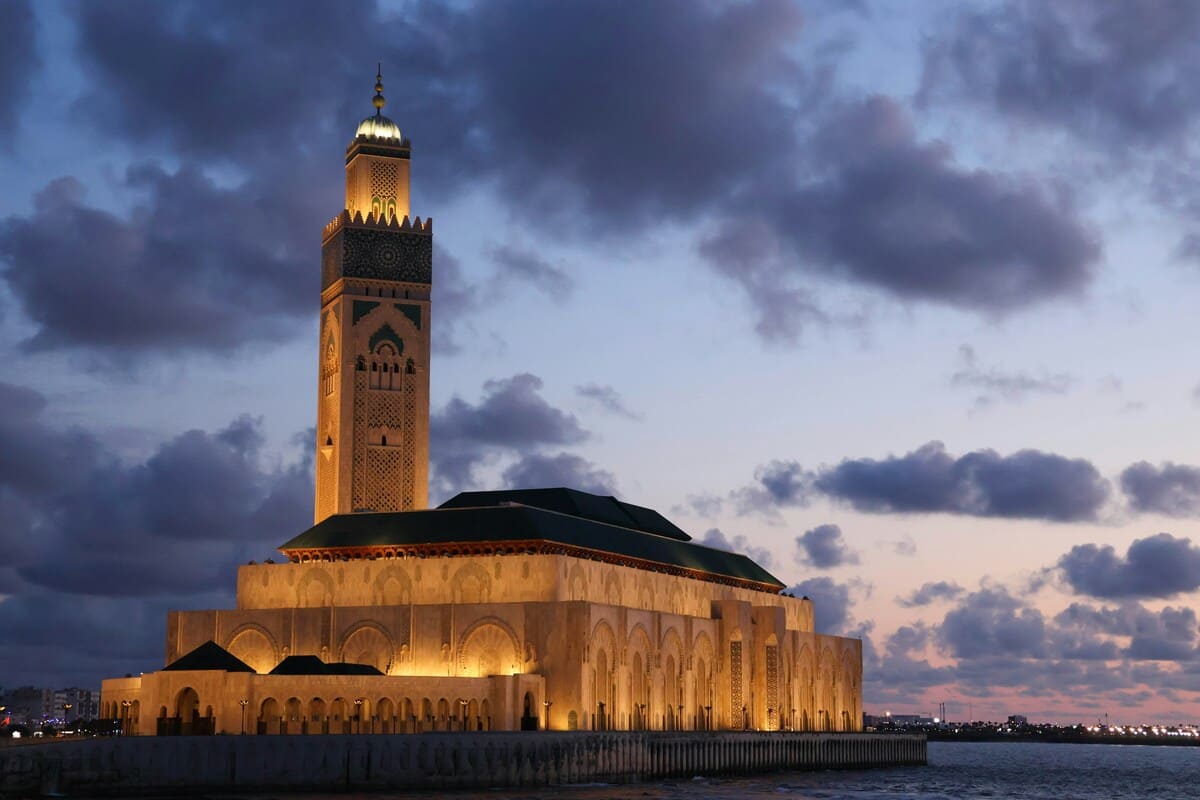
Casablanca is most useful when you plan it as a modern Atlantic city, not as a substitute for the historic medinas of Fes or Marrakech. Hassan II Mosque is the essential landmark, but the city also rewards a focused look at its central streets, markets, architecture and coast.
One full day covers the main sights when you group them carefully. A second day makes room for Habous, the Museum of Moroccan Judaism, art or a slower coastal evening without turning the visit into a sequence of cross-city transfers.
The practical question is not how many attractions fit on a list. It is which city zones belong together, where a tram or taxi is more sensible than walking, and whether Casablanca improves the arrival or departure route through Morocco.
Table of contentsJump to a section
Quick answer: how long to spend in Casablanca?
How Casablanca fits a Morocco route
Casablanca is a major transport gateway, so its value depends partly on the flight and rail plan. It can work well as:
- An arrival stop after a long international flight, especially when continuing by train the next day.
- A focused stop between cities when Hassan II Mosque is a priority.
- A final night that protects the international departure from a risky same-day intercity transfer.
- A two-night city break for architecture, food, museums and the Atlantic coast.
It is less useful as an automatic extra city between every major destination. If the flight arrives early and the next stop is Rabat, Marrakech or Fes, one well-planned day may be enough. If Casablanca would create a separate hotel change for only a few evening hours, use the time elsewhere.
For the wider country decisions, the Morocco places and route guide explains which northern, Atlantic, mountain and desert stops belong together.
Plan Casablanca by zone
Casablanca is too large to treat as one continuous walking route. Plan compact areas, then use the tram, busway or a short taxi transfer where the gap is not useful sightseeing.
1. Hassan II Mosque and Atlantic edge
Core stop: the mosque exterior and a scheduled guided interior visit when current access suits.
Combine with: the nearby waterfront and the Old Medina side of the centre.
2. Old Medina and central Casablanca
Core stops: Old Medina, Place des Nations Unies, Central Market and selected downtown streets.
Best approach: walk within the cluster and look up for Art Deco and Neo-Moorish details.
3. Habous and cultural branch
Core choice: Habous for arcades, books, pastries and a calmer shopping area.
Optional extension: the Museum of Moroccan Judaism when current opening arrangements fit.
4. Corniche and Ain Diab
Best for: an Atlantic walk, cafe or dinner later in the day.
Transport: treat the coast as a separate transfer, not the end of one citywide walk.
The former Sacred Heart Church, Villa des Arts and other cultural buildings can fit into the central section when their current opening or exhibition schedule is useful. Do not cross the city simply to collect every name.

A practical one- or two-day Casablanca itinerary
One-day Casablanca plan
This is the strongest default when Casablanca is part of a wider Morocco trip.
Morning: Hassan II Mosque
Build the morning around the current official guided-visit schedule if you want to enter. Leave time for the exterior and waterfront without assuming the interior is continuously open to visitors.
Late morning: Old Medina
Walk a focused section rather than trying to cover every lane. Continue toward Place des Nations Unies and the central city.
Lunch: Central Market area
Use the market and nearby streets for a practical meal stop. Check the menu and price before ordering seafood sold by weight or selected from a counter.
Afternoon: choose one branch
Choose downtown architecture and a cultural stop, or take a ride to Habous. Trying to do both thoroughly makes the day more fragmented.
Evening: Atlantic coast
Finish around the Corniche only if the extra transfer suits your hotel and energy. A central dinner is the simpler alternative.
Two-day Casablanca plan
Keep the first day as above. Use the second day for one cultural branch and one slower district rather than repeating the central route.
Day 2 option A - heritage and architecture: visit the Museum of Moroccan Judaism when open, continue to Habous, see Mahkama du Pacha from the permitted public area, and return to the centre for Villa des Arts or an architecture walk.
Day 2 option B - slower city and coast: spend more time in Habous or Maarif, choose one museum or gallery, then move to Ain Diab for the later afternoon and evening.
Best things to do in Casablanca
1. Visit Hassan II Mosque
Hassan II Mosque is the city’s essential landmark. Its position beside the Atlantic gives the complex a scale and setting that photographs do not fully explain.
Non-Muslim visitors should use the mosque foundation’s current scheduled guided-visit arrangements for interior access. Opening patterns and visitor rules can change during Ramadan, religious events, maintenance or other operational periods, so check the official site close to the visit instead of relying on an old timetable.
Dress and behave in line with the current visitor rules. Exterior access does not mean every doorway or prayer area is open to general visitors.
2. Walk a focused part of the Old Medina
Casablanca’s Old Medina is smaller and less restored than the better-known medinas of Fes and Marrakech. Visit it for a short look at the city’s older street pattern and daily trade, not because it offers the same scale or monuments.
Keep valuables controlled in crowded lanes, stay aware of traffic at the edges, and do not assume every narrow passage is a sightseeing route. Pair the walk with Place des Nations Unies or the central market area.
3. See the Central Market and downtown streets
The Central Market is useful as both a food stop and a route anchor. From this part of the city, select a few downtown streets around Boulevard Mohammed V and nearby squares for Art Deco and Neo-Moorish facades.
Architecture is the point, not a rigid trail. Some buildings are best understood from the street, while access, restoration and business use can change. Look above the shopfronts and allow traffic crossings to set the pace.
4. Explore Habous without rushing it
Habous, often called the New Medina, combines Moroccan architectural forms with a planned district created during the protectorate period. Its arcades, booksellers, bakeries and small shops make it a calmer alternative to a large historic medina.
It is a separate city cluster. Take suitable transport rather than pretending it naturally follows every central sight on foot. Nearby Mahkama du Pacha adds architectural context, but controlled access means the interior should never be promised.
5. Visit the Museum of Moroccan Judaism
The Museum of Moroccan Judaism gives the trip important context beyond the mosque and colonial-era city centre. It belongs in a two-day visit or a culture-focused one-day plan, not as a quick stop added between distant districts.
Check the museum’s official site for current opening information and contact details. Exhibitions, closures and visitor arrangements can change.
6. Choose one art or architecture stop
Villa des Arts can provide a quieter contemporary-art break, while the former Sacred Heart Church is a prominent central landmark that has been used as a cultural and exhibition space. Neither should be treated as permanently open without checking current programming.
Choose the place whose current exhibition or access genuinely interests you. The surrounding architecture walk remains useful when an interior is unavailable.
7. Eat seafood with clear expectations
Casablanca’s Atlantic position makes seafood a sensible meal choice. Central Market and coastal restaurants offer different experiences, from simple counters to formal dining.
Ask how the fish is priced, what preparation is included and whether side dishes are separate. Fresh availability changes, so choose from what is actually offered rather than arriving with a fixed checklist.
8. Finish beside the Atlantic
Ain Diab and the Corniche work best as a separate later-day outing. Go for an ocean walk, cafe or dinner rather than expecting a quiet beach escape in every section.
Weather, surf, construction and local access can change the experience. Keep a central evening as the fallback when the transfer or conditions no longer justify the coast.
Food and where to stay
Casablanca has far more than one signature restaurant. A short visit can combine a market lunch, Moroccan home-style dishes, bakery or cafe food, and one seafood meal without crossing the city for famous names.
Useful foods to recognize include msemen or harcha at breakfast, harira or bissara for a simple meal, grilled fish when availability and price are clear, and almond pastries in Habous. Rick’s Cafe is a private, film-inspired restaurant rather than a location from the original film; reserve only if that specific atmosphere is worth building into the evening.
Choose accommodation according to the route:
- Central Casablanca or near Place des Nations Unies: useful for a short first visit and central walking.
- Gauthier or Maarif: practical for restaurants and a more contemporary city base.
- Ain Diab: suitable when the coast and evening atmosphere matter more than central sightseeing convenience.
- Near Casa Voyageurs: functional for an early intercity train, but not automatically the most enjoyable sightseeing base.
For a late arrival or early flight, compare a city hotel with an airport-area stay by the actual transfer plan. The airport is outside central Casablanca.
Getting around Casablanca
Walking works inside compact zones. It is not the default for moving between Hassan II Mosque, Habous, the museum and Ain Diab in one day.
Tram and busway
Useful where the current network matches the route. Check the official network map and operating information for the travel date.
Petit taxi
Useful for gaps between clusters. Make sure the meter or agreed fare is understood before the ride and ask the accommodation about current local practice.
Walking
Best within the Old Medina, downtown, Habous and selected waterfront sections. Use crossings carefully and expect busy roads.
App-arranged rides
Availability, pickup practice and local operation can change. Check what currently works and keep a licensed taxi or hotel-arranged transfer as the fallback.
Intercity rail
Casa Voyageurs and Casa Port serve different routes. Confirm the correct station on the current ONCF itinerary before leaving the hotel.
Airport connection
ONCF rail and road transfers connect Mohammed V International Airport with Casablanca. Check current service times against the flight and preserve a sensible buffer.
Entry, safety and cultural planning
Morocco’s entry requirements depend on nationality, passport and trip purpose. Check the current official formalities for the passport you will use and verify transit requirements separately when the flight connects through another country.
Casablanca needs normal large-city judgment. Keep phones and wallets controlled in crowded markets and transport areas, use well-lit routes at night, and do not accept transport or guiding services without understanding the arrangement. Conditions can vary by district and time of day, so current government advice and accommodation guidance are more useful than a blanket claim that the whole city is either safe or unsafe.
Religious, government, port and controlled areas deserve particular care. Follow signs, ask before photographing people or sensitive buildings, and accept that access can change. Travel insurance should match personal health needs and the wider Morocco route rather than only the city stay.
Casablanca flight and tour tools
A guided activity is most useful when it provides verified mosque timing, architectural context, food interpretation or transport between places that would otherwise fragment the day. Read the actual route and inclusions; a product title does not prove interior access.
Affiliate note: WeltFox may earn a commission from an eligible booking through these tools at no additional cost to you. The provider controls availability, prices and booking terms.
Official Casablanca planning links
These sources cover the details most likely to change. Recheck the relevant page close to the visit rather than relying on a saved timetable or an old tour description.
FAQ
Casablanca travel FAQ
Short answers to the decisions that matter most on a one- or two-day Casablanca visit.
Is Casablanca worth visiting?
Casablanca is worth a focused stop when Hassan II Mosque, modern Moroccan city life, architecture or the flight and rail route interest you. It is not a substitute for the historic medinas of Fes or Marrakech, so one well-planned day is often enough on a busy first trip.
How many days do you need in Casablanca?
One full day covers Hassan II Mosque, a central walking cluster and either Habous or the Atlantic coast. Two days allows a museum, more architecture, Habous and a slower coast visit without excessive backtracking.
Can non-Muslims enter Hassan II Mosque?
Non-Muslim interior access follows the mosque foundation's current scheduled guided-visit arrangements. Check the official schedule and visitor rules close to the date because operating patterns can change.
Can you walk around Casablanca?
Walking is useful within the Old Medina, central streets, Habous and selected waterfront sections. The main areas are too spread out for one continuous sightseeing walk, so combine walking with tram, busway or short taxi transfers.
Should you stay in Casablanca or continue to Marrakech?
Stay when the flight arrives late, Hassan II Mosque is a priority or a final-night buffer improves the departure. Continue when the arrival is early, the connection is comfortable and Casablanca would add a hotel change without a usable sightseeing day.
Is Casablanca safe for tourists?
Casablanca requires normal large-city precautions rather than a simple yes-or-no label. Control valuables in crowded places, use clear transport arrangements, be careful on busy roads and at night, and review current government advice for your circumstances.
How do you get from Casablanca airport to the city?
Rail and road transfers connect Mohammed V International Airport with Casablanca. Check current ONCF service details and the station or hotel route against the flight time, especially for an early departure or late arrival.
What should you skip with only one day?
Keep Hassan II Mosque and one central cluster. Then choose Habous or a coastal ending. Skip distant shopping stops, repeated city tours and any museum whose current opening would force unnecessary cross-city travel.
Final Casablanca recommendation
Use Casablanca as a focused city stop, not a test of how many names fit into one day. Start with Hassan II Mosque, continue through one central cluster, and choose either Habous or the coast according to your interests and available time.
Add a second day only when it creates room for the Museum of Moroccan Judaism, art, architecture or a slower Atlantic evening. The best Casablanca plan supports the wider Morocco route and protects the next train or flight; it does not compete with the rest of the trip.

Reader Notes
Share your thoughts
Have a question, update, or practical tip about Casablanca Travel Guide: What to See and a Practical 2-Day Plan? Share it with other readers. Every comment and reply is reviewed before publication.
✓Moderated conversation
Rate this guide
Ratings appear here when available.
Conversation
Reader comments
Replies appear below the original comment after review.
Reader comments will appear here after review.
Add a note
Join the conversation
Share a useful update, a focused question, or a correction. Do not post personal information.