

Choosing where to go in Thailand is harder than finding places worth visiting. Bangkok, Chiang Mai, Krabi, Phuket, Koh Samui, Pai, Khao Sok and the islands can all make sense. They do not all make sense in the same first trip.
For most first-time visitors, the strongest plan starts with Bangkok, adds Chiang Mai when northern Thailand matters, then chooses one southern coast. A slower island or nature stop can fit when there is enough time, but it should replace something rather than sit on top of an already full route.
This is not a ranking of Thailand’s most famous destinations. It is a decision guide: which places work as practical bases, which additions deserve the transfer, and which choices are better saved for a different season or a longer journey.
Table of contentsJump to a section
Quick Answer: The Best Places for a First Thailand Trip
For many first-time visitors, the strongest combination is Bangkok + Chiang Mai + one suitable southern base. Krabi or Ao Nang is the practical Andaman default; Phuket and Koh Samui are alternatives, not extra stops.
Build the trip from three decisions: how much city time you want, whether northern Thailand deserves a place, and which single coast fits the dates. Add a slower island, nature stop or historical detour only when it replaces time elsewhere.
Bangkok + Chiang Mai + one coast
This gives a first trip city contrast, northern culture and beach time without turning every move into another check-in.
Krabi / Ao Nang
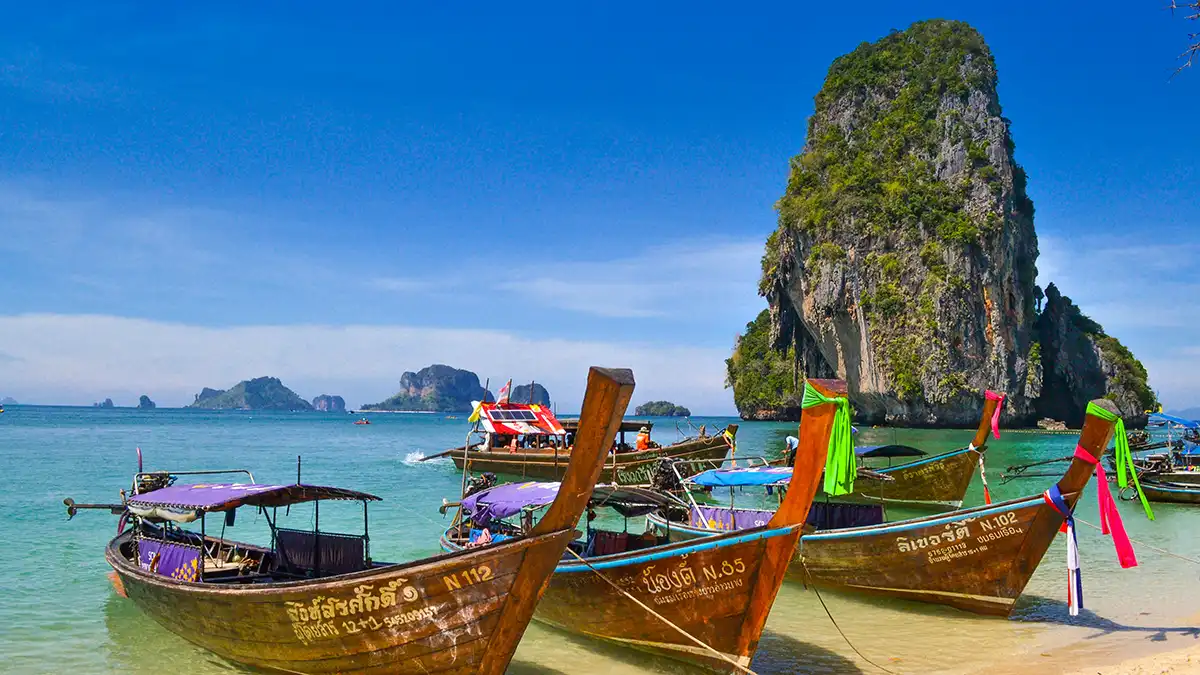
Choose it for Railay access, limestone scenery and flexible boat outings from one practical mainland base.
Phuket or Koh Samui
Choose Phuket for flights, resorts and variety, or Samui when the Gulf and a comfortable island base fit better.
Koh Lanta, Khao Sok or Koh Tao
Choose slower beaches, rainforest or diving. Each needs real time and should replace another detour or coast stay.
How Many Bases Fit?
Count hotel bases, not map pins. A day trip to Railay does not need to become another check-in, and visiting Ayutthaya does not require moving out of Bangkok.
Arrival and departure days are often partial. Flights, station transfers, ferry check-ins and hotel changes also use more time than the headline journey suggests. That is why a route with fewer bases often contains more useful travel than a longer destination list.

Map of the Best Places to Visit in Thailand
The markers on this map are planning tiers, not a popularity ranking. A core base is useful for many routes. An optional addition needs the right interests and enough time. A specialist or later-trip destination may be excellent, but less efficient in the classic first journey.
The islands are not one automatic ferry chain. Northern Thailand and the southern coasts also require real travel time, so most first trips should choose one coast rather than trying to connect every marker.
Useful foundations
Bangkok, Chiang Mai and one suitable southern gateway. They are alternatives and building blocks, not five compulsory stops.
Add when the route supports it
Places such as Ayutthaya, Khao Sok, Koh Lanta, Pai and Koh Tao normally replace another stop or use spare days.
Choose for a clear reason
These places suit a dedicated interest, regional route or longer stay rather than the default first-trip sequence.
How to Choose Where to Go in Thailand
Choose by Trip Length
With seven days, Bangkok plus one region is enough. Ten days can support Bangkok, Chiang Mai and one beach base when flights or rail connections line up. Two weeks makes the same structure calmer and leaves room for one same-coast island. Three weeks gives you one more meaningful choice, not permission to add every detour.
Use the 10 Day Thailand Itinerary, 2 Week Thailand Itinerary and 3 Week Thailand Backpacking Route once you need a daily plan.
Choose by Season
Thailand’s regions do not share one simple weather calendar. The Andaman coast and Gulf islands can experience different conditions, while northern air quality may affect Chiang Mai, Pai and Chiang Rai during parts of the dry season.
Do not choose an island from a generic annual chart alone. Check current forecasts, marine warnings, park notices and transport operations close to travel. A flexible mainland base is often easier to adjust than a chain of prepaid boat transfers.
Choose by Travel Style
Food and city travelers may want more Bangkok and Chiang Mai. Beach-first visitors can skip the north and stay on one coast. Divers have a stronger reason to reach Koh Tao. Families and travelers avoiding scooters usually benefit from well-connected bases, while social backpackers may accept an extra transfer for Pai or Koh Phangan.
The best-known place is not automatically the best fit. Match the destination to the way you actually travel: early starts or slow mornings, dorms or resorts, nightlife or quiet beaches, organized outings or independent days.
Choose One Southern Coast
The Andaman side includes Phuket, Krabi / Ao Nang, Railay, Koh Lanta and Koh Phi Phi. The Gulf side includes Koh Samui, Koh Phangan and Koh Tao.
Crossing between them can consume a substantial travel day and add road, ferry and weather dependencies. For most first-time routes, choose one coast and, if time allows, add a second base on that same side.
Best Places to Visit in Thailand for Most First-Time Visitors
These are practical foundations, not a five-stop itinerary. A seven-day trip may use only two. Krabi, Phuket and Koh Samui are competing southern choices, while Chiang Mai should be added only when the north deserves enough time.
Bangkok - Best First Gateway
Bangkok deserves two to four nights on most first routes, potentially with another night before the flight home. It is where temples, river transport, street food, modern neighborhoods and major onward connections sit in one useful base.
One night is often too rushed. It can become airport transfer, check-in and jet lag with little time left for the city. A better plan gives one day to the river and major temples, then another to food, markets or neighborhoods.
Central Bangkok is manageable without a scooter. BTS, MRT, river boats, taxis and app-based rides cover different parts of the city, although no single system reaches everything. Traffic, heat and common tourist detours still reward a selective plan.
Choose Bangkok if you want the strongest arrival base and the widest food and city contrast. Shorten it only when the trip is intentionally beach-first, not because the city looks inconvenient on a map.
Chiang Mai - Best Northern Base
Chiang Mai is the most useful northern base for many first-time visitors. Around three to five nights gives room for the Old City, northern food, Doi Suthep or another day trip, and a slower day that does not begin in a van.
Its central areas work without renting a scooter. Walk, use songthaews or app-based rides where available, and book a transfer or organized outing for places outside town. A night train can be part of the experience; a flight is usually the easier time-saving choice on a short route. Verify current services before booking either.
Chiang Mai usually offers more first-trip value than adding Chiang Rai as a second northern base. Choose Chiang Rai instead only when its art and temple architecture are a stronger priority than Chiang Mai’s broader city experience.
Air quality can change the decision. Check current readings before committing to the north, especially during the late dry-season haze period, and keep a southern or Bangkok-focused alternative if conditions are poor.
Animal Tourism Needs a Separate Decision
An elephant activity should not be chosen simply because it is near Chiang Mai or uses the word sanctuary. Avoid riding, performances and forced bathing or close-contact routines. Look for observation-focused visits, transparent welfare policies and recent independent reporting, then reassess before booking because practices can change.
The photograph below shows elephants in Thailand; it does not verify the venue, operator or welfare standard.
Krabi / Ao Nang - Best Andaman Base
Krabi and Ao Nang are a strong default when a first trip needs an Andaman coast base. Ao Nang is practical rather than secluded: it has accommodation, restaurants, road transfers and boat access to Railay and nearby islands.
That convenience lets you see limestone coast scenery without changing hotels every night. Stay around three to five nights, use Railay as an outing or short overnight, and keep boat plans flexible when sea conditions look uncertain.
Choose Krabi over Phuket when scenery, Railay access and a smaller base matter more than resort choice or nightlife. Skip Ao Nang only if you expect an isolated beach outside your hotel; its value is the connection, not the claim that it is Thailand’s finest beach.
Choose One Thai Island, Not Every Island
Koh Lanta suits a slower Andaman stay. Koh Samui offers the easiest Gulf comfort and the broadest range of services. Koh Phangan works for social, event or wellness priorities; Koh Tao has the clearest diving case; Phi Phi suits scenery or a short energetic stop.
These are different answers to different trips. Pick the island that improves the route you already have. Do not add hotel changes merely because the islands are famous or appear close on a national map.
Best Cultural and Historical Additions
Most first trips need only one major historical detour beyond Bangkok and Chiang Mai. Ayutthaya is the efficient choice from Bangkok. Sukhothai needs a more deliberate overland route. Chiang Rai is an art-and-temple decision, while Kanchanaburi combines history with a western Thailand side trip.
Ayutthaya - Best Easy History Addition
Ayutthaya is the simplest major heritage addition from Bangkok. The historic city is a UNESCO World Heritage property, and its temple ruins can work as a day trip or a single overnight without forcing a new cross-country route.
The sites are spread out and the heat can make an ambitious list tiring. Choose a bicycle only when conditions and road confidence suit you; tuk-tuks, drivers and organized trips are alternatives. A day trip is enough for many first-time visitors, while one night creates a quieter start and evening.
Choose Ayutthaya over Sukhothai when route efficiency matters. Choose Sukhothai when the historical section deserves more time and you are already building a slower northbound journey.
Sukhothai - Best for a Slower Cultural Route
Sukhothai rewards travelers who want the historical park to be a destination rather than a compressed outing. The UNESCO property includes Sukhothai and associated historic towns, but a first visit does not need to cover every component.
Give the area around two nights and accept that reaching it changes the route. It works best between Bangkok and Chiang Mai on a slower overland trip, or as the center of a culture-first itinerary. Skip it in a fast Bangkok-north-islands plan where the extra transfer would take time from every other section.
Chiang Rai - Best for Contemporary Temple Art
Chiang Rai is worth choosing for Wat Rong Khun, Baan Dam and the region’s distinct art and temple architecture. It is not an automatic extension just because the traveler is already in Chiang Mai.
A long day trip can feel transport-heavy. One or two nights gives the city more space, but that should come from Chiang Mai or beach time. Choose Chiang Rai instead of Pai when art, design and temples matter more than a social mountain-town stay.
Kanchanaburi - Best for a Western Thailand Side Trip
Kanchanaburi can combine difficult wartime history, river scenery and access to natural areas west of Bangkok. It needs careful, respectful planning and is better treated as its own two- or three-night branch than squeezed into a busy Bangkok day.
Choose it when the history is a central interest or when the wider western route replaces another region. Save it for later when the main trip already includes Ayutthaya, Chiang Mai and a full southern section.
Best Nature and Northern Detours
Nature stops use time differently from cities. Khao Sok involves transfers, park or lake logistics and weather. Pai requires a winding road in both directions. Both can be worthwhile, but neither should be attached automatically to a full first route.
Khao Sok - Best Nature-First Southern Addition
Khao Sok is the strongest nature substitution for travelers who want rainforest and lake time more than another beach base. Give it a meaningful two or three days, including access time, and verify current park notices, accommodation arrangements and activity details before paying.
It combines most logically with an Andaman route through Phuket, Krabi or nearby mainland gateways. The exact transfer depends on current services; a line on a route map does not prove a direct connection.
Choose Khao Sok instead of several island nights, not in addition to Phuket, Krabi, Phi Phi, Koh Lanta and the Gulf. Skip it when unpredictable access or an organized lake stay does not suit your budget or travel style.
Pai - Best for a Social Mountain-Town Detour
Pai suits backpackers and slower travelers who want a small-town social stop, cafes and northern scenery. The winding transfer from Chiang Mai is part of the decision, especially for anyone prone to motion sickness.
Two or three nights can work in a three-week route. In ten days, the return journey and extra check-in usually cost too much. Pai also has a scooter-heavy reputation, but a visitor does not need to ride; choose central accommodation and arranged transport instead.
Skip Pai when road fatigue, air quality, limited time or the pressure to rent a scooter makes it a poor fit. Chiang Mai with one well-chosen day trip is the easier first-time alternative.
Best Beach and Island Destinations
The right beach choice depends on coast, access and travel style. Phuket and Koh Samui are broad gateways. Krabi is a practical mainland base. Koh Lanta, Koh Phangan and Koh Tao each reward a more specific reason for making another move.
Phuket - Best for Flights, Resorts and Choice
Phuket is the easiest Andaman alternative when airport access, resorts, nightlife and a wide range of hotels matter. The island is large enough that the area you choose changes the trip: a stay near nightlife will not feel like a quieter beach base.
Three to five nights works for many first visits. Phuket can also anchor nearby outings, but it should normally replace Krabi rather than become another short hotel stop beside it.
Choose Phuket for convenience and selection. Choose Krabi for Railay access and a smaller practical base. Skip Phuket only when its scale, traffic or resort development conflicts with the island experience you want.
Koh Lanta - Best for a Slower Andaman Stay
Koh Lanta works well after Krabi because it slows the southern section without changing coasts. It suits couples, families and solo travelers who value a longer beach stay over constant tours or nightlife.
Allow around three to five nights. The island is spread out, so choose accommodation near the beach area and services you expect to use. It can be done without a scooter when you plan transfers, local rides and outings in advance.
Choose Koh Lanta when the route needs fewer decisions and more unstructured time. Skip it when a further transfer would leave only one useful island day.
Koh Samui - Best Gulf Gateway for Comfort
Koh Samui is the broadest first-time base in the Gulf. It offers an airport, a large hotel range, developed beach areas and connections onward to Koh Phangan and Koh Tao.
That convenience can cost more, especially when flights and resort areas are involved. Three to five nights works as a standalone island stay. If Koh Tao or Koh Phangan is the real priority, use Samui as a gateway or shorter base rather than giving every island equal time.
Choose Samui when comfort, easier access and resort choice matter. Do not choose it only because the Gulf appears close to the Andaman coast on a national map.
Koh Phangan - Best for Social, Event or Wellness Priorities
Koh Phangan is not one continuous party zone. Different parts of the island support event-focused trips, social backpacking, wellness stays and quieter beach time.
Event dates can still affect ferry demand, room prices and availability across the island. Check the calendar before choosing both the travel date and accommodation area. Three to five nights is useful when Phangan is a main destination; a rushed two-island sequence rarely improves a short Gulf trip.
Choose it instead of Koh Tao when diving is not central, or instead of a long Samui stay when a smaller social or wellness setting is the priority.
Koh Tao - Best Specialist Choice for Diving
Koh Tao has the clearest case when scuba diving is one of the trip’s main purposes. It can also suit snorkeling and a smaller social-island stay, but reaching it adds ferry dependence and should be weighed against the available days.
Allow at least three nights, and more for a course or several dive days. Verify operator credentials, current sea conditions and what is included before booking. The specific dive site shown in any promotional image should not be assumed.
Choose Koh Tao over Koh Phangan or Samui when underwater time is the priority. For a general beach holiday with only seven days, Samui is usually the simpler base.
Koh Phi Phi - Best as a Deliberate Day Trip or Short Stay
The Phi Phi Islands combine recognizable limestone scenery with heavy visitor pressure, boat traffic and a lively overnight scene. That makes the day-trip-versus-overnight decision more important than simply asking whether the islands are worth seeing.
A day trip suits travelers who want the scenery without another hotel move. An overnight stay suits those who want earlier or later hours on the islands and accept the crowd and nightlife tradeoffs. Conditions, access rules and marine-park operations should be checked close to travel.
Do not add Phi Phi automatically between Phuket and Krabi. It is a purposeful stop, not a transfer requirement.
Match Thailand Destinations to Your Priorities
Choose by what you want to do, then check whether the transfer and season support that choice. These are starting points, not fixed packages.
Bangkok + Chiang Mai
Add Ayutthaya for an efficient history day. Use Sukhothai only when a slower overland route matters more than beach time.
Krabi / Ao Nang or Phuket
Choose Krabi for Railay and a smaller base, or Phuket for stronger flight access, resorts and a wider range of areas.
Koh Lanta
Use one suitable beach area as the base and allow enough nights for the extra transfer to create a calmer trip.
Koh Tao or Koh Phangan
Choose Tao when diving drives the trip, or Phangan for a specific social, event, wellness or quiet-area stay.
Khao Sok
Give the park and lake plan its own allocation, and verify current access, weather and operator arrangements.
Central, connected bases
Bangkok, central Chiang Mai, Ao Nang, Phuket and Samui can work with public transport, taxis, transfers and organized outings.
Best Destination Combinations by Trip Length
These are route outlines, not full daily itineraries. The arrows show travel order; they do not promise a direct train, flight, road transfer or ferry between every pair of places.
Best Places for 7 Days
Two main bases are usually enough. The three choices below are separate trips, not sections to combine.
Option A: City and Culture
Bangkok → Chiang Mai
Use Bangkok for the arrival and city section, then give Chiang Mai enough time to justify the northern transfer. Keep Pai, Chiang Rai and Sukhothai off the same short week unless one of the two main bases is removed.
Option B: City and Beach
Bangkok → Krabi / Ao Nang
Use Ao Nang as the beach base and visit Railay without changing hotels. Do not turn the same week into Bangkok, Krabi, Phuket, Phi Phi and Koh Lanta. Check current sea and boat conditions before committing to an outing.
Option C: Gulf-Focused Route
Bangkok → Koh Samui
Koh Samui is the simplest single Gulf base when access, resorts and a broad activity range fit the trip. Add Koh Tao only for a diving priority or Koh Phangan for a distinct social, event or wellness stay, and remove Samui nights rather than extending the list.
Best Places for 10 Days
Classic First-Time Route
Bangkok → Chiang Mai → Krabi / Ao Nang
Three bases are the practical limit for most ten-day routes. Phuket or Koh Samui can replace Krabi, but Pai, Chiang Rai, Khao Sok and extra islands quickly turn the trip into repeated transfer days.
The Gulf alternative is Bangkok, Chiang Mai and Koh Samui. A southern-only version can use Phuket or Krabi, Khao Sok and one beach base, but Khao Sok must replace part of the coast stay. See the complete 10 Day Thailand Itinerary for daily pacing.
Best Places for 2 Weeks
Balanced First Trip
Bangkok → Chiang Mai → Krabi / Ao Nang → Koh Lanta
This is the strongest default when the Andaman side fits the dates. Krabi and Koh Lanta create one coherent coast section, Railay remains a nearby outing, and Phuket is an alternative rather than another base.
Gulf Alternative
Bangkok → Chiang Mai → Koh Samui → Koh Tao
This route replaces the Andaman coast. Add Koh Tao when diving or a smaller social island is central; choose Koh Phangan instead for an event, social or wellness priority. Verify current ferry operations and leave a safe departure buffer.
A culture-focused two weeks can use Bangkok, Ayutthaya, Sukhothai and Chiang Mai, leaving the islands for another trip. For a day-by-day coast plan, use the 2 Week Thailand Itinerary.
Best Places for 3 Weeks
The finished backpacking route uses Bangkok → Chiang Mai → Pai → Chiang Mai → Krabi / Ao Nang → Koh Lanta → Bangkok. It works because Pai and Koh Lanta receive real stays and the route returns to established transport hubs.
Nature Substitution
Bangkok → Chiang Mai → Khao Sok → Krabi / Ao Nang → Koh Lanta
Use Khao Sok instead of Pai or several beach nights. The long jump south still needs current transport planning, and you should not assume that one direct service covers it.
A Gulf substitution can use Bangkok, Chiang Mai, Koh Samui, then Koh Tao or Koh Phangan before returning to Bangkok. It replaces the Andaman section. The 3 Week Thailand Backpacking Route explains the slower hostel-focused version.
Thailand Destination Combinations to Avoid
These combinations are technically possible. The problem is what they do to a first trip: more check-outs, higher transport costs, less weather flexibility and fewer complete days in each place.
Andaman + Gulf in a short trip
Crossing between Krabi or Phuket and Samui, Phangan or Tao adds a heavy transfer. Choose the coast that fits the dates.
Chiang Mai + Pai + Chiang Rai + Sukhothai
Each direction has a return or onward cost. In two weeks, choose one northern addition at most.
Phuket + Phi Phi + Krabi + Koh Lanta
Use Phuket or Krabi as the main gateway, then add one island only when the stay is long enough to justify moving.
Khao Sok between full coast stays
Khao Sok deserves its own allocation. It should replace a northern detour or several beach nights.
Island ferry to long-haul flight
Weather and transport changes can break a tight chain. Use a mainland or Bangkok buffer when the international departure requires it.
One or two nights everywhere
A two-night stay may contain only one full day. Fewer, longer bases normally produce a better first trip.
What to Add, Skip or Save for Later
A place can be worthwhile and still be wrong for the current route. Add specialist destinations for a clear purpose; save regional detours when they would reduce every main stop to one or two nights.
Koh Tao or Khao Sok
Give either choice several nights and let it replace another island, northern detour or section of beach time.
Chiang Rai or Pai
Choose Chiang Rai for art and temples or Pai for a social mountain-town stay. Do not add both to a short route.
Sukhothai or Kanchanaburi
Each requires a deliberate route in a different direction. Ayutthaya is the more efficient short historical addition.
Koh Chang, Koh Kood or Koh Lipe
Build a regional beach trip around them rather than attaching them to an Andaman or Gulf island chain.
Pattaya or Hua Hin
They can suit a Bangkok-focused mainland trip, but add little when another coast already fills the beach role.
The second coast and deeper regional routes
Isaan and less-visited northern areas deserve time. Crossing to a second island coast rarely creates more useful beach days.
Best Places to Visit in Thailand by Season
Season should narrow the shortlist, not produce a guarantee. Conditions vary by region and year, and current forecasts matter more than a confident sentence written months before the trip.
When the Andaman Side Fits
Krabi, Phuket, Koh Lanta and Phi Phi form the logical coast group. Choose one gateway and no more than one additional island base for most first routes. Marine conditions, park operations and boat plans can still change during an otherwise suitable period.
When the Gulf Fits Better
Koh Samui, Koh Phangan and Koh Tao are the Gulf set. Samui is the easiest general base; Phangan and Tao should be selected for their distinct travel styles. The Gulf is not a universal wet-season fallback, so check the actual forecast and ferry operation for the travel dates.
Northern Thailand and Air Quality
Bangkok and the south may be the better first route when northern air quality is poor. Chiang Mai, Chiang Rai and Pai can all be affected during the haze period. Check live official readings through Air4Thai rather than assuming a fixed start or end date.
Rainy-Season Planning
Rain does not automatically ruin a trip. It does make boat-heavy schedules, tightly connected ferries and non-refundable island chains less resilient. Keep at least one flexible day, choose accommodation with workable rainy-day options and be willing to simplify the coast section.
Quick Destination Comparison
Use these cards to narrow the shortlist. Budget labels are relative and can change sharply by season, accommodation area and booking date. The strongest choice is the place that fits the route, not the destination with the longest attraction list.
Bangkok
Best for: Food, temples, city contrast and connections
Suggested stay: 2-4 nights
Relative budget: Highly variable
Scooter-free ease: Strong in central areas
Main drawback: Heat, traffic and sensory load
Chiang Mai
Best for: Northern food, temples and day trips
Suggested stay: 3-5 nights
Relative budget: Lower-moderate
Scooter-free ease: Good centrally
Main drawback: Seasonal air quality
Krabi / Ao Nang
Best for: Railay access and Andaman scenery
Suggested stay: 3-5 nights
Relative budget: Moderate
Scooter-free ease: Good with transfers and tours
Main drawback: Developed base and weather-sensitive boats
Phuket
Best for: Flights, resorts, nightlife and hotel choice
Suggested stay: 3-5 nights
Relative budget: Moderate-higher
Scooter-free ease: Possible with taxis and transfers
Main drawback: Scale, traffic and area choice
Koh Samui
Best for: Comfort and Gulf-island access
Suggested stay: 3-5 nights
Relative budget: Moderate-higher
Scooter-free ease: Possible with planned rides
Main drawback: Flights and local transport can cost more
Koh Lanta
Best for: Slower beaches and longer stays
Suggested stay: 3-5 nights
Relative budget: Moderate
Scooter-free ease: Manageable with the right base
Main drawback: Extra transfer and spread-out island
Koh Phangan
Best for: Social travel, events, wellness or chosen quiet areas
Suggested stay: 3-5 nights
Relative budget: Highly variable
Scooter-free ease: Depends on accommodation area
Main drawback: Event pressure and ferry logistics
Koh Tao
Best for: Diving and snorkeling
Suggested stay: 3-5+ nights
Relative budget: Moderate
Scooter-free ease: Manageable in a suitable base
Main drawback: Ferry dependence
Ayutthaya
Best for: Efficient history from Bangkok
Suggested stay: Day trip or 1 night
Relative budget: Lower-moderate
Scooter-free ease: Good with tuk-tuk or tour
Main drawback: Heat and spread-out ruins
Chiang Rai
Best for: Art and contemporary temple architecture
Suggested stay: 1-2 nights
Relative budget: Lower-moderate
Scooter-free ease: Good with arranged outings
Main drawback: Long detour for a short route
Pai
Best for: Social mountain-town travel
Suggested stay: 2-3 nights
Relative budget: Lower-moderate
Scooter-free ease: Mixed
Main drawback: Winding access road and scooter pressure
Khao Sok
Best for: Rainforest and lake nature
Suggested stay: 2-3 nights
Relative budget: Moderate-higher
Scooter-free ease: Good with arranged transfers
Main drawback: Planning, weather and activity cost
Plan Your First Thailand Trip
Choose the route before booking every hotel. Start with trip length and season, select one coast, then add only the destination that solves a real travel goal.
Write the route in bases
Count nights and complete days in each base, then identify every airport, station, ferry and hotel connection.
Check the coast and exit plan
Verify current forecasts and transport, and protect the international departure from an uncertain final ferry.
Check air quality
Use current official readings and keep a practical alternative when haze could materially affect the trip.
Verify the operator, not the label
Review current welfare, safety, cancellation and weather policies for animal, diving, boat and national-park activities.
Helpful Booking Tools
Once you have a rough route, use these tools to compare flights, private transfers and activities. Choose the option that fits your plans, then check the final price and booking conditions before paying.
Affiliate booking tools: The tools below contain affiliate links. If you make an eligible booking through them, WeltFox earns a commission at no additional cost to you. Read our full affiliate disclosure.
Once the destinations are chosen, use the guide to traveling around Thailand to compare the full transfers between them.
Useful Official Links and Details to Check
Use official sources for details that can change. A destination article should not be the final authority for weather warnings, park access, air quality or transport operations.
FAQ
FAQs About Where to Go in Thailand
Short answers for choosing destinations, islands, route length and places to save for another trip.
What are the best places to visit in Thailand for a first-time visitor?
Bangkok, Chiang Mai and one suitable southern base such as Krabi, Phuket or Koh Samui form the strongest first-trip foundation for many travelers. Add one island or nature stop only when time and season support it.
How many places should I visit on my first trip to Thailand?
Plan about two main bases in seven days, three in ten days, three or four in two weeks, and four or five in three weeks. Day trips do not need to become hotel bases.
Is Bangkok worth visiting, or should I skip it?
Bangkok is worth at least two or three nights for most first trips. It offers food, temples, neighborhoods, river travel and the best onward connections; treating it as only an airport stop usually feels rushed.
Should I visit Chiang Mai or stay in southern Thailand?
Choose Chiang Mai for northern food, temples and day trips. Stay south when beach time is the main goal, the trip is short or current northern air quality is poor.
Is Phuket or Krabi better for a first trip?
Krabi is the stronger default for Railay access and a smaller practical base. Phuket is better when flights, resorts, nightlife and a wider hotel range matter more.
Which Thai island is best for first-time visitors?
Koh Samui suits comfort and Gulf access, Koh Lanta suits a slower Andaman stay, Koh Phangan suits social, event or wellness priorities, and Koh Tao suits diving. There is no universal best island.
Should I visit both the Andaman and Gulf coasts?
Usually not on a first trip of two weeks or less. Choose the coast that fits your dates and route; crossing between them adds a long transfer and reduces useful island time.
Can I visit Thailand without renting a scooter?
Yes. Choose central bases and use Bangkok rail, boats, taxis, app-based rides, transfers and organized outings. A scooter is not required for the routes in this guide.
Final Recommendation
Start with Bangkok. Add Chiang Mai when the north matters and current conditions suit it. Then choose Krabi, Phuket or Koh Samui as the southern gateway, not all three.
With more time, add Koh Lanta for a slower coast, Khao Sok for nature, Koh Tao for diving, or one cultural detour. The best places to visit in Thailand are the ones that leave enough time to experience them after the transfers are counted.



Reader Notes
Share your thoughts
Have a question, update, or practical tip about Best Places to Visit in Thailand for First-Time Visitors? Share it with other readers. Every comment and reply is reviewed before publication.
✓Moderated conversation
Rate this guide
Ratings appear here when available.
Conversation
Reader comments
Replies appear below the original comment after review.
Reader comments will appear here after review.
Add a note
Join the conversation
Share a useful update, a focused question, or a correction. Do not post personal information.