
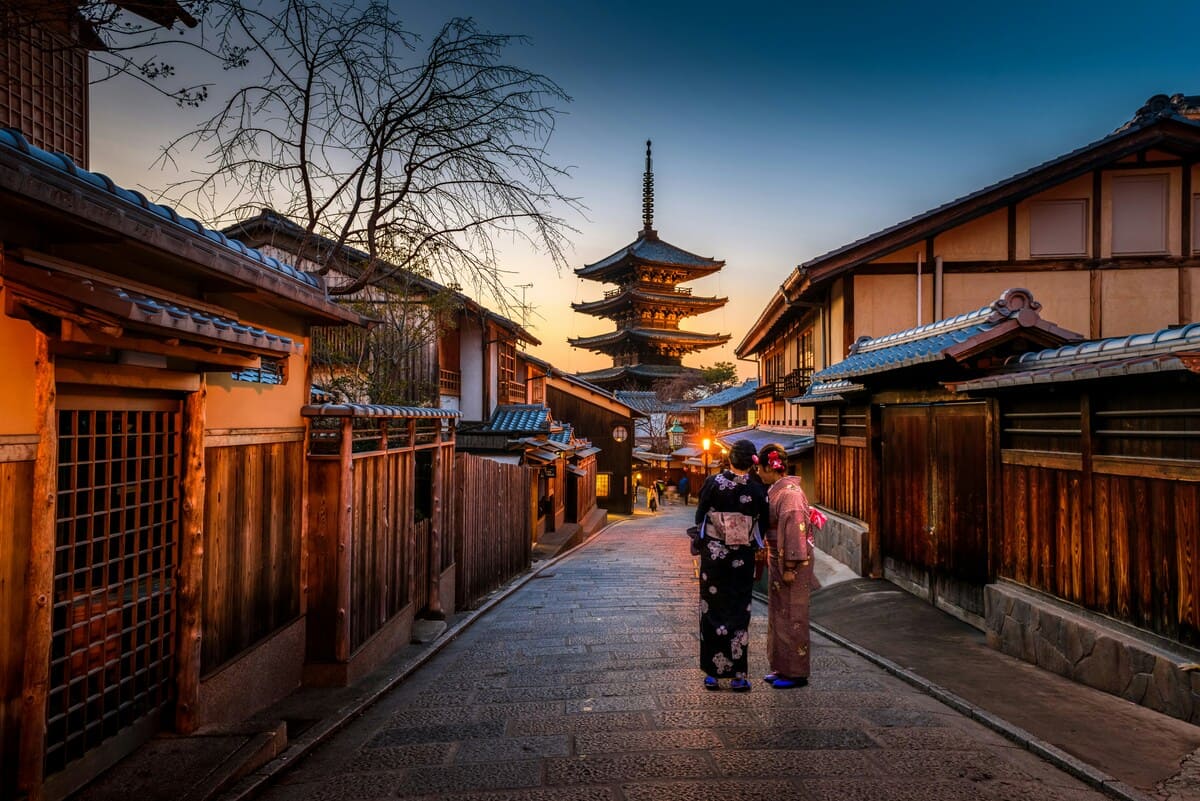
Japan’s best-known route is easy to recognize and just as easy to overload. Tokyo, Kyoto, Osaka, Mount Fuji or Hakone, Nara, Hiroshima and Miyajima can already fill a first trip. Hokkaido, Kyushu, Okinawa and the smaller regional stops belong in longer or more focused itineraries.
This guide compares 50 useful places without treating them as one checklist. Some entries are hotel bases, some are day trips, and others are individual sights inside a larger city. The practical goal is to choose a small group that fits the same route, season and pace.
Table of contentsJump to a section
Quick Answer: Where to Go in Japan
For many first-time visitors, the strongest route is Tokyo + Kyoto + one western or mountain extension. Osaka and Nara can work from the Kyoto/Osaka region without becoming separate long stays. Choose either Mount Fuji / Hakone or Hiroshima / Miyajima when time is tight; with around two weeks, both can fit at a calmer pace.
Tokyo and Kyoto / Osaka
Use two main bases and, at most, one nearby day trip. A Fuji, Hiroshima or regional detour will make this version noticeably tighter.
Add one major extension
Choose Mount Fuji or Hakone for scenery and onsen, or Hiroshima and Miyajima for history and island context.
Build a balanced first route
Tokyo, one Fuji-area stop, Kyoto with Nara, Osaka, Hiroshima and Miyajima can fit when the hotel changes stay controlled.
Choose one deeper region
Add the Japanese Alps, Kyushu, Hokkaido, Okinawa or a Setouchi island route. Do not stack several distant regions into the same two-week plan.
How to Use This Japan Guide
Start with the route, not the ranking. Decide how many complete days you have, which airports make sense, and whether the trip is mainly about cities, culture, food, nature, onsen, hiking or islands.
Then classify each choice:
- Base: somewhere worth sleeping for several nights, such as Tokyo, Kyoto, Osaka, Hiroshima or Fukuoka.
- Day trip or short stop: somewhere that can fit from a nearby base, such as Nara, Kamakura, Nikko or Himeji.
- Dedicated extension: somewhere that needs its own transport and time allocation, such as Yakushima, Hokkaido, Okinawa or the Iya Valley.
- Sight inside a base: an attraction such as Fushimi Inari or Arashiyama, not another destination to add to the hotel count.
For a first trip, shortlist Tokyo and Kyoto first. Add Osaka or Nara according to your interests, then choose one or two extensions that fit the same travel line. Kanazawa and Takayama work as a central-Japan alternative; Hiroshima and Miyajima work as a western extension; Hokkaido, Kyushu and Okinawa are better treated as distinct regional routes.
The Japan National Tourism Organization destination guide and official itinerary collection are useful for checking how different regions connect before committing to accommodation.
If a guided outing would simplify a difficult transfer or add useful context, compare it only after the route is settled. The booking section remains near the end so commercial tools do not interrupt the destination decisions.
Best Places in Japan at a Glance
The numbers provide an editorial shortlist, not a universal ranking. They balance cultural value, route usefulness, regional variety and the amount of planning each place requires. A lower-ranked stop can still be the better choice when it fits your interests and travel line.
The list deliberately includes cities, islands, landscapes and individual sights. Kyoto, Fushimi Inari and Arashiyama therefore appear separately, but they should normally be planned within the same Kyoto stay rather than counted as three bases.
Kyoto
Kyoto
Temples, gardens, culture, and old districts
Tokyo
Kanto
Food, neighborhoods, shopping, museums, and day trips
Mount Fuji and Fuji Five Lakes
Yamanashi and Shizuoka
Views, lakes, nature, and ryokan stays
Miyajima
Hiroshima
Shrines, island scenery, and atmosphere
Osaka
Kansai
Street food, nightlife, and easy rail links
Nara Park and Todai-ji
Nara
Ancient temples, deer, and early Japanese history
Hiroshima Peace Memorial Park
Hiroshima
History, reflection, and a city break
Hakone
Kanagawa
Onsen, art museums, and Mount Fuji views
Kanazawa
Ishikawa
Gardens, samurai districts, crafts, and seafood
Nikko
Tochigi
Shrines, forests, waterfalls, and mountain scenery
Himeji Castle
Hyogo
Castles, history, and an easy shinkansen stop
Fushimi Inari Taisha
Kyoto
Shrine walks, torii gates, and photography
Takayama
Gifu
Old town streets, mountain culture, and markets
Shirakawa-go
Gifu
Thatched farmhouses and village scenery
Okinawa Main Island
Okinawa
Beaches, Ryukyu culture, and island travel
Kamakura
Kanagawa
Temples, the Great Buddha, coast, and a Tokyo day trip
Naoshima
Kagawa
Contemporary art, architecture, and island atmosphere
Kumano Kodo
Wakayama, Nara, and Mie
Pilgrimage trails, forests, and spirituality
Arashiyama
Kyoto
Bamboo groves, river scenery, and temple gardens
Sapporo
Hokkaido
Food, winter travel, and a Hokkaido gateway
Koyasan
Wakayama
Temple stays, Buddhist heritage, and cemetery walks
Yakushima
Kagoshima
Ancient cedar forests, hiking, and wild nature
Kurokawa Onsen
Kumamoto
Hot springs, ryokan stays, and village atmosphere
Takachiho Gorge
Miyazaki
Gorge views, boats, and mythology
Kiso Valley
Nagano and Gifu
Historic post towns and heritage walking routes
Amanohashidate
Kyoto
Coastal views and a northern Kyoto detour
Beppu
Oita
Onsen and steaming hot-spring landscapes
Matsumoto
Nagano
Castle history, art, and Japan Alps access
Fukuoka
Fukuoka
Food, yatai stalls, and a Kyushu gateway
Kerama Islands
Okinawa
Snorkeling, clear water, and an island escape
Kurashiki
Okayama
Canals, merchant history, and relaxed walks
Matsushima
Miyagi
Bay scenery, temples, and boat trips
Furano and Biei
Hokkaido
Flower fields, summer scenery, and photography
Iya Valley
Tokushima
Remote valleys, vine bridges, and mountain villages
Tottori Sand Dunes
Tottori
Unusual landscapes, sea views, and photography
Tomonoura
Hiroshima
Historic port streets and Setouchi atmosphere
Gokayama
Toyama
Quiet thatched villages and rural heritage
Hiraizumi
Iwate
Temples, gardens, and Tohoku culture
Matsue
Shimane
Castle-town history, canals, and tea culture
Kobe
Hyogo
Port-city dining and hillside views
Oirase Gorge
Aomori
River walks, waterfalls, and autumn leaves
Mount Aso
Kumamoto
Volcanic scenery, grasslands, and road trips
Shodoshima
Kagawa
Olive groves, island food, and slow travel
Sado Island
Niigata
Coast, gold-mine history, and taiko culture
Daisetsuzan and Asahidake
Hokkaido
Alpine scenery, hiking, and early autumn color
Ine Fishing Village
Kyoto
Boathouses, seafood, and peaceful bay views
Nyuto Onsen
Akita
Rustic forest baths, snow, and ryokan stays
Yamadera
Yamagata
Mountain temples, stone steps, and views
Kagoshima and Sakurajima
Kagoshima
Volcano views, bay scenery, and local food
Ouchi-juku
Fukushima
Edo-period streets, thatched houses, and history
Must-See Places in Japan
These are the first route decisions to settle before considering a distant regional detour.
Tokyo, Kyoto, and Osaka
Tokyo is the most practical starting point for many trips. Plan it by neighborhood: combine nearby sights, food stops and evening areas instead of crossing the city repeatedly. Three or four full days can still feel selective, especially when an arrival day is affected by the flight and airport transfer.

Kyoto needs slower planning than a checklist suggests. Split Higashiyama, central Kyoto, Arashiyama and Fushimi Inari across separate half-days or days. Early starts can reduce some crowd pressure, but opening patterns, local transport and seasonal demand still need checking.
Osaka is the stronger choice when food, nightlife and a less formal city atmosphere matter. It can be a separate base or a day/evening visit from Kyoto. Choose the arrangement that avoids moving luggage for a short stay.
Mount Fuji or Hakone
Treat Fuji Five Lakes and Hakone as alternatives on a shorter first trip. Fuji Five Lakes is the more direct choice when mountain views and lakes are the priority. Hakone is useful for onsen, art and a break between cities, with Fuji views possible rather than guaranteed.
Climbing Mount Fuji is a separate seasonal undertaking, not an automatic part of a sightseeing stop. Check current official trail, access and safety information if a climb is the actual goal.
Nara, Himeji, and Koyasan
Nara is the simplest addition from Kyoto or Osaka. Himeji works well as a castle stop on the rail line toward Hiroshima. Koyasan needs more time and planning; a temple stay should replace another overnight stop rather than become a rushed day-trip extra.
Hiroshima and Miyajima
Hiroshima and Miyajima form one useful western extension. Hiroshima needs respectful, unhurried time around the Peace Memorial Park and museum. Miyajima can be a day trip from the same base or an overnight island stay when evening atmosphere is a priority.
Nikko or Kamakura
Both work from Tokyo, but they serve different interests. Choose Nikko for ornate shrines and forested mountain context, or Kamakura for temples, the Great Buddha and the coast. Adding both to a short Tokyo stay usually removes too much city time.
Regional Alternatives in Japan
Japan’s less-visited regional stops are not always remote. Some are practical detours that add a different pace or landscape to the main route.
Choose one that adds something missing from your main route rather than another stop that feels similar. These three groups make that choice easier.
Culture and historic towns
Choose these when you want old streets, local craft, or quieter heritage beyond Kyoto.
- Kiso Valley for post towns and historic walking routes
- Kurashiki for canal streets and merchant history
- Matsue for an original castle, canals, and tea culture
- Hiraizumi for quiet temples and refined gardens
- Ouchi-juku for a compact Edo-period village scene
Nature and hiking
These stops work best when landscapes and time outdoors matter more than city sightseeing.
- Oirase Gorge for river walks and autumn color
- Yakushima for ancient cedar forests and serious hiking
- Takachiho Gorge for dramatic cliffs and boat views
- Iya Valley for remote mountain scenery
- Daisetsuzan and Asahidake for alpine Hokkaido landscapes
Islands, onsen, and slow travel
Add one of these when your itinerary needs a calmer stay rather than another fast day trip.
- Kurokawa Onsen for ryokan hopping and village hot springs
- Ine Fishing Village for boathouses and quiet seafood stays
- Naoshima for contemporary art and island architecture
- Sado Island for coastlines, history, and island culture
- Shodoshima for olives, island food, and Seto Inland Sea calm
If your route already includes Kyoto, consider adding Amanohashidate and Ine for a northern Kyoto coast detour. If your route includes Hiroshima, consider Tomonoura, Kurashiki, Naoshima, or Shodoshima. If you are heading into Kyushu, Kurokawa Onsen, Takachiho Gorge, Beppu, Mount Aso, and Kagoshima are strong options.
For alpine towns, snow monkeys, temples and mountain scenery, Nagano can form a separate extension from Tokyo. Check the complete rail, bus and accommodation sequence before adding it; the regional transport should fit the route without relying on a rushed same-day chain.
14-Day Japan Itinerary Idea
Two weeks can cover the classic Tokyo-to-western-Japan line without adding the Japanese Alps as another chain of hotel changes. This version uses five main bases at most: Tokyo, one Fuji-area stop, Kyoto, Hiroshima and Osaka. Nara, Himeji and Miyajima are outings or short stops within that route.
14-day route overview
Two-Week Japan Itinerary Idea
Follow one broad line from Tokyo through the Fuji area and Kyoto to Hiroshima, Miyajima and Osaka, while keeping day trips attached to practical bases.
| Day | Base or stop | What to do |
|---|---|---|
| 1-4Tokyo | Tokyo base | Use three city days by neighborhood and choose either Nikko or Kamakura only when a day trip matters more than another Tokyo day. |
| 5Hakone or Fuji Five Lakes | Choose one Fuji-area base | Choose Hakone for onsen and art, or Fuji Five Lakes when mountain views and lakes are the stronger priority. |
| 6Travel to Kyoto | Kyoto base | Complete the connection, settle in, and keep the first Kyoto evening light rather than treating it as a full sightseeing day. |
| 7-9Kyoto and Nara | Kyoto base | Use two days for separate Kyoto areas and one day for Nara, with Osaka as an optional evening rather than another immediate hotel move. |
| 10Himeji to Hiroshima | Hiroshima base | Stop at Himeji only when luggage and timing remain practical, then continue to Hiroshima. |
| 11Hiroshima | Hiroshima base | Give the Peace Memorial Park, museum and city enough time without combining them with the island. |
| 12Miyajima | Day trip or island overnight | Visit Miyajima from Hiroshima, or stay on the island only when the extra hotel change is worthwhile. |
| 13Osaka or return to Tokyo | Match the departure airport | Finish in Osaka for a Kansai departure, or use this day to position back in Tokyo. |
| 14Departure | Airport transfer | Protect enough time for the correct airport and terminal instead of adding a final distant day trip. |
Route note: If the flight home leaves from Tokyo, use Day 13 to return there instead of adding Osaka as the final base. Kanazawa and Takayama belong in an alternative central-Japan version, not on top of this route.
For a shorter seven-day trip, use Tokyo and Kyoto / Osaka as the two main bases, with one nearby day trip. With ten days, add either a Fuji-area stop or Hiroshima and Miyajima. With three weeks, add one coherent region such as the Japanese Alps, Kyushu, Hokkaido or Okinawa rather than sampling all four.
Best Time to Visit Japan
Spring and autumn are often the easiest seasons for a first city-and-culture route, but they are also popular and can require earlier accommodation planning. Blossom and foliage timing varies by region and year, so neither should be treated as guaranteed for fixed dates.
Summer is generally hot and humid in the major Honshu cities. Hokkaido and higher elevations can offer a different route, while late-summer and early-autumn weather can disrupt outdoor plans and transport. Winter suits snow, onsen and northern travel, but mountain roads, trails and rural connections require more careful checking.
Japan stretches from subarctic Hokkaido to subtropical Okinawa, so a national seasonal summary is only a starting point. Check the JNTO regional weather guide, current forecasts and Japan Meteorological Agency warnings for the actual route.
Comfortable city days with high demand
Tokyo, Kyoto, Osaka, Nara, Kanazawa and Himeji can form a practical route. Treat blossoms as a variable bonus and book major stays with realistic cancellation terms.
Festivals, northern routes, and heat planning
Hokkaido, Furano, Biei and higher areas may suit travelers avoiding the hottest city-heavy route. Check humidity, storms and outdoor operating conditions.
Foliage with regional timing
Kyoto, Nikko, Hakone, Kiso Valley, Oirase Gorge and Takayama can work well, but color and weather move at different times across the country.
Snow and onsen with transport tradeoffs
Sapporo, Nyuto Onsen, Kanazawa and Shirakawa-go need winter-ready plans. Hakone and Kurokawa Onsen offer different regional alternatives rather than one connected route.
Japan Planning Tips
Do not try to visit all 50 places in one trip. A seven-day route usually needs only two main bases. Around two weeks can support four or five when they follow one travel line and arrival, departure and transfer days are counted honestly.
Count complete days and hotel changes
Arrival and departure days are often partial. A two-night stay may provide only one full day, while every luggage move adds station, storage or check-in work.
Price the actual route first
A nationwide pass is not automatically the cheapest choice. Compare the current pass coverage and conditions with the point-to-point trips you will genuinely take.
Check the complete connection
Heritage villages, islands, onsen towns and trail areas may require buses, ferries or local pickups beyond the headline rail journey. Verify the last connection and luggage plan.
Protect a workable alternative
Mountain access, ferries, ropeways and outdoor activities can change with weather. Avoid making one fragile connection responsible for the rest of the trip.
Build Regional Clusters
Use major bases to organize nearby choices. Tokyo can connect with Kamakura or Nikko. Kyoto and Osaka can support Nara and Himeji. Hiroshima can support Miyajima, while the Setouchi islands need a more deliberate ferry and museum plan.
Do not interpret every nearby place as a possible same-day combination. Amanohashidate and Ine form a northern Kyoto Prefecture detour, not another central Kyoto afternoon. Naoshima and Shodoshima need transport planning, not just spare space on a map.
Treat Reservations Selectively
Reserve the details that could break the route: limited accommodation, a required long-distance train, a timed museum or a ferry-dependent stay. Keep ordinary neighborhood days flexible. Reservation rules and release windows vary, so check the official provider instead of relying on one universal booking timetable.
Plan luggage around the difficult segments. Large bags can be awkward in heritage villages, temple areas, ferries, mountain towns and rural bus routes. Confirm storage or forwarding arrangements directly rather than assuming every small station or accommodation offers the same service.
Helpful Booking Tools for Japan
Japan can be traveled independently, so these tools belong after the route decisions. Use them to compare a flight or a specific city experience, then check the final provider, meeting point, inclusions, cancellation rules and total price before paying.
Affiliate booking tools: The tools below contain affiliate links. If you make an eligible booking through them, WeltFox earns a commission at no additional cost to you. Read our full affiliate disclosure.
Useful Official Japan Planning Links
Use primary sources for details that can change. Check again shortly before travel when a train, ferry, trail, attraction or weather-sensitive booking affects the route.
FAQ
FAQs About Visiting Japan
Practical answers for choosing destinations, route length, seasons and transport products.
How many days do you need in Japan?
Seven days can support Tokyo and Kyoto / Osaka with one nearby day trip. Ten days allows one major extension. Around fourteen days is a better first-trip length for Tokyo, one Fuji-area choice, Kyoto with Nara, Hiroshima, Miyajima and a Kansai finish without adding several distant regions.
What are the best places in Japan for first-time visitors?
Tokyo and Kyoto are the strongest foundations for many first trips. Add Osaka and Nara according to your interests, then choose Mount Fuji or Hakone, Hiroshima and Miyajima, or one coherent regional alternative when the available days support it.
Are Mount Fuji and Hakone the same stop?
No. Fuji Five Lakes is usually the stronger choice when lake scenery and views of Mount Fuji are the priority. Hakone is a separate onsen and art destination where Fuji views may be possible. Treat them as alternatives on a shorter route.
Which regional stops work beyond the classic Japan route?
Kanazawa and Takayama suit a central-Japan route; Naoshima and Shodoshima suit a Setouchi plan; Kurokawa Onsen, Takachiho and Mount Aso fit a Kyushu route. Hokkaido, Okinawa and Yakushima need their own substantial time allocation.
Is Kyoto or Tokyo better?
Tokyo offers larger-scale neighborhoods, food variety, museums and urban day trips. Kyoto offers temples, gardens and historic districts. They fill different roles, so most first-time itineraries should include both rather than choosing one as universally better.
When is the best time to visit Japan?
There is no single best season for every region. Spring and autumn often suit city and cultural routes, summer can favor Hokkaido and higher areas, and winter suits snow and onsen travel. Check regional forecasts and current warnings because conditions vary greatly from Hokkaido to Okinawa.
Do you automatically need a Japan Rail Pass?
No. Compare the current pass price, coverage and restrictions with the point-to-point journeys in the finished route. Local or regional passes and ordinary tickets may fit better, and transport details can change.
Final Recommendation
For a first trip, start with Tokyo and Kyoto. Use Osaka and Nara within the same Kansai portion, then choose one Fuji-area stop and one western extension only when the trip has enough complete days.
For a repeat or longer journey, choose one deeper region: the Japanese Alps, Setouchi, Kyushu, Hokkaido, Okinawa or a dedicated hiking route. The right selection is the one that still leaves useful time after every transfer and hotel change is counted.


Reader Notes
Share your thoughts
Have a question, update, or practical tip about 50 Places to Visit in Japan: Major Stops and Route Ideas? Share it with other readers. Every comment and reply is reviewed before publication.
✓Moderated conversation
Rate this guide
Ratings appear here when available.
Conversation
Reader comments
Replies appear below the original comment after review.
Reader comments will appear here after review.
Add a note
Join the conversation
Share a useful update, a focused question, or a correction. Do not post personal information.